The Conversation (0)
Science & Tech
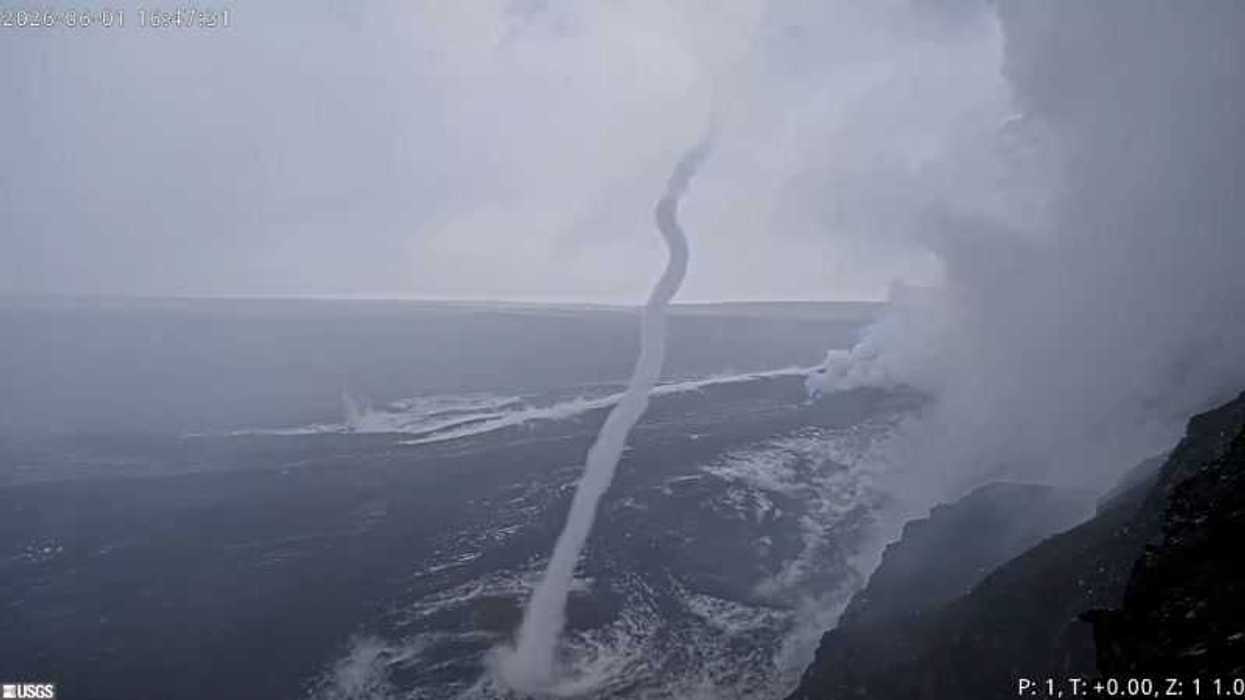
Related video: Whirlwind takes shape over Hawaii's Kilauea volcano
Volcanic eruptions are messy, what with their ejecting a load of stuff into the atmosphere, but a recent study published in Nature Communications has found that one eruption in 2022 could potentially help in the fight to slow global warming.
Back in 2022, the Hunga Tonga–Hunga Ha’apai volcano in the South Pacific Ocean erupted, but through satellite measurements, researchers have discovered that actually ‘cleaned up’ after itself when it came the release of methane.
Methane is responsible for around 30 per cent of the rise in global temperatures since the industrial revolution (per the International Energy Agency) and is the second-largest contributor to global warming after carbon dioxide (according to Nasa).
Dr Maarten van Herpen, of Acacia Impact Innovation BV in the Netherlands, and the first author of the study, said: “When we analysed the satellite images, we were surprised to see a cloud with a record-high concentration of formaldehyde.
 Pexels
“We were able to track the cloud for 10 days, all the way to South America. Because formaldehyde only exists for a few hours, this showed that the cloud must have been destroying methane continuously for more than a week
“It is known that volcanoes emit methane during eruptions, but until now it was not known that volcanic ash is also capable of partially cleaning up this pollution.”
In other words, satellite observations resulted in the researchers spotting “unusually high concentrations” of formaldehyde in the volcanic plume emitted after the eruption – formaldehyde being a “short-lived intermediate” when methane is destroyed in the atmosphere, according to a press release from the University of Copenhagen.
A Copenhagen researcher involved in the study, Matthew Johnson, said it is an “obvious idea” for engineers to attempt to replicate the natural phenomenon – but only if “it can be proven to be safe and effective”.
“Our satellite method could offer a way to help figure out how humans might slow global warming,” he said.
Why not read…?
Sign up to our free Indy100 weekly newsletter
How to join the indy100's free WhatsApp channel
Have your say in our news democracy. Click the upvote icon at the top of the page to help raise this article through the indy100 rankings.