The Conversation (0)
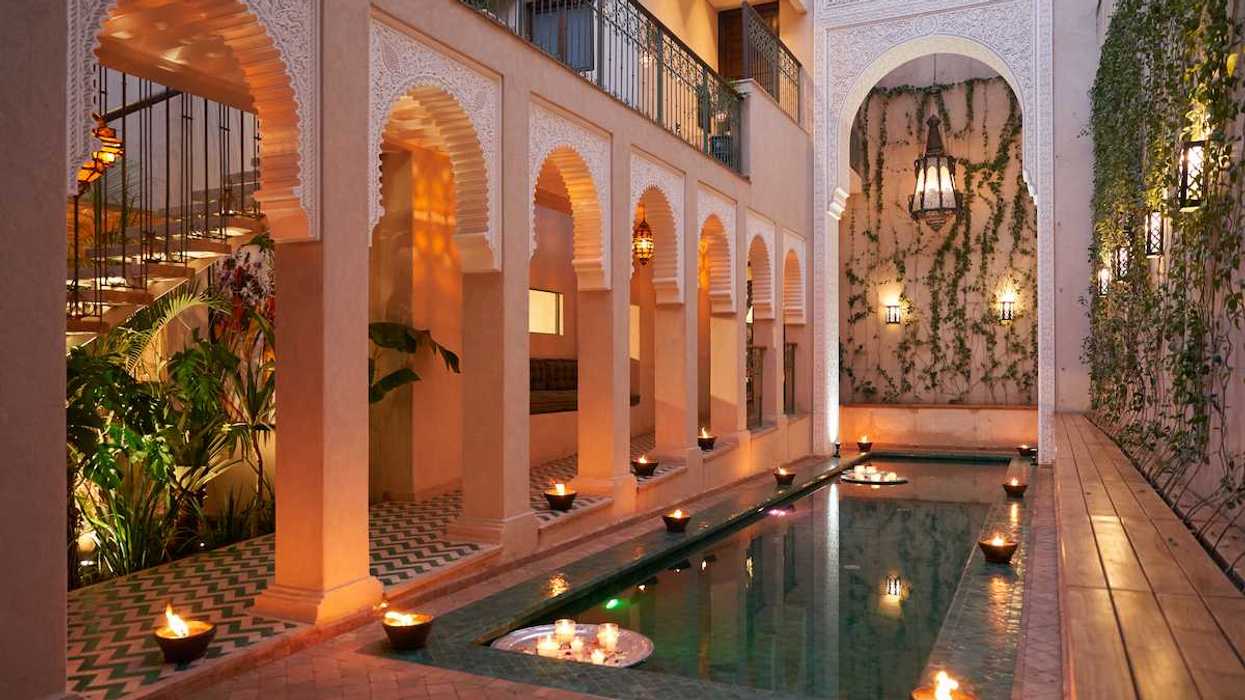
Seven ancient homes, one house of friends
IZZA
When you picture Marrakech, thoughts of breathtaking sunsets, stunning riads, aromas of mint tea and cumin come to mind.
Morocco's home to evocative landscapes from Sahara Deserts to snowy Atlas Mountains - and has a rich blend of cultural influences.
Recently, its popularity with Brits has soared and according to Travel and Tour World, the country just overtook South Africa and Egypt to become Africa’s top tourism hotspot - despite rising costs and “increased jet fuel prices”.
Right in the centre of Marrakech, otherwise dubbed the ‘Red City’, is the capital’s Medina, a historic old town with ancient Islamic architecture and grand walls that are vibrant in colour from iron-rich clay.
Endless winding streets lead to bustling souk markets with all kinds of merchants from leather shoe cobblers to el hindia ‘prickly pear’ fruit sellers. The city offers excitement and timeless charm.
Arriving at IZZA
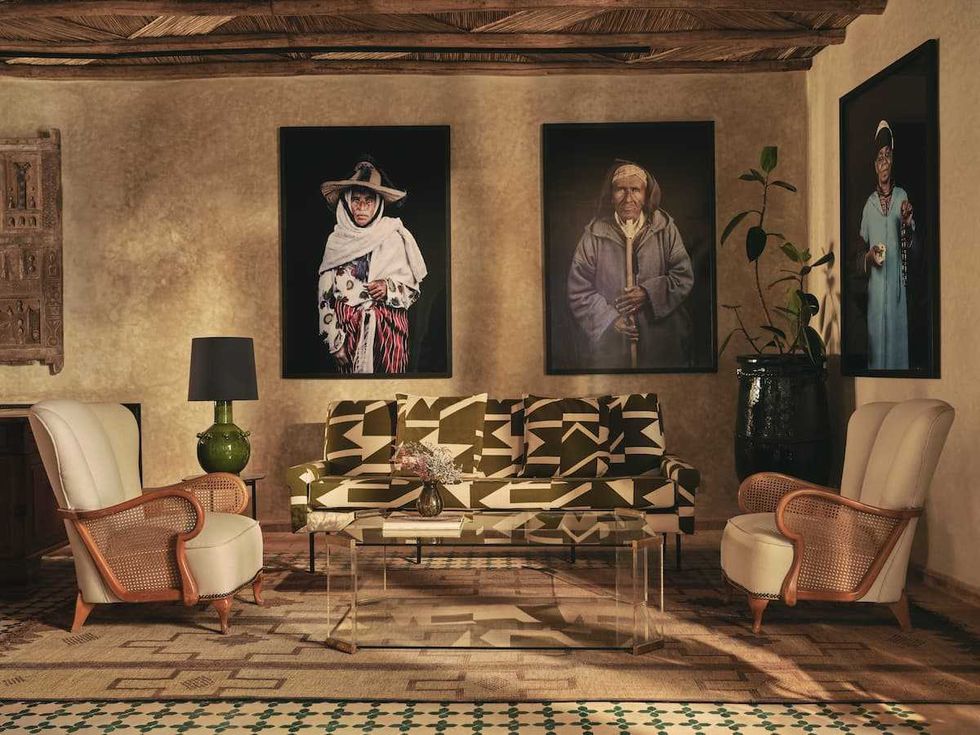 Entering IZZA's first artworks on display / IZZA
Conveniently, just a 10-minute walk from the market - and 15-minute drive from the airport - lies the design-led, boutique hotel, IZZA.
The retreat is tucked away from all the buzz but also right on the Medina’s doorstep offering guests a calm sanctuary among the lively atmosphere.
Notes of orange blossom in the air will guide you through the 14 something bedrooms, and its “house of friends” layout consists of seven interconnecting riads. Each room is individually named and inspired by 1960-70s ‘freedom-seekers’, such as Yves Saint Laurent, Jack Kerouac and Grace Jones.
Creativity and art are central to IZZA’s identity, with much of its design paying homage to the late socialite and designer Bill Willis. Renowned for his lavish parties and bold reinterpretation of traditional Moroccan design, he also helped shape the interiors of many affluent homes in Marrakech.
A 300-piece contemporary art collection fills IZZA’s walls and corridors, creating what feels like a ‘museum in the Medina’. The work adds an individual touch to every room whilst elevating shared, communal spaces.
Specially curated and frequently rotated, the collection spans a wide range of styles. Some pieces feature provocative, AI-generated reinterpretations of 18th-century portraiture, white others include black white prints of the Amazon or digital motion works depicting mythological African royalty.
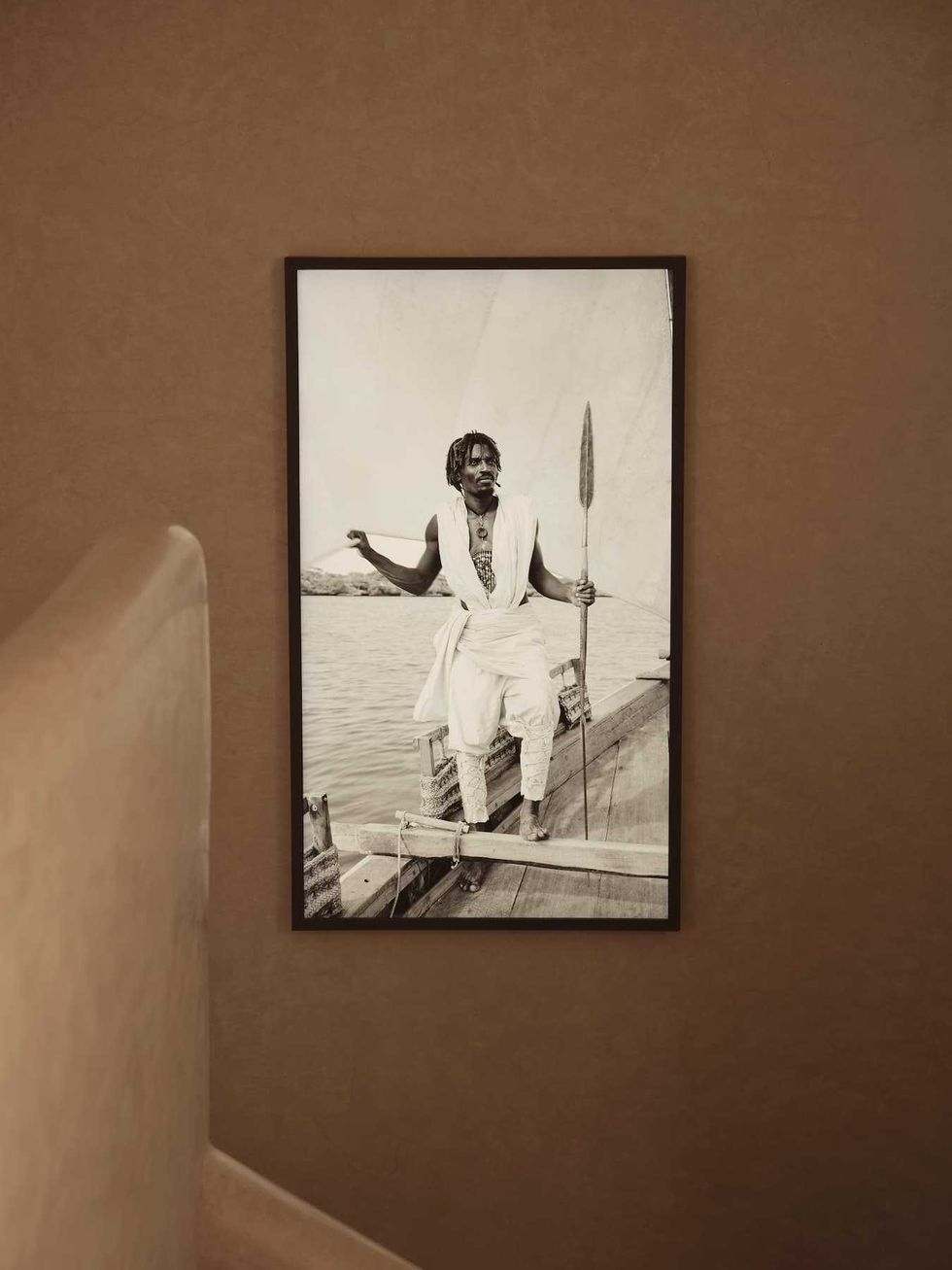 Yatreda art / IZZA
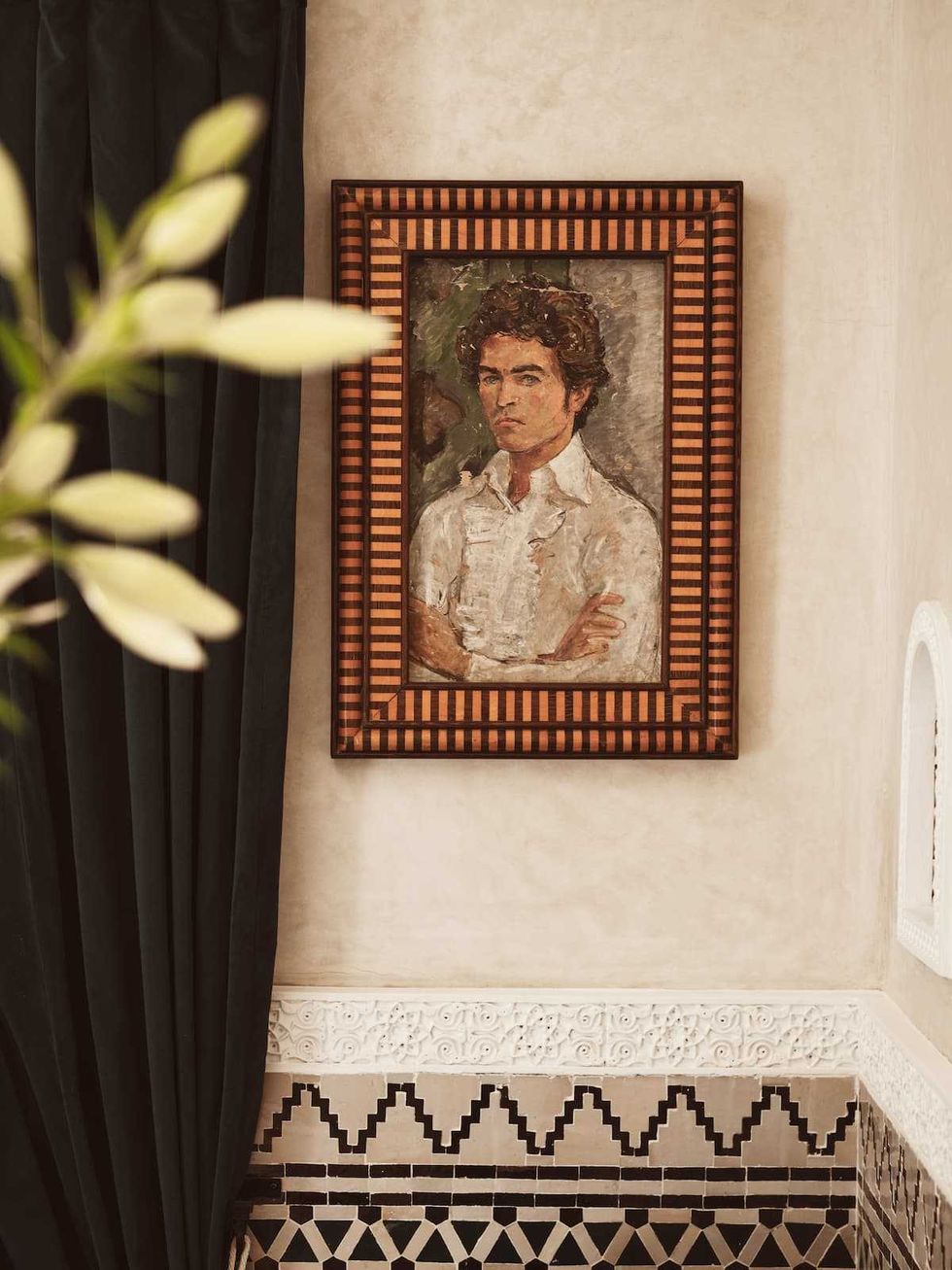 Bill Willis, American interior designer and architect / IZZA
The Room, Grace
At first, the maze-like layout of IZZA can feel slightly overwhelming, but once you become familiar with it, the way each riad is connected by courtyards and hidden passages reveals itself - bringing Marrakech’s artistic and cultural history to life.
The room I stayed in was named after the iconic Jamaican-born musician, actor and model, Grace Jones, who was said to inspire the room’s ‘daring spirit’.
Maneuvering around the Emperor-sized bed - which sent me into the deepest sleeps - I passed through an impressive Moucharabieh arch connecting the bedroom to the bathroom. Inside, an opulent, vintage copper roll-top bath sits alongside a marvellous walk-in wet-room with a rain-shower, complemented by locally sourced toiletries that reflect the hotel’s emphasis on comfort. For me at 5ft 1, the bath felt like a personal hot tub.
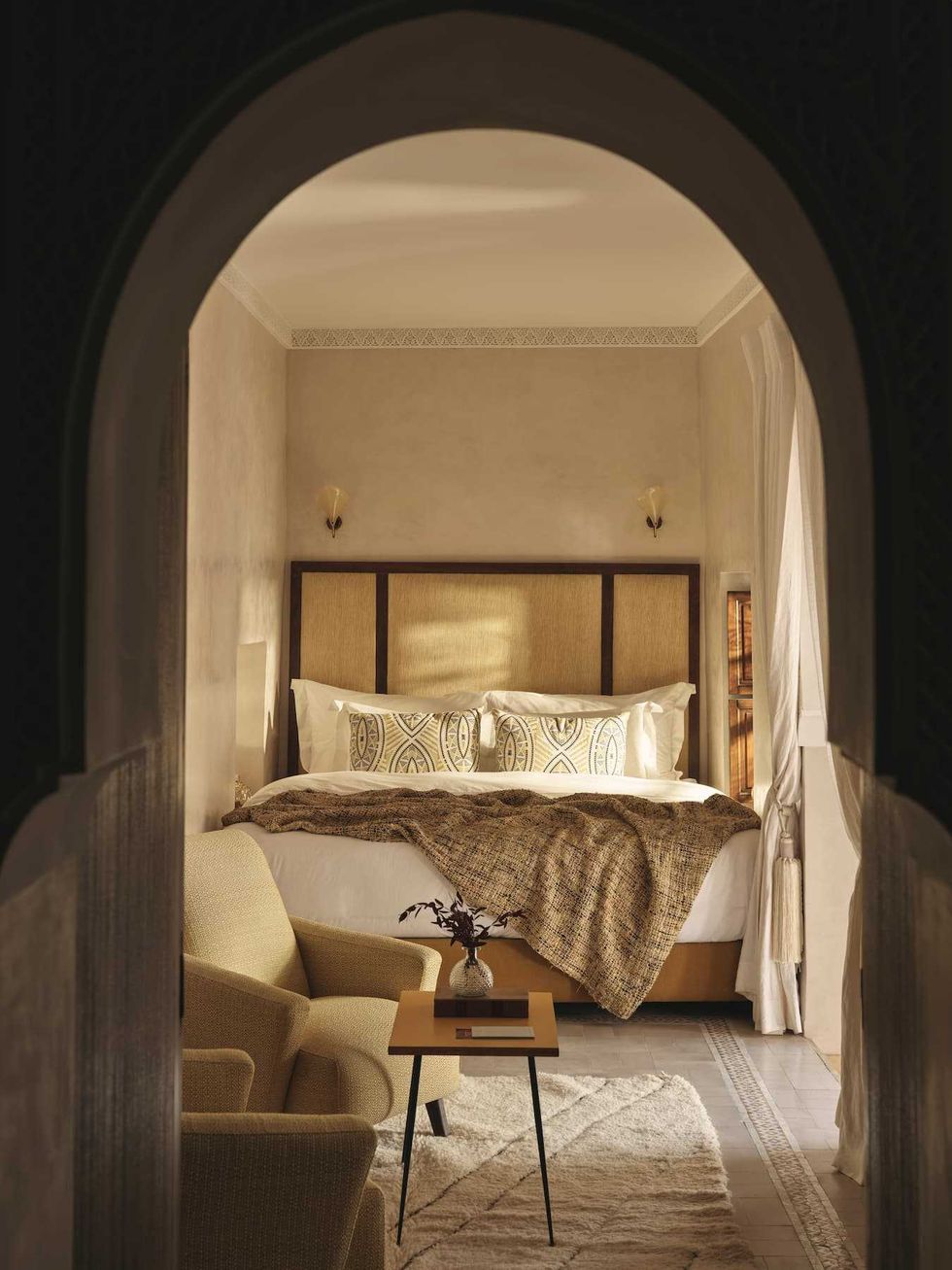 Named after the Jamaican-born musician, actor and model, Grace Jones / IZZA
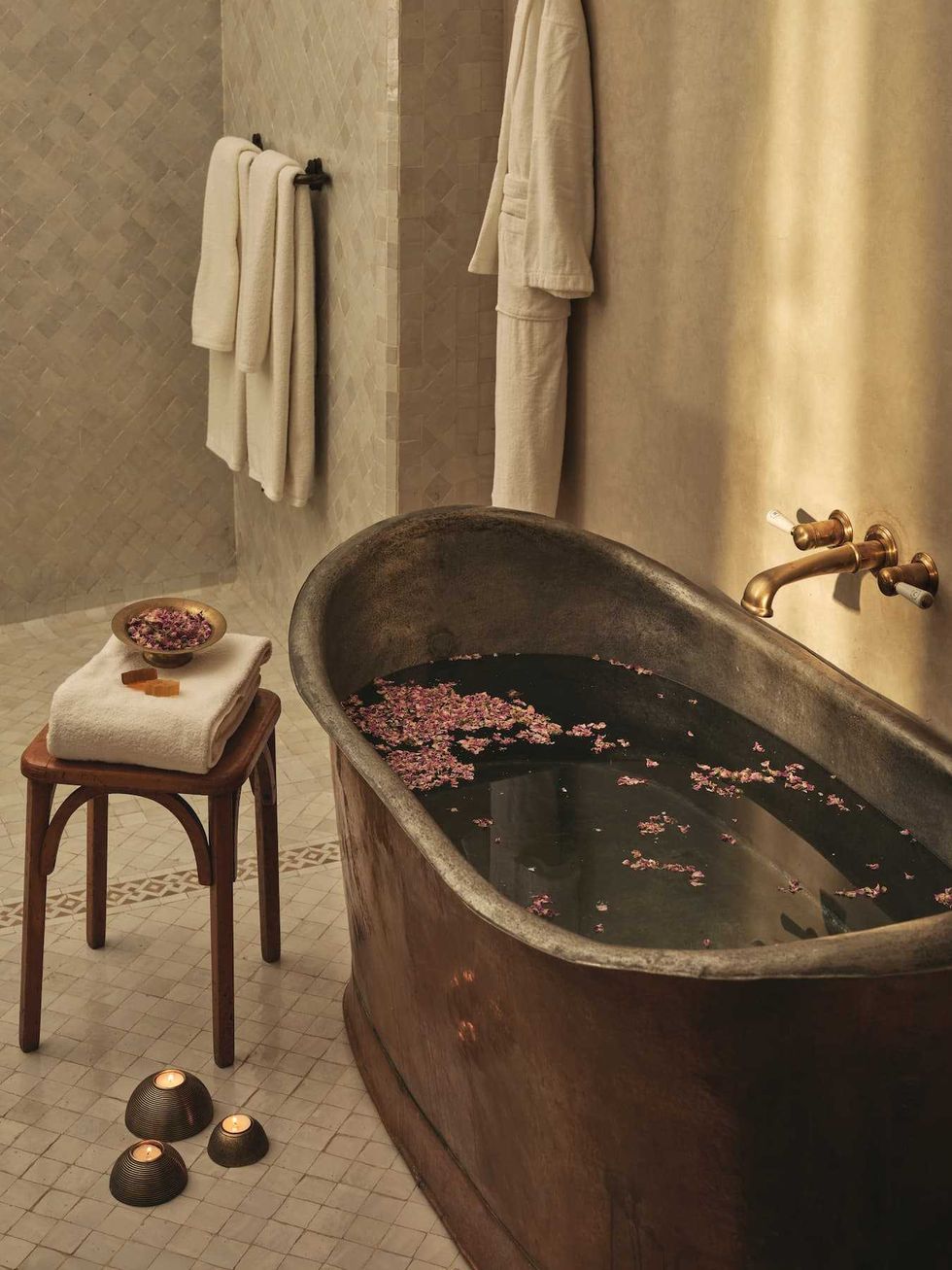 GRACE: copper roll-top bath / IZZA
Artwork was of course prominent alongside several books including ‘The Arabian Nights’, but my favourite addition was the traditional musical instrument hung on the wall. Each room had something but for Grace, it happened to be a krakeb or qraqeb, a percussive tool made from metal.
Its distinct, clangy sound can be heard in music across Marrakech and according to locals, it’s said to evoke the chains and shackles linked to the enslavement of West and Central African ancestors - a powerful symbol of cultural identity.
Solitude didn’t fall short either as footsteps away, I was treated to a private sejour space furnished with Parisian textile armchairs, a homey sofa and a large coffee table. Alongside an already fully stocked mini fridge, here I had a coffee machine, Moroccan teas and even an in-house pastry chef, who delivered heavenly sweets daily. It’s the perfect place to unwind after a long, hot day.
Facilities
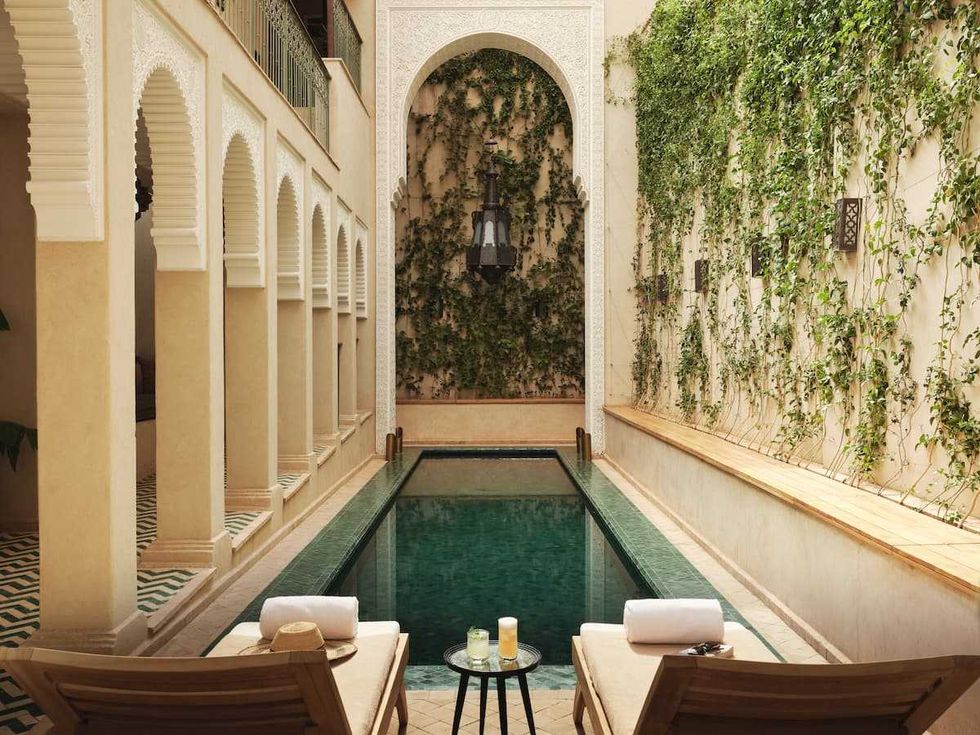 The largest pool situated near the entrance of IZZA
The view outside was just as peaceful, overlooking one of the two swimming pools that was dressed in low hanging shrubbery. At night it was so tranquil as water glistened from dim lighting shone on the aqua tiles.
Near IZZA’s entrance, a second courtyard holds the largest pool, slightly warmer due to extra exposure from the sun. To the right is the in-house spa and hammam, where I experienced a replenishing deep-tissue massage.
Around the corner sits the Bill Willis bar, a snug yet comfortable space lined with photographs showing his extravagant life, and surrounded by his unusual geometric-style wall tiles.
IZZA is bliss, so much so that ducking and weaving through the narrow staircases to reach the courtyards, rooftop and library - another enchanting space with an enormous fireplace - became something I began to look forward to.
The Food
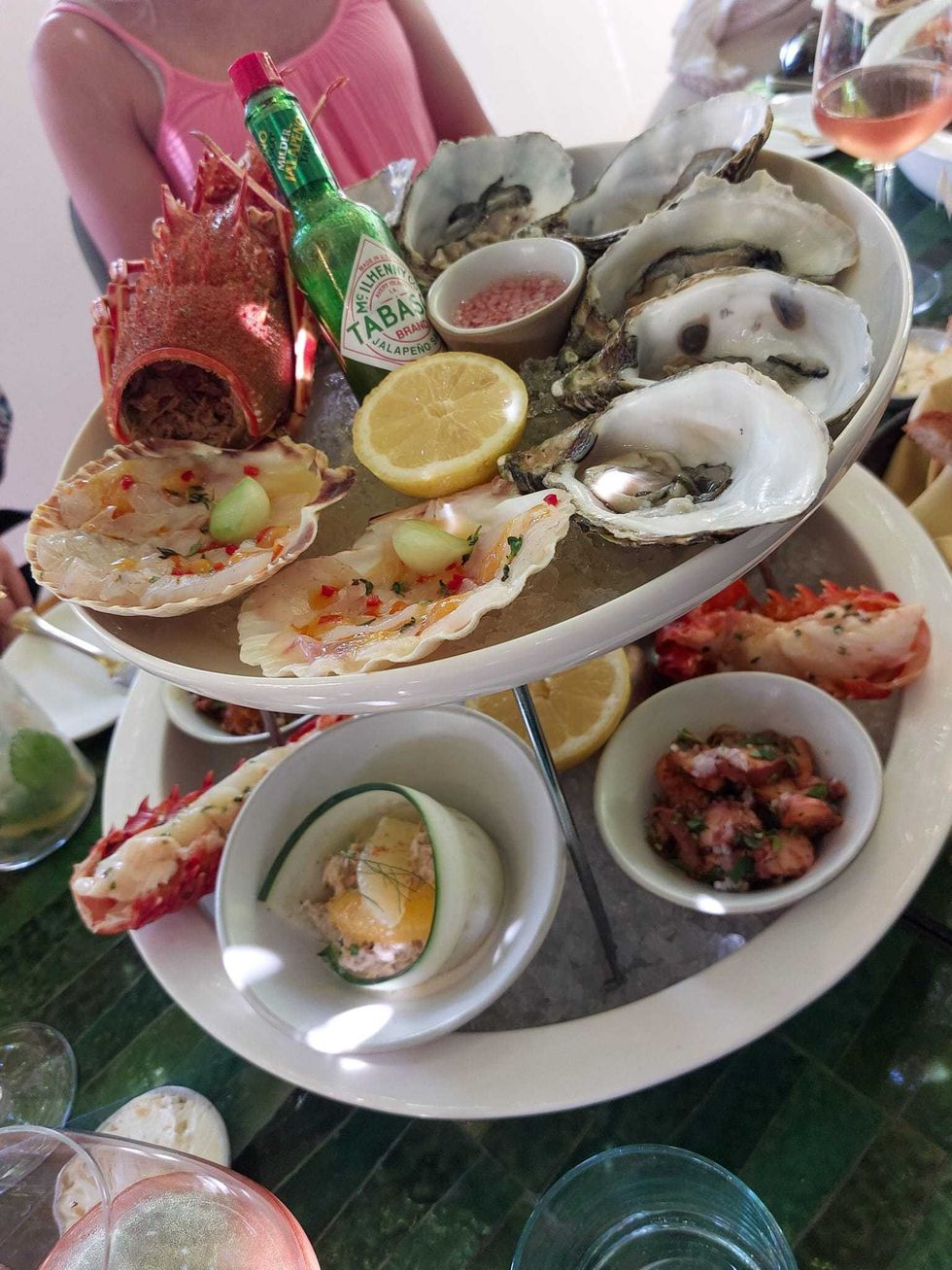 Seafood platter / Aaliyah Harris
Dining here is spectacular and the restaurant alone is worth a trip in itself.
All meals are served on the generously sized rooftop terrace, Noujoum - meaning ‘stars’ in Arabic - and the setting is nothing short of magical.
Breakfast offered a pretty comprehensive la carte menu, beginning with homemade Moroccan m’semen and beghrir for the table. These include staple flaky and spongy flatbreads served with almond amlou and sweet jam condiments. The homegrown mint used for traditional tea is undoubtedly a highlight.
I was thrilled to learn that the sun-dried tomatoes on my piping hot Khliaa and beldi egg were dried in IZZA’s own garden. Other ingredients are locally sourced, supporting artisans and growers across the region.
Every dish arrived sizzling and fragrant, with the Loubia - a white bean stew, with spicy sausage and a free range egg - particularly standing out for its deliciously rich, slow-cooked flavour.
But even simpler dishes like seasonal fruit platters were presented in beautifully intricate and artistic arrangements, with fruit that was perfectly soft and ripe.
You won’t go hungry at Noujoum, especially during lunch and dinner, where generous portions are matched by a wide variety of dishes. The chefs blend seasonal and traditional Moroccan staples such as hearty tagines with a European and Mediterranean influences.
Embracing the “house of friends” ethos, the menu focuses on small and sharing plates best experienced together - a fusion of culinary flavours aimed to linger on the palette.
Succulent spiny lobster with café de Paris butter, fresh oysters, creamy crab salad, velvety grilled octopus and aromatic saffron aioli on soft, pillowy bread… need I say more? The seafood platter was exceptional and, paired with a crisp, chilled rose was absolutely divine.
Of course, when in Marrakech, the chicken tagine is a must, cooked in warm spices and served with seasoned olives and lemon, it fell straight off the bone. But the real showstopper was the monkfish tagine paired with charred peppers and fennel, flavours oozed out of the meaty but incredibly tender fish that melted in your mouth.
Likewise, the stuffed and roasted seabass, along with the ricotta and almond ravioli in a black garlic sauce, was equally memorable.
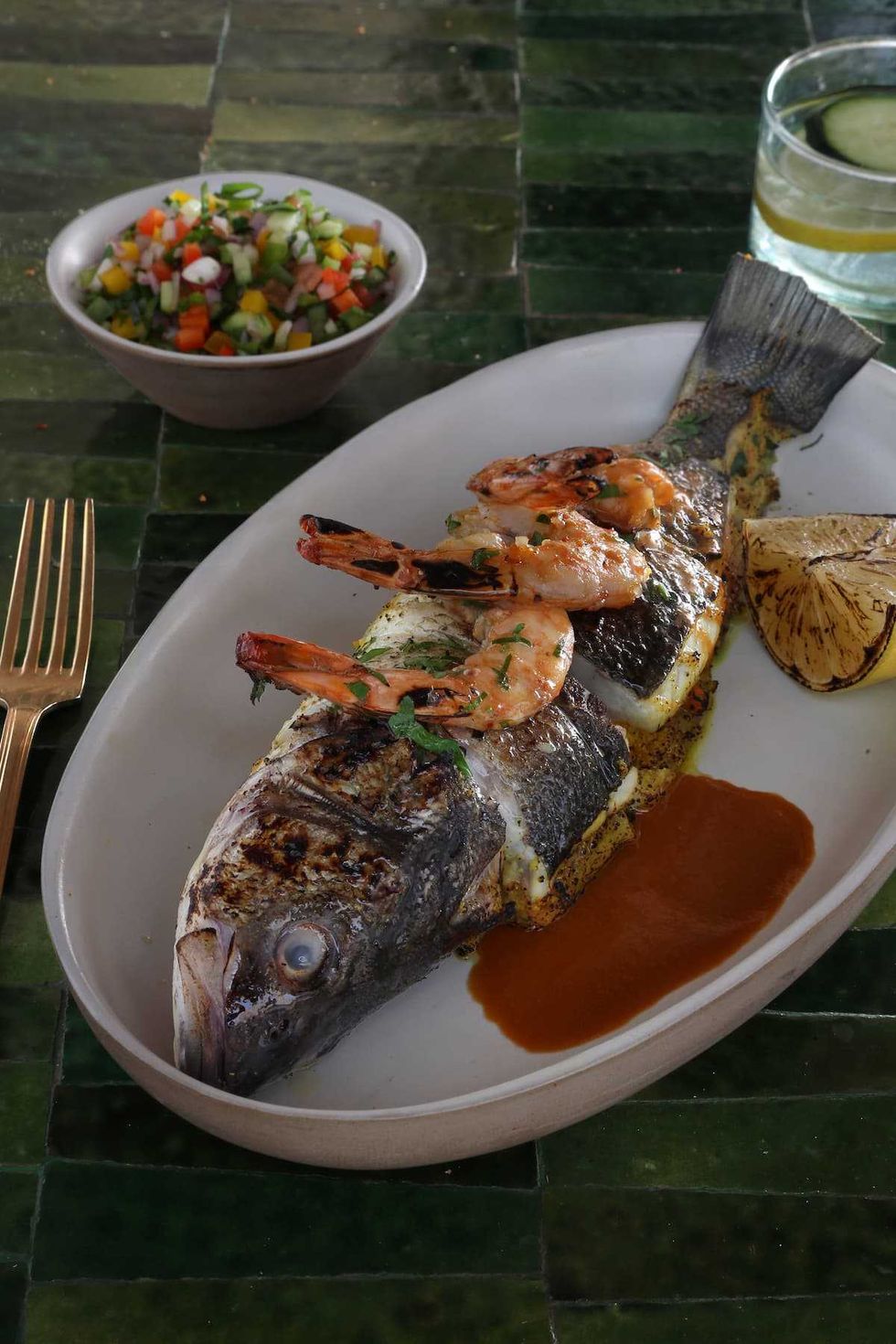 Stuffed seabass at Noujoum / IZZA
If you can manage dessert (without forgetting the pastries waiting in your room), then the artisan cheese board is highly recommended. For something sweeter, the Paris-Marrakech, Moroccan amlou ice cream, and choux pastry with milk chocolate sauce and argan oil are more than enough to leave you satisfyingly full and waddling from the dinner table to retreat for a good night's rest.
Sustainability is also clearly a priority at Noujoum, with the hotel priding itself on being free of single-use plastic, including the use of thoughtful bamboo straws in cocktails.
The Verdict
It’s easy to see why IZZA was awarded a MICHELIN Key just two years after opening. Part of its appeal, beyond the striking accommodation, is its genuine commitment to support local businesses and champion Moroccan talent.
Mustafa, a highly knowledgeable guide arranged by IZZA, did a superb job of guiding me and others through the intricate souks, revealing hidden gems like Fiber Trip, where traditional methods of wool weaving are used to create your own personalised scarf.
We also visited artisan workshops, where the loud sounds of brass being shaped and iron being chiseled fill the air. I saw rows of expert craftsmen building intricately detailed metal lamps with fine tools that cast ornate patterns across ceilings when lit.
Without Mustafa, we would almost certainly have got lost and missed these hidden treasures.
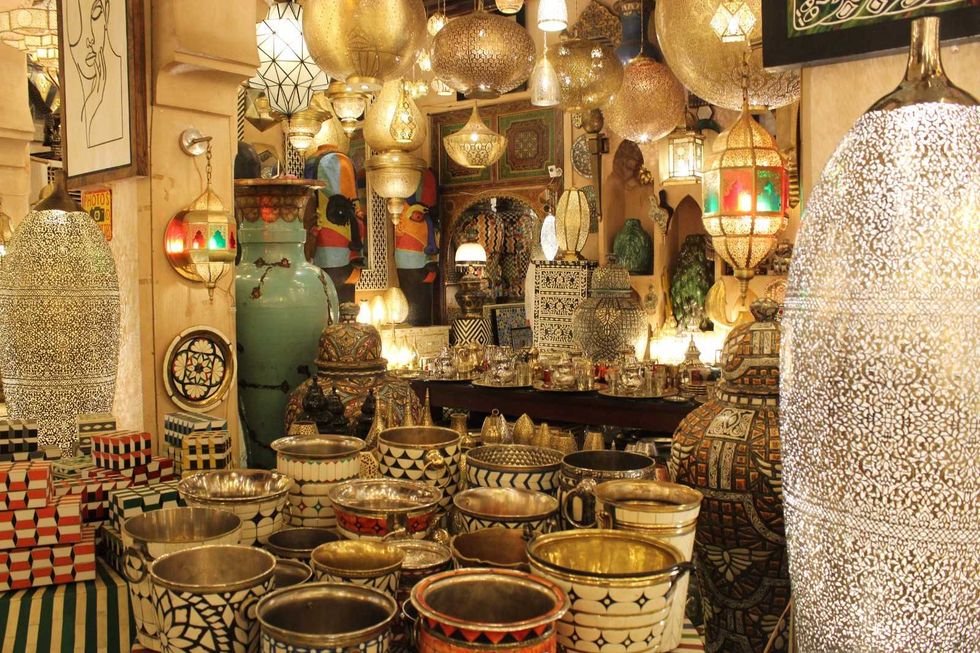 Miloud Art Gallery / Aaliyah Harris
Another day, I met Yassine Chraibi, a multidisciplinary artist at the MACAAL - a contemporary museum showcasing established and emerging African artists - who led an interactive sculpturing workshop. This followed an eye-opening tour of remarkable artworks and an exploration of how artists aim to “confront the revenants of colonial history to reclaim marginalised or destroyed narratives”.
A particularly emotive exhibition, ‘Statues Also Breathe’, featuring 108 terracotta portraits of the still missing Chibok schoolgirls who were kidnapped by Boko Haram in 2014, went on to inspire my own clay model.
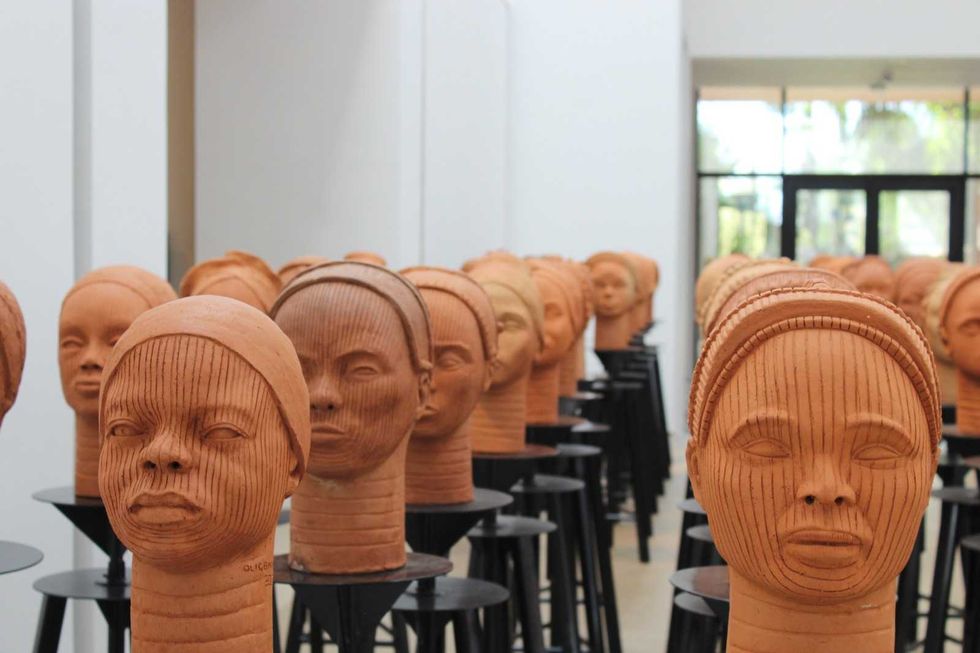 Statues Also Breathe, MACAAL / Aaliyah Harris
IZZA’s team links guests with local guides, helping to deepen the understanding of Moroccan people and culture, offering an authentic experience as a visitor.
What sets IZZA apart is its embrace of the country’s cosmopolitan influences, while also reflecting its nuances through art, shared connections, and cultural storytelling.
It doesn’t shy away from the energy of Marrakech but instead places itself at its very heart, inviting guests to explore every part of it at their own pace - and what better place to begin than a “house of friends”.
Room rates range from £190 to £725 per night, including the daily à la carte breakfast, an airport transfer on arrival and a welcome drink. For more information, read here.
Sign up to our free indy100 weekly newsletter
Have your say in our news democracy. Click the upvote icon at the top of the page to help
raise this article through the indy100 rankings.
Top 100