The Conversation (0)
What If Titanosaurs Never Went Extinct?
Underknown / VideoElephant
A rare dinosaur fossil, a tail bone from a long-necked, plant-eating titanosaur, has been identified after languishing for decades in a drawer. The specimen, whose species remains unknown, offers a glimpse into Antarctica's ancient past.
The bone was initially unearthed in 1985 during an expedition to James Ross Island by geologist Mike Thomson, working with the British Antarctic Survey. Thomson, who was mapping rock layers and collecting marine reptile fossils for dating purposes, recorded his find simply as a large reptile.
Decades later, paleontologist Mark Evans stumbled upon the bone within the British Antarctic Survey's collections and suspected its true origin. He and his research team meticulously analysed its shape, comparing it to more complete dinosaur remains, ultimately confirming it as a dinosaur fossil. Their findings were published on Monday in the journal Acta Palaeontologica Polonica.
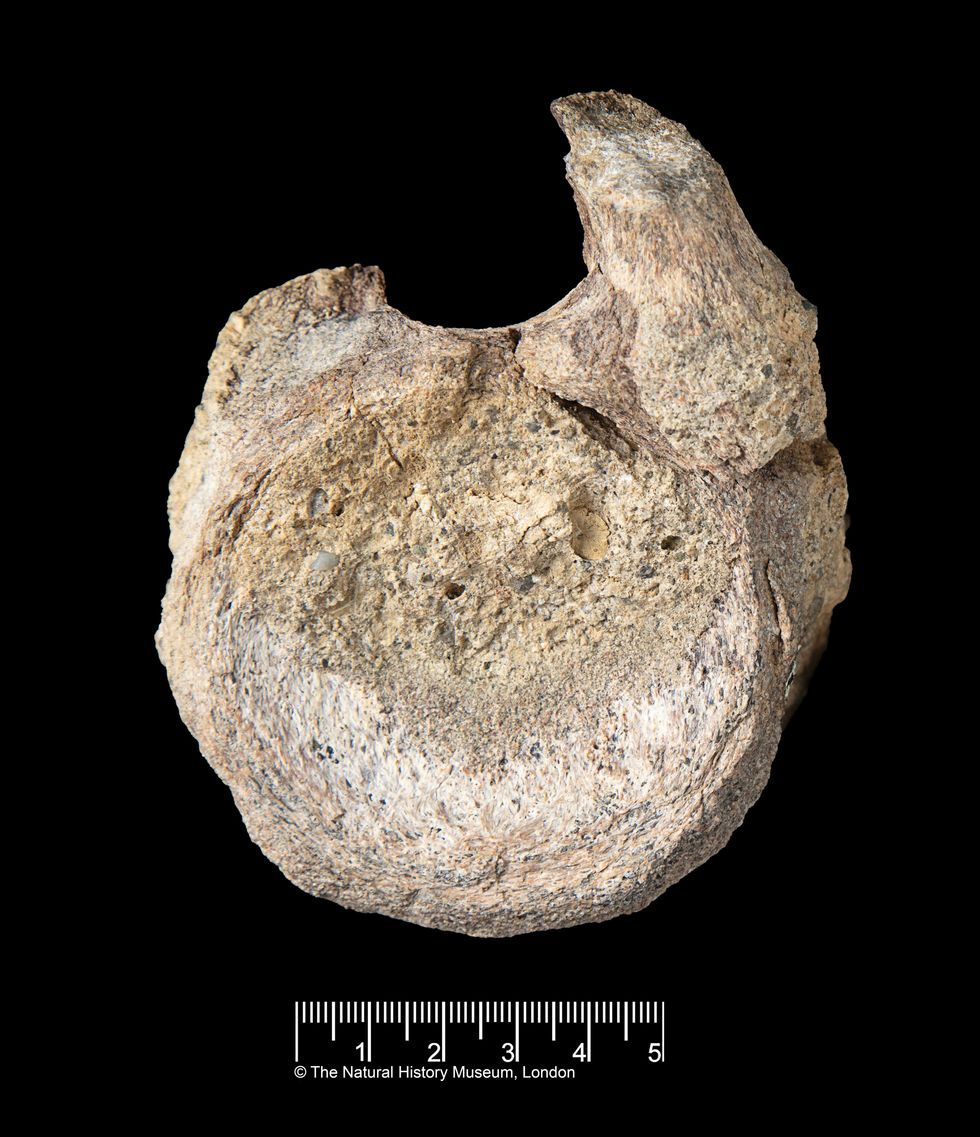 A fossil found in Antarctica that belongs to a group of dinosaurs called titanosaursNatural History Museum via AP
Dinosaur fossils are exceptionally rare in Antarctica due to the continent's harsh, ice-covered conditions. However, millions of years ago, when this particular dinosaur roamed, the region was home to lush forests – a "rather different and much more hospitable place than we think of today," explained study co-author Paul Barrett from the Natural History Museum in London.
Measuring approximately 7 metres (23 feet) long, the dinosaur was considered small for its group and may have been young at the time of its death. While the exact cause of its demise is unknown, scientists believe its body drifted away from the coast, sank to the seabed, and became fossilised within marine rock.
Technological advancements since the fossil's initial discovery have significantly enhanced researchers' ability to examine bones internally and extract detailed information about ancient creatures. Tragically, Thomson passed away in 2020, before his remarkable find was definitively identified as a dinosaur. "If he were still with us, he would be delighted to know what this was," Evans, a co-author of the study, remarked.
Top 100