The Conversation (0)
Science & Tech
Several large fossil fish teeth have been discovered team of researchers exploring the southwestern part of the Cook Islands, and it's believed that they belonged to megalodon sharks.
During the month-long deep sea survey of the South Pacific near the Cook Islands, the National Oceanic and Atmospheric Administration (NOAA) encountered polymetallic nodules each time they reached the seafloor, and it turns out these nodules were the teeth belonging to the famous extinct prehistoric apex predators.
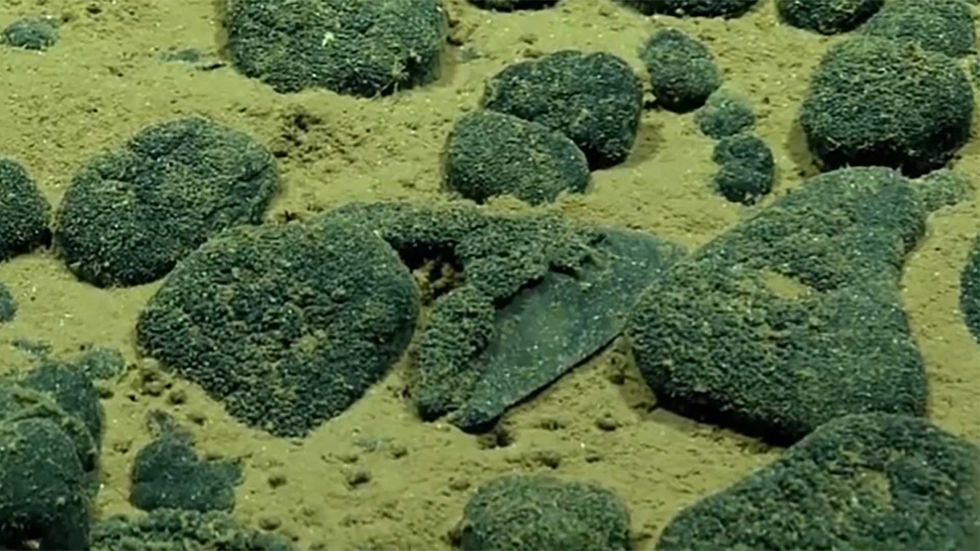 This shark tooth was seen resting on the seafloor during Dive 09 of the 2026 Cook Islands ROV Exploration. At the time, the mission team was interacting live with Cook Islands Prime Minister Mark Brown, who guided remotely operated vehicles in the collection of the tooth, as per NOAA Image courtesy of NOAA Ocean Exploration, 2026 Cook Islands ROV Exploration.
Size-wise, the teeth measure over seven centimeters (three inches) in length, leading them to assume that they are megalodon gnashers.
For those unfamiliar, the Megalodon (or "megs" for short) are thought to be the biggest shark and fish that has ever lived but have been extinct for over 3 million years. But these days the megs have been referenced in pop culture with horror movies such as Shark Attack 3: Megalodon (2002) and The Meg (2018).
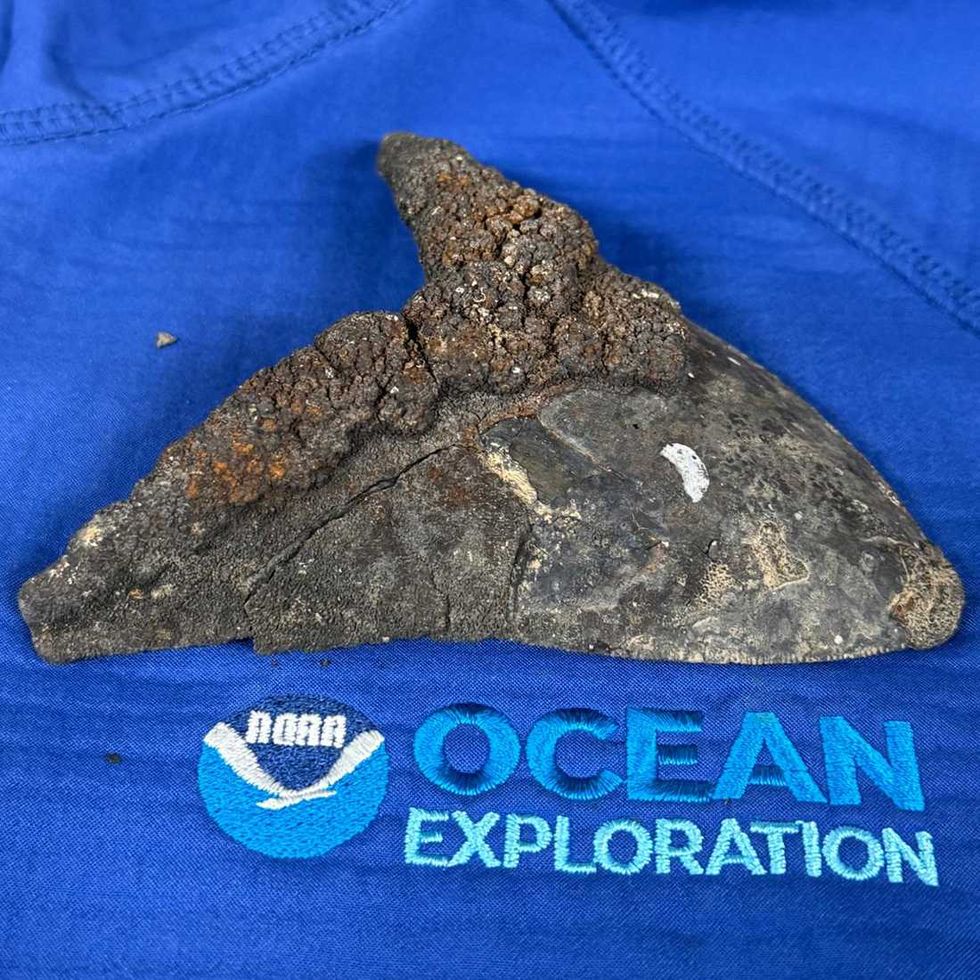 Seven shark teeth were collected on several dives during the 2026 Cook Islands ROV Exploration cruise. The teeth will be analyzed to determine their chemical signatures, which can help scientists better understand changes in the ocean environment over time, says NOAA. Image courtesy of NOAA Ocean Exploration, 2026 Cook Islands ROV Exploration.
As for their teeth, the fossils can help provide further understanding as to how the ocean's condition has changed as other parts, sharks die, their teeth are one of the only parts that remain.
"... fossilized fish teeth absorb trace and rare earth elements (REE) from the water column and seafloor upon sinking, analyzing the concentration of REEs such as neodymium trapped in the teeth can serve as a tool for tracking past ocean circulation patterns," according to NOAA.
"Fish teeth are also often the nucleus around which polymetallic nodules form, with minerals such as manganese and iron slowly accumulating around the tooth, layer by layer, over millions of years."
Why not read...
Sign up to our free indy100 weekly newsletter
Have your say in our news democracy. Click the upvote icon at the top of the page to help raise this article through the indy100 rankings.