
The Conversation (0)
Science & Tech
A solar eclipse - where moon passes between Earth and the Sun, causing the sun's light to be partially or fully blocked - is set to occur in the UK next month as it's set to be most dramatic eclipse visible from the UK in 27 years.
On August 12, 95 per cent of the sun will disappear behind the moon and will be the most visible one the country has seen since August 1999.
Among the best places to watch the rare celestial event include Cornwall and the Isles of Scilly at 95 per cent of the Sun will be covered, while it will be 90 per cent obscured in Bristol, Somerset, Gloucestershire and Wiltshire.
According to the National Space Centre, the arc of totality – the path the eclipse shadow takes - misses us here in the UK, we will still get to see over 90% of the sun covered by the moon," and so UK viewers will see a partial - not a total eclipse.
Meanwhile, a total solar eclipse will be visible in Greenland, Iceland, Spain, Russia, and a small area of Portugal, as per NASA.
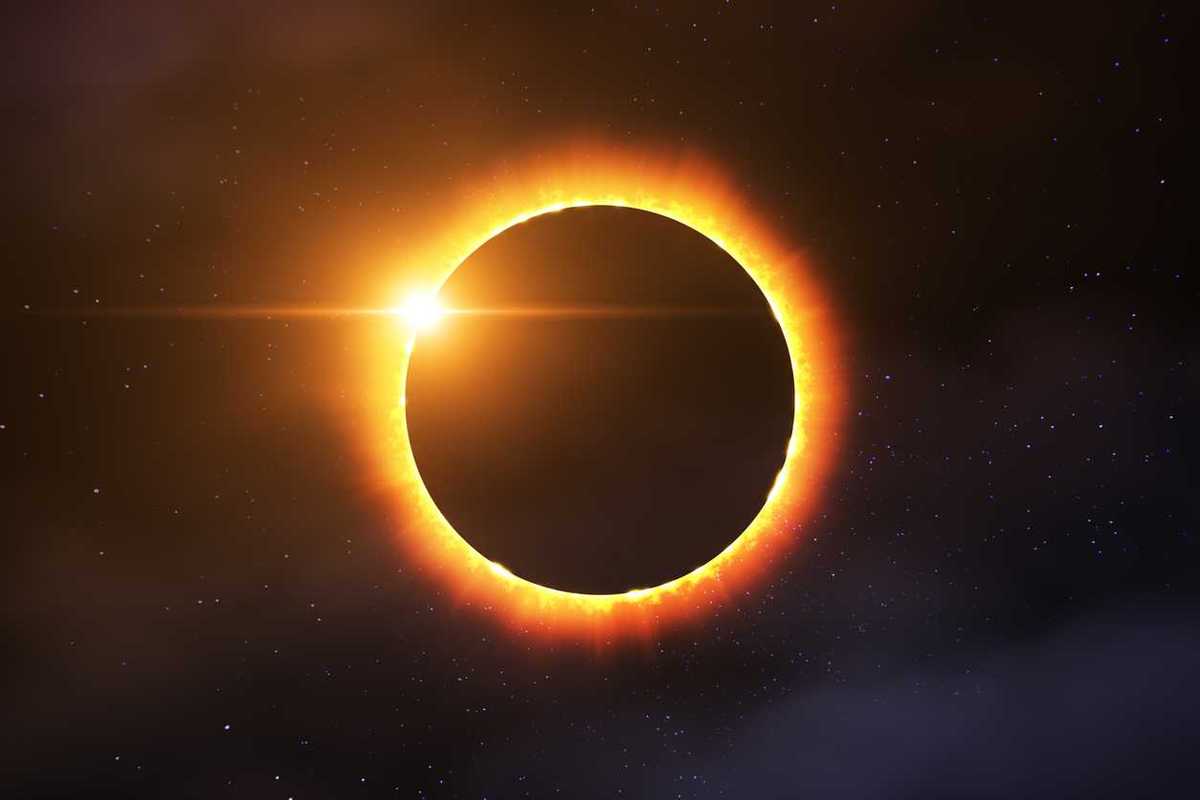 iStockphoto by Getty Images
In the UK, the maximum eclipse is set to occur between about 7:05pm and 7:13pm BST.
The solar eclipse will also be visible over Arctic Ocean, and other countries such as Greenland, Iceland, Spain and part of northern Portugal, along with northernmost regions of the USA and Canada.
To watch the solar eclipse, you'll need to have a clear view of the western horizon.
Or you can also tune into the solar eclipse livestream from the Royal Observatory Greenwich on YouTube and Facebook from 6.10pm BST where astronomer Dr Greg Brown will be discussing the science behind the celestial event.
It's important to never look directly at sun during this event as it can be extremely damaging for our eyes.
Photosensitive cells that coat the back wall of our eyes are responsible for turning light into signals that our eyes can interpret as images.
But, if these cells are exposed to too much light, the chemical reactions they produce can deplete. Without pain receptors in the retina, the damage cannot be felt but doctors warn it can be permanent and affect vision.
Special solar eclipse glasses from a reputable vendor can prevent damage, however sunglasses are not able to provide adequate protection.
The safest way to view it at home is through a colander, according to experts.
More than 90 per cent of the Sun will be obscured by the Moon between 6.17pm and 8.06pm on August 12, the most it has been blocked above UK skies since the total eclipse in 1999.
But the Royal Greenwich Observatory has warned the public that sunglasses are not a safe enough method to view the cosmic phenomenon.
Imo Bell, a planetarium astronomer at the observatory, told the Press Association: “It’s not a total eclipse, but over 90% is really exciting. We’re not going to get one this good for a really long time.“
So it’s important not to miss it, and to be prepared. You can’t just go out and expect to have a look because it’s really dangerous for your eyes.
“So you can use solar eclipse glasses, which are very, very different from sunglasses – they block out so much light that you can’t see anything through them except the Sun, because that’s how much light they need to block for the damaging light of the Sun to be safe to view.
“Ideally a solar telescope is an amazing way to witness it, and if you don’t have one of them then you can look into whether your local astronomy society is doing any events.
“And if all else fails, you can project the image of the eclipse using a household item like a colander which has lots of holes in – point the colander towards the Sun with your back facing it, and in the shadow of the colander you’ll be able to see the eclipse in the holes, which is really cool.”
Additional reporting from PA.
Why not read...
Sign up to our free indy100 weekly newsletter
Have your say in our news democracy. Click the upvote icon at the top of the page to help raise this article through the indy100 rankings.