The Conversation (0)
Trump
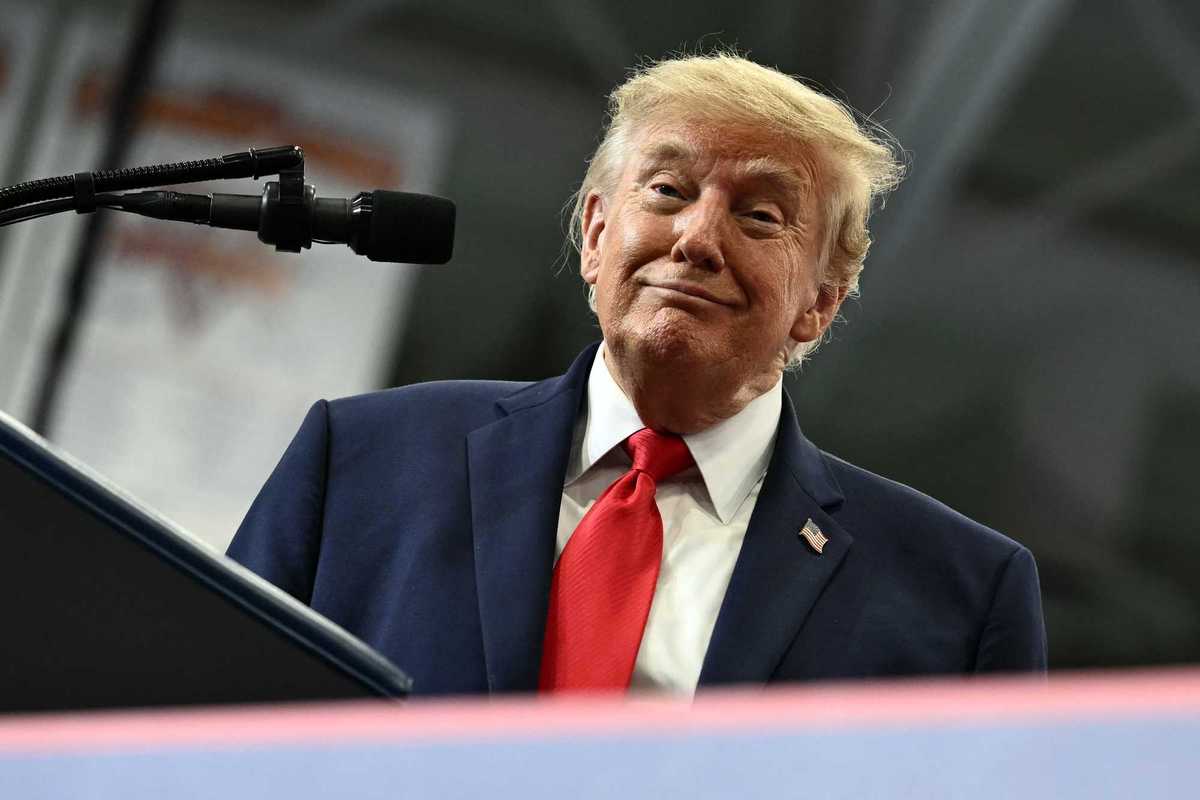
While flying back to Washington from his Mar-a-Lago estate on a recent Sunday, Donald Trump chose to address a matter far removed from pressing national concerns such as the Iran war or a partial government shutdown. Instead, his focus was firmly on a monumental project of a different kind: showcasing artist renderings of a $400m White House ballroom he is constructing, complete with hand-carved, "top-of-the-line" Corinthian columns.
"I’m so busy that I don’t have time to do this. I’m fighting wars and other things," Trump declared, before extensively detailing plans for what he described as "the greatest ballroom anywhere in the world."
This apparent division of attention has become a significant point of attack for Democrats and a source of concern for some Republicans, who worry he is not dedicating enough time to issues voters care most about ahead of upcoming elections.
The stark contrast was evident again when, as Trump flew to Las Vegas to discuss tax cuts for Americans earning tips, his administration was simultaneously advancing another of his ambitious projects: plans for a 250-foot Triumphal Arch near the Lincoln Memorial, envisioned with a Lady Liberty-like statue and a pair of golden eagles.
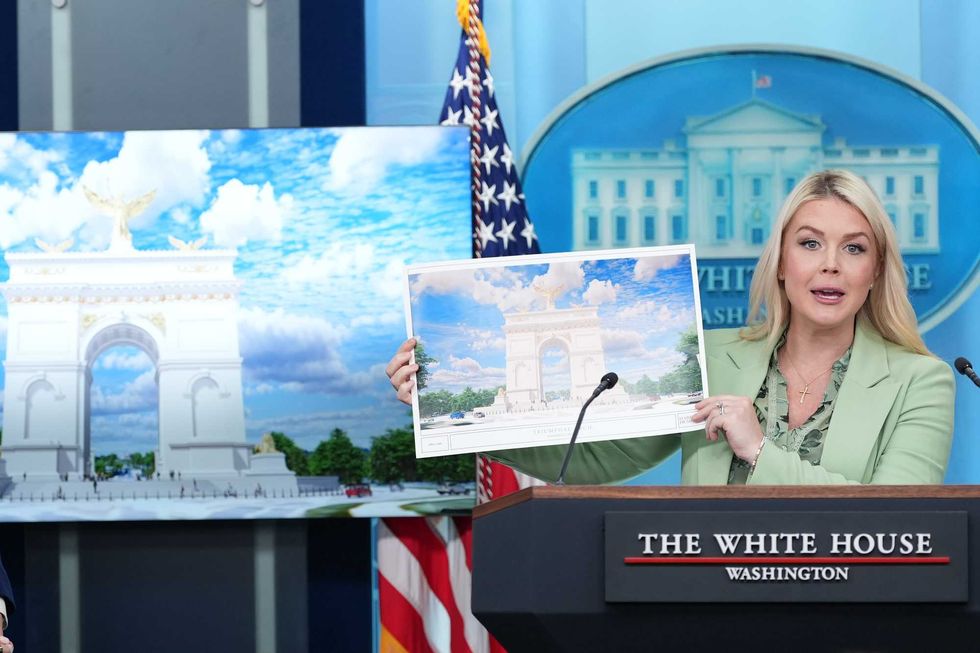 White House press secretary Karoline Leavitt holds up an artist rendering of the new triumphal archAP Photo/Alex Brandon
Trump’s ability to connect with the concerns of working people has often seemed incongruous with his background as a billionaire real estate developer. Yet, his populist policies and emphasis on the economy during his 2024 campaign were instrumental in his return to the White House. Republican strategist Rick Tyler noted that, during his initial presidential campaign in 2016, his wealth was an asset. "While other people, like Mitt Romney, played down how rich he was, Trump was giving free helicopter rides at the Iowa State Fair," Tyler said. "People loved it."
However, Trump’s preoccupation with the gilded trappings of the presidency, particularly as more Americans grapple with rising bills, has drawn accusations of him being a modern-day Marie Antoinette. "‘Fighting wars’ and surging gas prices, yet Trump has time to brag about his billionaire-backed ballroom," Sen. Andy Kim, a New Jersey Democrat, posted on X in response to Trump’s Air Force One presentation.
Democratic California Governor Gavin Newsom, a potential 2028 presidential hopeful, has been even more direct, comparing Trump to the last queen before the French Revolution, who has become synonymous with extravagant opulence. Newsom even shared an AI-generated image of Trump's face on her body on social media, writing in October 2025, at the start of a 43-day government shutdown: "TRUMP ‘MARIE ANTOINETTE’ SAYS, ‘NO HEALTH CARE FOR YOU PEASANTS, BUT A BALLROOM FOR THE QUEEN!’"
When questioned about opponents invoking Marie Antoinette, White House spokesman Davis Ingle asserted that Trump "is going to go down in history as the most successful and consequential president in our lifetime." Ingle added in a statement: "His successes on behalf of the American people will be imprinted upon the fabric of America and will be felt by every other White House that comes after him."
 AP
AP
Trump faced similar critiques during his first term, but lately, he has appeared unabashed by accusations of being disconnected from Americans' worries about high costs. This perception could present Republicans with an uphill battle to retain control of Congress. While Republicans have been reluctant to openly criticise Trump, there has been notably little opposition to a federal judge’s ruling that work on the ballroom project must cease until it receives congressional approval. Neither the Republican-controlled House nor Senate has prioritised legislation to advance the ballroom project. "I’m not much into architecture," Republican Sen. John Kennedy of Louisiana remarked last autumn.
An ABC News/Washington Post/Ipsos poll from February indicated that about two-thirds of Americans believe Trump is "out of touch" with the concerns of most people in the United States today, a sentiment shared by the same percentage regarding the Democratic Party. Elaine Kamarck, author of "Why Presidents Fail And How They Can Succeed Again," argues that presidents often become too focused on their own political narratives rather than public concerns. Yet, she notes that when it comes to Trump, "All of this stuff is frankly unique to him." She cited the ballroom and other White House renovations, alongside suggestions of adding his signature to currency and renaming the Kennedy Center after himself. "It's a reflection, I think, of his own background as a businessman and somebody who made his fortune selling his name," said Kamarck, who previously worked in Bill Clinton’s White House.
While Trump focuses on the ballroom and other Washington projects, some public works in other parts of the country have languished. Joe Meyer, the former mayor of Covington, Kentucky, spent years advocating for crucial improvements to the Brent Spence Bridge, connecting his town with Cincinnati – a project listed as a top federal priority dating back to Trump's first administration. Federal funds for these improvements were approved under President Joe Biden but were held up by a Trump-ordered review. Work is now finally set to begin later this year, though Meyer warns that delays will likely limit design options and slow the project. "The ballroom is Washington inside-baseball," Meyer said. "The bridge is just a wreck. It’s frustration that we’ve been dealing with forever."
Other instances have further highlighted a perceived disconnect. Trump once staged ordering McDonald's to the Oval Office – which he has adorned with gold flourishes – and tipped the delivery grandmother $100. When she described large medical bills from her husband’s cancer treatments, Trump suggested she bring him to an upcoming UFC fight on the White House lawn. When hundreds of farmers were invited to the White House for an agricultural policy speech, they stood on the South Lawn beside a tractor painted gold. Despite a drizzle, Trump remained dry, addressing them from a covered second-floor balcony. "You don’t mind rain," he told the farmers below. He then flew to Miami for a conference of Saudi investors, joking that they were too wealthy to be impressed by US families struggling to save $5,000. "I know they’re looking like, ‘What the hell is $5,000?’" Trump quipped. "Their shoes cost them more than $5,000."
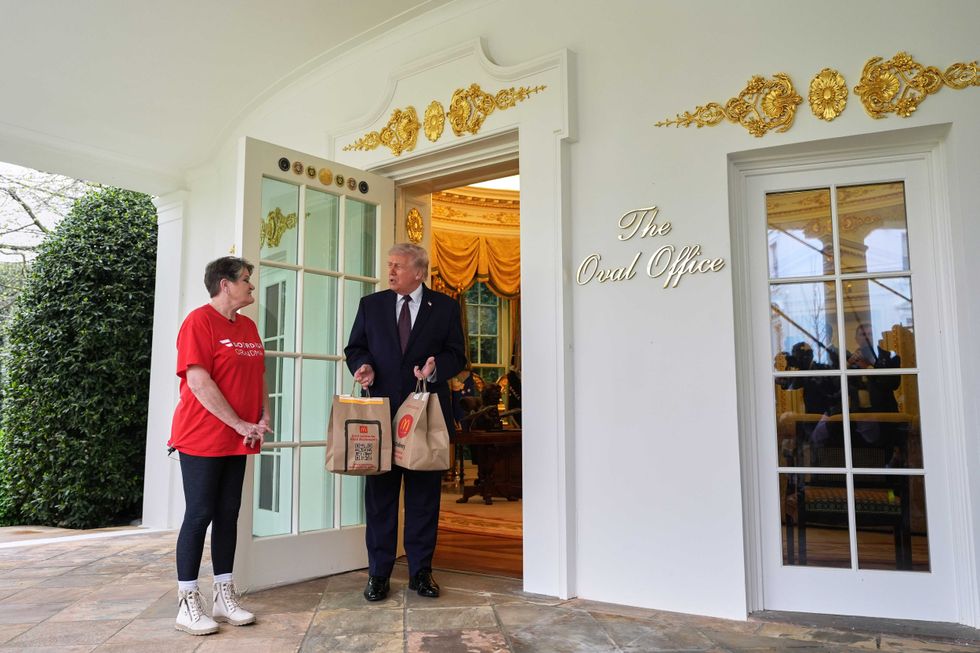 President Donald Trump speaks to Sharon Simmons, a Dasher from Arkansas, who delivered him two bags of McDonald's food outside the Oval Office AP
When asked in February for his message to young people aspiring to buy a home, Trump replied: "Save a little longer. Wait a little longer." Members of his Cabinet have also contributed to the perception that Trump's promised "Golden Age" may not extend to everyone. Health Secretary Robert Kennedy Jr. advised Americans to buy liver instead of beef. "If you go and buy a steak, it’s still pretty expensive. But if you buy the cheaper cuts, it’s great meat. And it is very, very affordable. Or liver, or, you know, all these alternatives," he told podcast host Joe Rogan. Agriculture Secretary Brooke Rollins suggested people could still afford meals consisting of "a piece of chicken, a piece of broccoli, corn tortilla and one other thing."
Texas-based Republican consultant Brendan Steinhauser believes Trump "can kind of get away with" building a ballroom because voters have come to expect such behaviour from him as a brash dealmaker and businessman. However, Steinhauser expressed concern that dramatic increases in petrol prices and a potentially weakening economy could resonate more deeply with voters. Ahead of the midterms, Steinhauser suggested, Democrats could score points "trying to make it more about Trump and his oligarch friends."