The Conversation (0)
Related: ‘Terrible Congressman’: Trump Targets Massie While Throwing Support Behind Ed Gallrein In …
Times of India - English / VideoElephant
A growing number of Republican lawmakers are demonstrating a willingness to break ranks with Donald Trump, forming a small but steadily expanding cohort that could complicate his legislative agenda. This emerging independence comes at a critical juncture, with the party holding a tenuous majority in Congress and facing key votes on issues ranging from the Iran war to immigration funding.
Sen. Bill Cassidy of Louisiana has become the latest to join this group. Days after losing his primary election to a Trump-backed challenger, Cassidy reversed his stance on legislation concerning the war in Iran, voting alongside Democrats to curb US military action. He articulated his reasoning the day before the vote, stating: "The way our Constitution is set up, Congress should hold the executive branch accountable."
Sen. John Cornyn of Texas could be next to show such defiance, particularly after Trump endorsed Ken Paxton, Cornyn's rival for the Republican nomination in an upcoming runoff.
Rep. Thomas Massie of Kentucky is arguably a founding member of this independent faction, having consistently frustrated Trump since his first term. His status was solidified after he too lost his primary on Tuesday to a Trump-backed challenger. Massie has previously angered Trump by voting against his signature tax and spending bill and by advocating for the release of the Jeffrey Epstein files. He hinted at further actions before his departure from office. "I got seven months left in Congress," Massie said with a grin during his concession speech, as the crowd erupted.
 Rep. Thomas Massie, R-KY, sits at a table alone in the studio ahead of a Kentucky Educational Television (KET) debate, Monday, May 4, 2026, in Lexington, Ky AP Photo/Jon Cherry
Other Republicans similarly situated are beginning to shrug off Trump’s influence. These include Sen. Thom Tillis, who has been a vocal critic of figures like Kristi Noem and Pete Hegseth.
Sen. Lisa Murkowski of Alaska recently joined Democrats in an effort to limit Trump’s war powers in Iran. Sens. Susan Collins of Maine and Mitch McConnell of Kentucky have previously voted against some of Trump’s Cabinet selections. In the House, Rep. Don Bacon of Nebraska has pushed to reclaim congressional authority over tariffs.
Massie underscored the importance of legislative independence in his concession speech, remarking: "If the legislative branch always votes with the president, we do have a king."
This trend does not signify a revival of the "Never Trump" movement, which some Republicans unsuccessfully hoped would curb the president's excesses during his first term or prevent his return to office. Many within the party, even occasional detractors, have either supported or been unable to block Trump as he launched the war in Iran, oversaw an aggressive immigration enforcement operation, and dismantled the federal workforce.
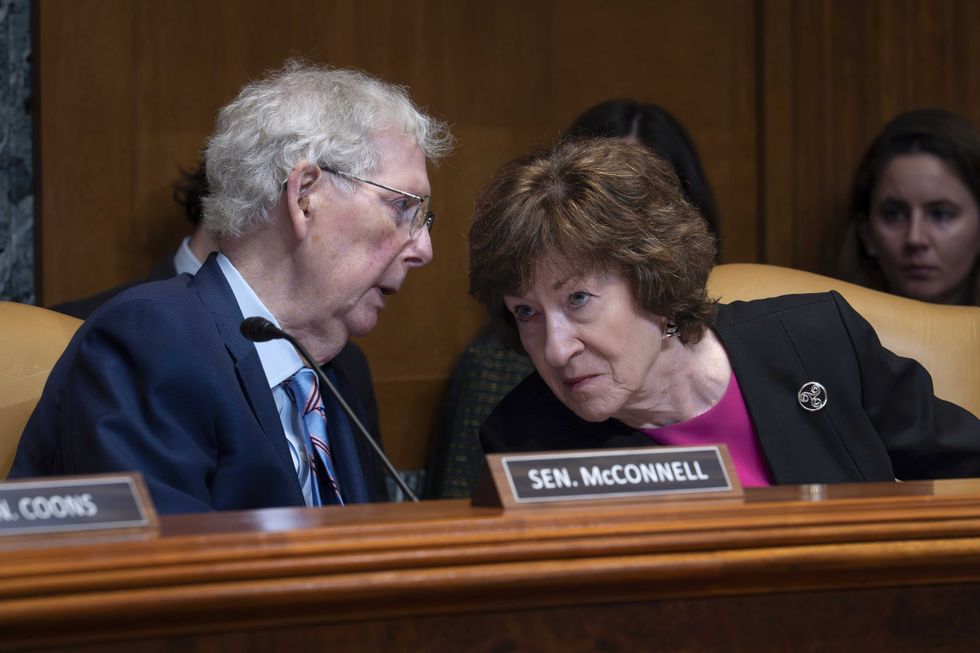 Sen. Mitch McConnell, R-Ky., chair of the Senate Defense Appropriations Subcommittee, left, confers with Sen. Susan Collins, R-Maine, chair of the Senate Appropriations Committee, as they hear President Donald Trump's funding requests for the Army, at the Capitol in Washington, Tuesday, May 19, 2026AP Photo/J. Scott Applewhite
Today’s unencumbered Republicans do not fit a single ideological mould. However, they are united by a sense of emboldening, attainable in Trump’s Washington through a few distinct paths. Many, like Tillis, McConnell, and Bacon, have chosen to retire, allowing them to cast votes without fear of facing Republican primary voters again. Others, such as Collins and Murkowski, enjoy greater latitude due to representing states that often reward political independence. Some, like Massie, gambled on the idea that voters could support both Trump and a candidate who occasionally opposed him.
This situation presents a paradox for Trump. His demand for absolute loyalty and his efforts to oust Republican dissenters are inadvertently creating a growing cohort who, for various reasons, now owe him nothing.
Democrats are keen to capitalise on this emerging dynamic. This shift in loyalties, even among a few Republican lawmakers, could significantly complicate the ability of both the Senate and the House to pass substantial legislation ahead of the November midterm elections, given their threadbare majorities.
Senate Majority Leader John Thune described Cornyn as a "principled conservative" and a "very effective senator" on Tuesday. He added: "None of us control what the president does." The next tests for this fractured loyalty could arise later this week as Thune pushes a funding package for Immigration and Customs Enforcement and Customs and Border Patrol, designed to pass along party lines.
House Democratic leader Hakeem Jeffries, speaking at a Washington event, indicated his intention to drive a wedge between Republicans. He plans to use a "discharge petition" to bring issues directly to the floor for a vote, a tactic that has previously secured House passage on matters ranging from the Epstein files to temporary protection for Haitian immigrants. "When we're disciplined and when we're focused and when we put pressure in particular on the so-called swing seat Republicans, they have been breaking with us," Jeffries said.
California Governor Gavin Newsom suggested that Trump’s endorsement of Cornyn’s rival indicated his political power resides primarily within the Republican base, rather than with the broader American public. The potential 2028 Democratic presidential contender remarked: "He’s showed the only influence he has, and that’s an outsize influence within the base of the party. Otherwise he’s shown little to no influence with the American people."
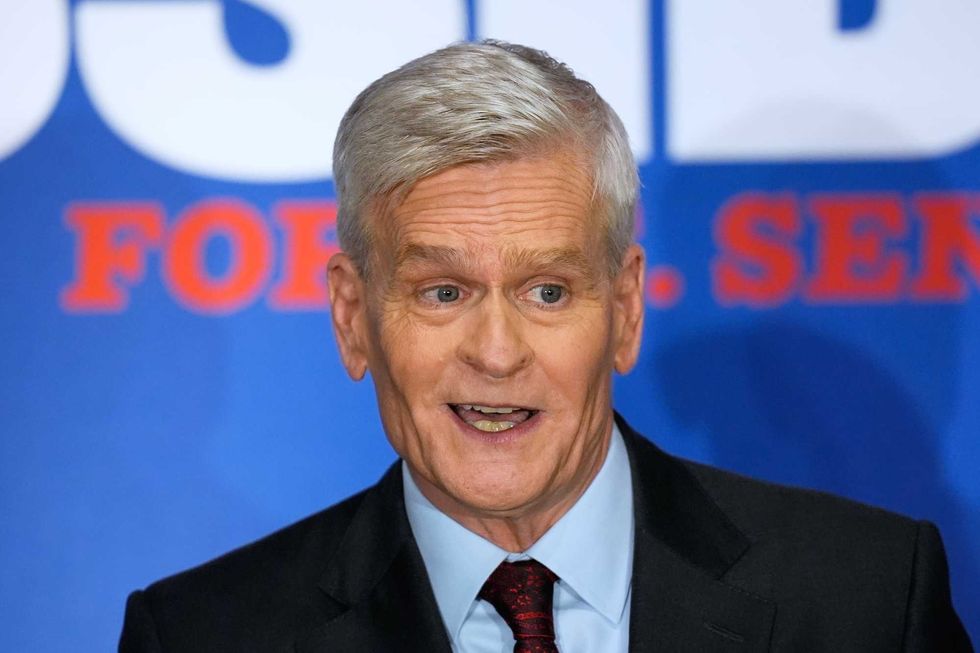 Sen. Bill Cassidy, R-La., speaks to supporters during an election night watch party Saturday, May 16, 2026, in Baton Rouge, LaAP Photo/Gerald Herbert
Republicans are now strategising how to cobble together the votes needed to pass legislation. Sen. John Hoeven of North Dakota called Cassidy a "good friend" and acknowledged his loss was "tough for him."
He expressed confidence that Cassidy "will always vote in line with what he thinks is best" and doubted he would become a less reliable Republican vote. His fellow Louisianan, Sen. John Kennedy, stated that Cassidy deploys power "rationally and maturely" and "will continue to do the same thing."
Cassidy himself repeatedly rejected the notion that he would spend his final months in Washington as a troublemaker for Trump, asserting he would do "what's good for my country and my state."
Yet, the independent streak that ended his political career quickly resurfaced. A week after Trump visited China, Cassidy spoke of a western alliance that is "totally falling apart" and would be unable to "push back on the threat China represents." He also expressed astonishment that the administration would create a nearly \$1.8 billion fund to compensate Trump allies who they believe have been unjustly investigated and prosecuted. "I just came off the campaign trail," he said. "People are concerned about making their own ends meet, not about putting a slush fund together without a legal precedent."
Top 100