











The Conversation (0)
Science & Tech
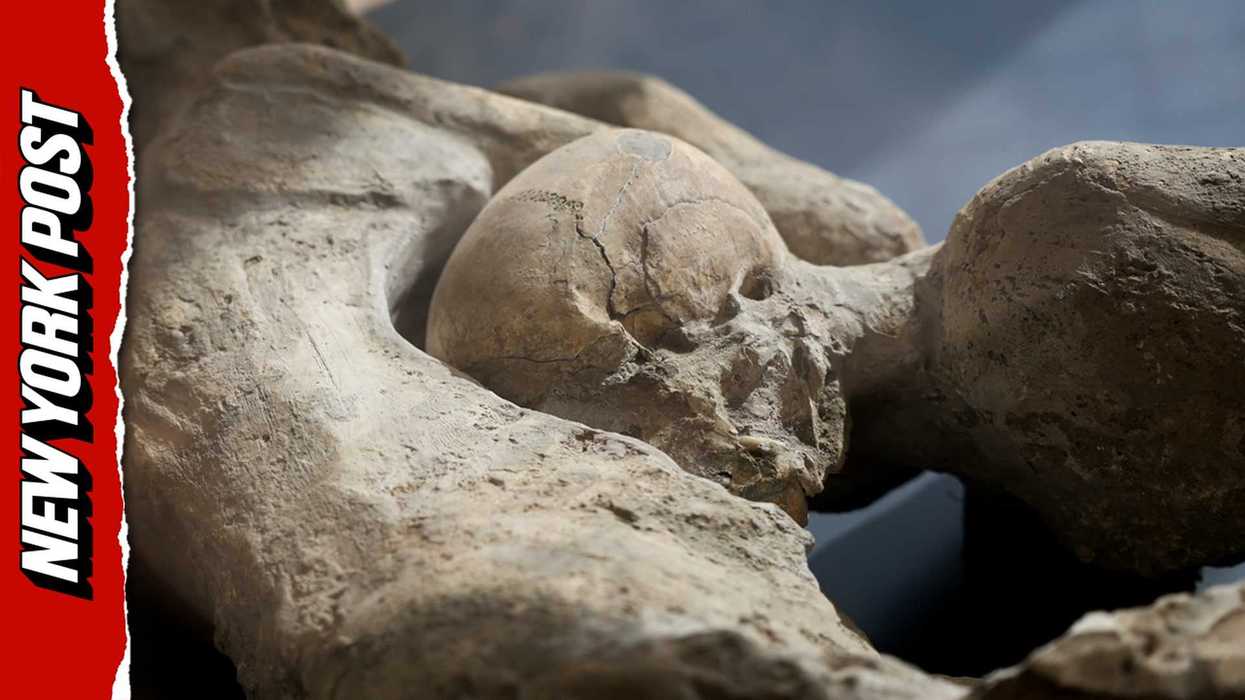
Italian archaeologists at Pompeii have leveraged artificial intelligence for the first time to recreate the likeness of a victim from the catastrophic volcanic eruption that obliterated the ancient Roman city almost two millennia ago. The groundbreaking AI-generated image, unveiled by the Pompeii Archaeological Park on Monday, offers a poignant glimpse into the final moments of one individual.
The digital reconstruction depicts a man crouched, shielding his head with a large bowl, set against the ominous backdrop of an erupting Mount Vesuvius. This vivid portrayal is rooted in the recent discovery of an adult male's remains, found just beyond one of the city's southern gates, positioned beside a terracotta mortar he likely used for protection.
Experts believe the man perished from a barrage of volcanic rocks during the early hours of the eruption's second day, as he attempted to flee towards the sea. He was also found to be carrying a lamp and ten bronze coins, according to the park.
The once-flourishing city of Pompeii, situated approximately 25 kilometres south-east of Naples, was entombed by the AD 79 eruption of Mount Vesuvius, preserving its structures, artefacts, and even graffiti beneath metres of ash.
Gabriel Zuchtriegel, head of the archaeological park, highlighted the transformative potential of this technology, stating: "If used well, artificial intelligence can contribute to a renewal of classical studies, illustrating the classical world in a more immersive way." Rediscovered in the 18th century, Pompeii remains one of the globe's most vital archaeological sites and a premier tourist destination in Italy, attracting 4.3 million visitors in 2024.