The Conversation (0)
Chiwetel Ejiofor in Backrooms official trailer
A24
The latest cinematic venture to plumb the unsettling depths of liminal spaces arrives with Backrooms, a film born from internet folklore that transports audiences into a disorienting, yellow-wallpapered labyrinth beneath a struggling furniture store.
Its genesis is arguably more compelling than the final product. In 2019, an anonymous 4chan creepypasta post ignited the imagination of the internet, presenting an image of an infinite, unsettling space accompanied by a description of "nothing but the stink of old moist carpet, the madness of mono-yellow, the endless background noise of fluorescent lights at maximum hum-buzz."
This viral concept was then expanded by 20-year-old YouTuber Kane Parsons, known as "Kane Pixels," whose found-footage series eventually caught the eye of A24, leading to this big-screen adaptation.
While the internet's collective creativity can yield remarkable concepts, translating them into a cohesive cinematic narrative often proves challenging. Backrooms, penned by Will Soodik and produced by Osgood Perkins, struggles to weave a compelling story around its disquietingly banal imagery.
 A24 via AP
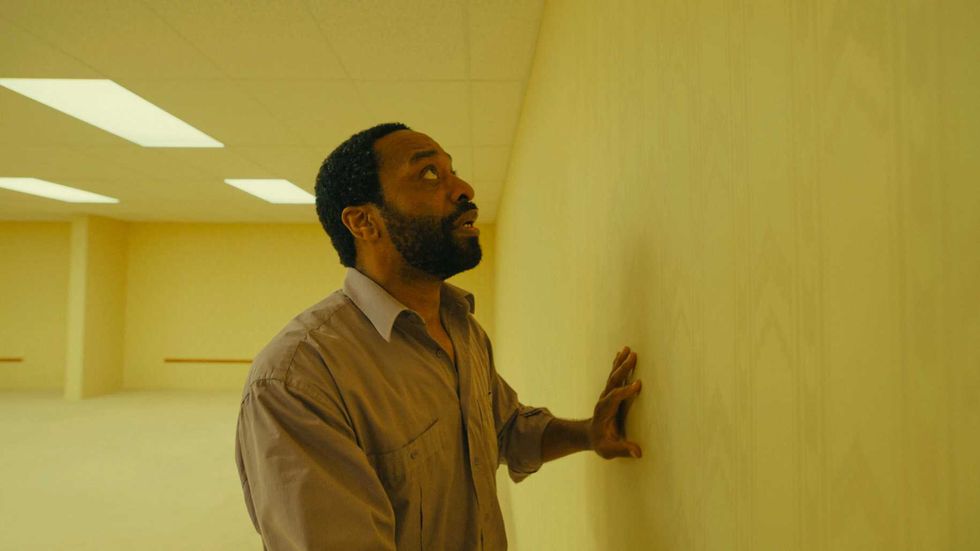
The film centres on Clark (Chiwetel Ejiofor), the unenthusiastic proprietor of Cap’n Clark’s Ottoman Empire, a desolate furniture store in a 1990s strip mall. Plagued by personal failures – a failed architectural career, a crumbling marriage, and a distinct lack of customers – Clark also contends with inexplicable electrical issues, as the store's lights flicker erratically.
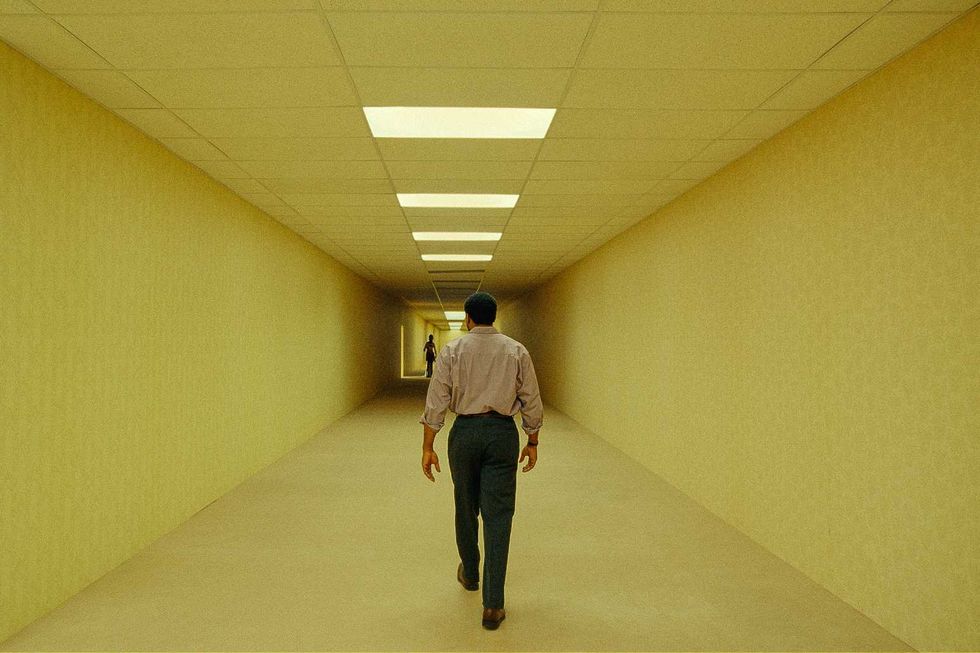
Investigating the circuit breaker, Clark uncovers "odd, irregular breakers" whose purpose remains a mystery. One night, while exploring the store's lower level, he inadvertently steps through a wall, finding himself in the eponymous Backrooms. Far from a wonderland, these seemingly endless chambers evoke vacant, nondescript office spaces, yet possess an unsettling, almost artistic strangeness.
They are filled with piles of furniture, shrunken doors, and bizarre, random objects like a stop sign or a cardboard cutout that greets visitors in multiple languages. Clark later aptly describes them as if they were made "by a bunch of construction workers on acid."
The motif of uncanny, labyrinthine workplaces has resonated in recent popular culture, from Severance to The Chair Company, and the Backrooms themselves can be seen as a potent metaphor for the internet's own endless, often disorienting, iterations.
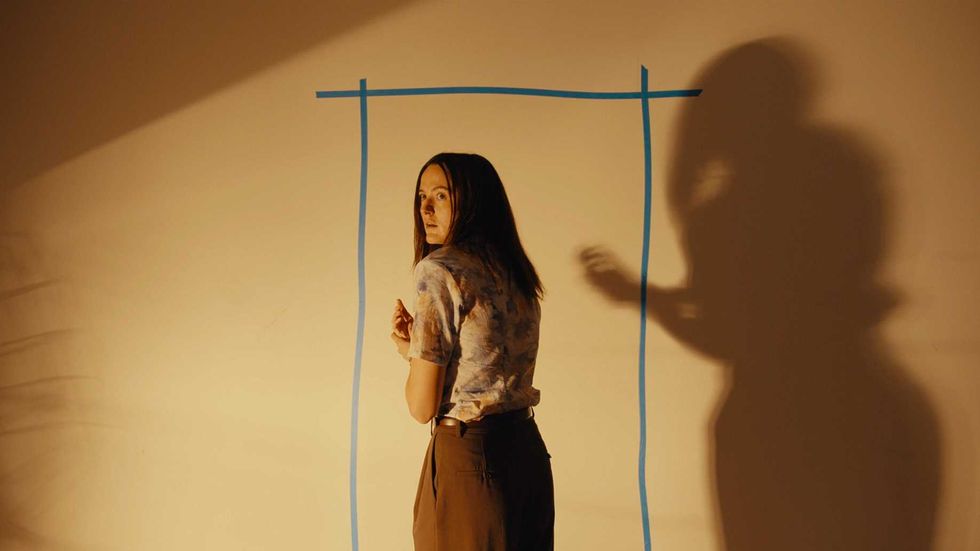
Director Parsons, however, attempts to push this setting into a psychological realm. Clark's interactions with his therapist, Mary Kline (Renate Reinsve), become pivotal. Mary's observation, "We all have our loops, our habits," foreshadows the film's deeper intentions.
 A24 via AP
The subterranean labyrinth increasingly mirrors Clark’s own cyclical psychological struggles, with its many doors leading deeper into his mind.
Mary, whose new book is tellingly titled The Window Within, also becomes ensnared within its confines. Yet, as a horror-infused, fluorescent-lit homage to Michel Gondry’s Eternal Sunshine of the Spotless Mind, Backrooms ultimately falls short. The film struggles to bridge its tangible, wall-to-wall-carpeted maze with Clark’s internal mental state, a narrative with "so many doors ultimately can't find the right one."
Despite a concept as fragile as "paper-wall-thin," the performances of Ejiofor and Reinsve inject considerable depth. Ejiofor, typically a picture of composure, here embraces a latent capacity for "fevered mania."
Reinsve, acclaimed for The Worst Person in the World, delivers an "especially absorbing" turn in her horror debut, imbuing the film with a "slinky intelligence."
However, the true standout is Danny Vermette's production design. Both mundane and bizarre, the Backrooms themselves become a mysterious rabbit hole, echoing a trend in contemporary horror, like 2022’s Barbarian, to delve ever deeper into subterranean terrors. It is perhaps unsurprising, then, that the film itself occasionally loses its way within them.
 A24 via AP
Backrooms, an A24 release, arrives in cinemas this Friday.
Top 100