The Conversation (0)
Science & Tech
Related video: Drought-hit Danube gives way to mammoth fossil hunt in Bulgaria
It initially appeared to be an “oddly shaped rock”, but a discovery from a geomorphologist in California has been confirmed to be a molar belonging to an extinct furry mammal not too distinct from today’s elephants.
Brigid Lych, of Balance Hydrologics, was actually working on a habitat restoration project for the threatened species that is the California red-legged frog when she found the fossilised tooth, which was confirmed by palaeontologists to be from a Pacific mastodon, separate from the American mastodon, which has narrower teeth and different tusks.
They’re also distinct from the classic mammoth, as while they fed on grasses, mastodons were believed to have used their trunks to strip leaves, shoots and fruits from woody, high-growing plants.
In a press release from the Midpeninsula Open Space District (or Midpen, for short), which oversees the preserve in San Mateo County in which the object was found, Lynch said: “As a geologist, I’ve gone out and seen stuff in the wild, but definitely nothing as exciting as this.”
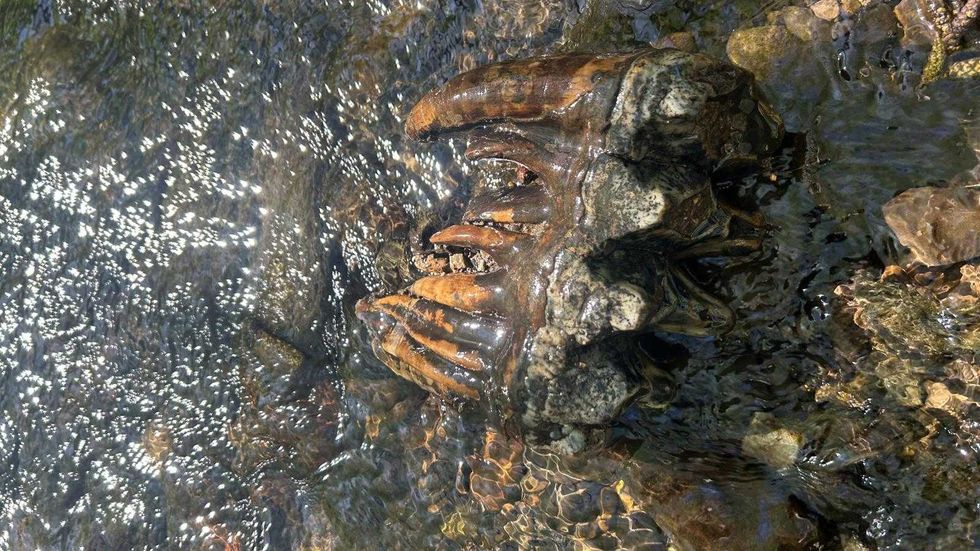 Balance Hydrologics
Palaeontologist Wayne Thompson described the tooth as being in 'immaculate condition'.
He said: "It's the most complete mastodon molar from our area, and the most spectacular mastodon molar that I've ever seen. I had chills and shivers up and down my spine.
"It's another puzzle in the Ice Age saga that we can put into place.”
The find was donated by Midpen to Stanford University’s Doerr School of Sustainability, which works on the Geoscience Specimen Collection at the institution alongside the Stanford University Libraries.
Christine Garcia, who is manager of the libraries and the collections’ curator, said fossils are “our only opportunity to see into past biodiversity”.
“We can study fossils to better understand Earth’s past, past wildlife and the ecosystem they were a part of, and to help us make better predictions and better decisions about how to help our ecosystems and biodiversity thrive into the future,” she said.
The next steps for researchers involve producing a 3D-scan and copy of the specimen to give Midpen for the purposes of education and public outreach, and using carbon dating to figure out the age of the molar.
Why not read…?
Sign up to our free Indy100 weekly newsletter
How to join the indy100's free WhatsApp channel
Have your say in our news democracy. Click the upvote icon at the top of the page to help raise this article through the indy100 rankings.