The Conversation (0)
NASA/DART/ESA/Hera
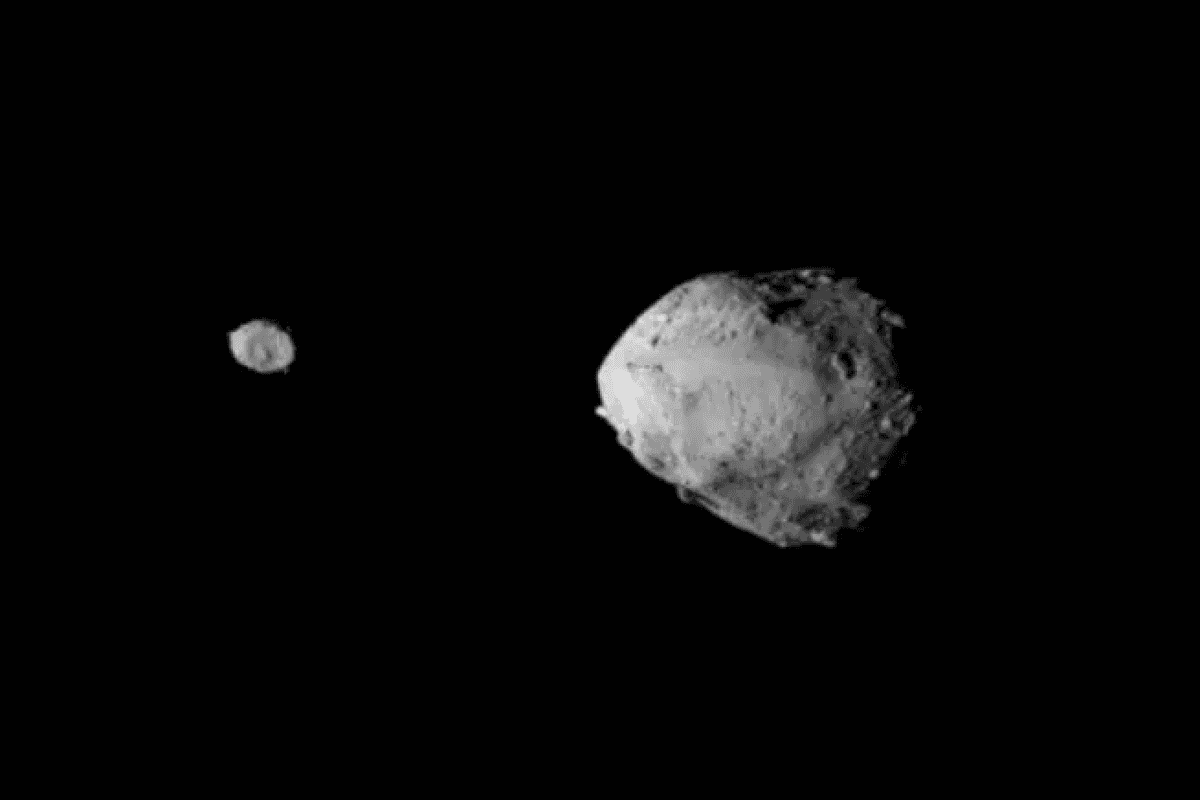
The first images of an asteroid that NASA deliberately crashed have been shared - and it's resulted in a stadium-sized crater on its surface.
In 2022, a NASA spacecraft called DART hit the asteroid Dimorphos at 14,000mph (22,000km/h), marking the first test of active planetary defense to see if it was possible for humans knock a space rock off course.
To understand it's impact, European Space Agency (ESA) spacecraft called Hera has been analysing the impact of the collusion.
The trail of debris caused is around 6,200 miles long (10,000km) and can been seen from Earth via a telescope.
But why was Dimorphos for this experiment?
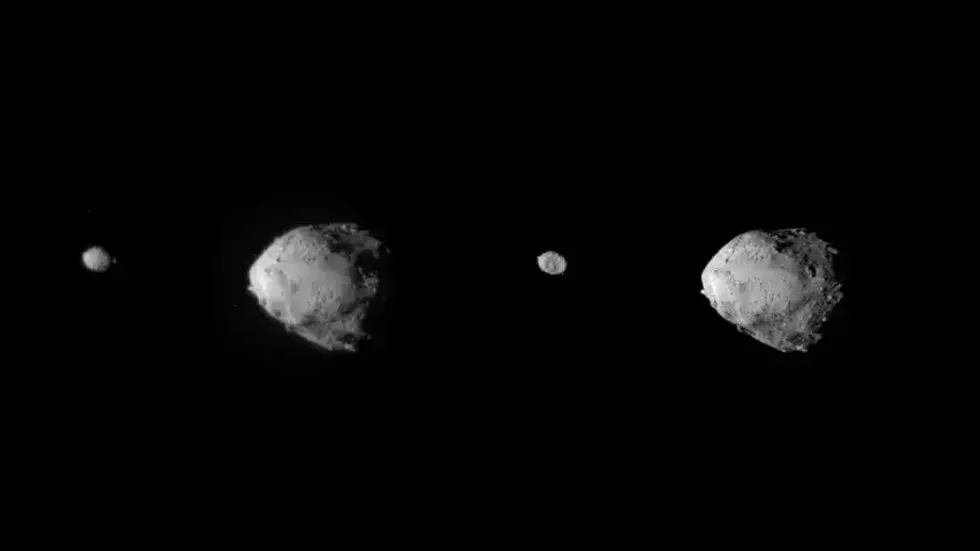 Before (left) and after (right) of Dimorphos and Didymos.NASA/DART/ESA/Hera
Given that Dimorphos is 150m (500ft) wide, and is one of an asteroid pair, orbiting (taking approximately 11 hours and 55 minutes) around a larger rock called Didymos spanning 730m (2,400ft) wide.
Following the collusion, the duration of Dimorphos's orbit had decreased by about 33 minutes.
Now that Hera has reached the area, we can now see the physical impact the collusion has had, with images showing a stadium-sized crater on Dimorphos.
“Scientists debated whether Dimorphos had sustained an impact crater, changed its shape or stayed the same,” explains Hera principal investigator Patrick Michel, Director of Research at CNRS / Observatoire de la Côte d'Azur.
“Much to our surprise the answer turns out to be all three at once! The face struck by DART has been flattened into an impact crater the size of a sports stadium, which extends across the asteroid’s entire width.”
“In addition, as Hera returned more images, it became clear that the DART impact has left Dimorphos tumbling wildly in its orbit,” says Michael Kueppers, ESA’s Hera mission scientist.
Another thing Hera has shown is how the asteroids are surrounded by hundreds of orbiting boulders.
Between the DART mission and Hera investigating the aftermath, both demonstrate the ways in which humanity is taking "a decisive step towards making asteroid deflection a reliable tool for protecting our planet," notes Hera mission manager Ian Carnelli.
Why not read...
- There's only one sea on Earth that doesn't touch land
- Strange rocks under the Pacific hint at how life on Earth really began
Sign up to our free indy100 weekly newsletter
Have your say in our news democracy. Click the upvote icon at the top of the page to help raise this article through the indy100 rankings.
Top 100