The Conversation (0)
Science & Tech
Humans and great apes share a common evolutionary giggle, with a new study suggesting our laughter has followed similar patterns since diverging from the evolutionary tree. This shared trait offers a fascinating glimpse into our ancient past.
Researchers delved into the origins of this shared mirth by re-examining decades-old recordings of 13 captive apes – including gorillas, orangutans, chimpanzees, and bonobos – who had been tickled. These were then compared with newly captured giggles from four young children, recorded while they were being tickled and playing at home.
The findings reveal that the chuckles of both humans and great apes exhibit strikingly similar rhythms, with consistent timing between their laughs.
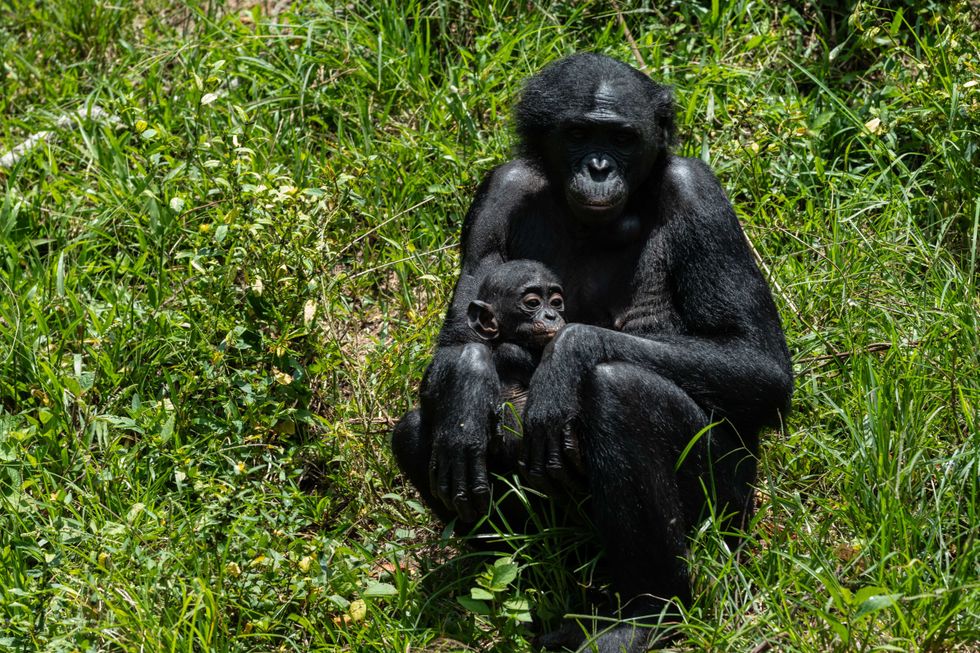 A bonobo holds her baby at the Lola ya Bonobo sanctuary in Kinshasa, Democratic Republic of the Congo, on April 8, 2026AP Photo/Samy Ntumba Shambuyi, File
This unifying characteristic strongly indicates a deep connection to a common ancestor, according to the researchers. "In a way, we are very similar to other great apes because we’ve been laughing in a similar way for 15 million years," explained study author Chiara De Gregorio, a primatologist at the University of Warwick in England.
Laughter serves as a universal communicator of playful, happy feelings, transcending the need for words. While many animals produce sounds akin to laughter, their patterns often differ significantly from human expressions. For instance, tickled rats respond with ultrasonic squeaks, a stark contrast to the rhythmic chuckles observed in apes and humans.
Scientists have long explored facial expressions to understand the evolution of laughter, but less attention has been paid to its auditory aspects. Human laughter, in particular, has evolved to become faster and more intricate, adapting to various social contexts – from a polite chuckle among colleagues to a hearty guffaw shared with close friends. "We are like the masters of laughter, I would say," added Ms De Gregorio, whose team's findings were published in the journal Communications Biology.
Brittany Florkiewicz, an animal communication expert at Lyon College who was not involved in the research, noted that these giggles likely evolved to suit animals' diverse social lives. She found the study's conclusions compelling and highlighted the need for further investigation.
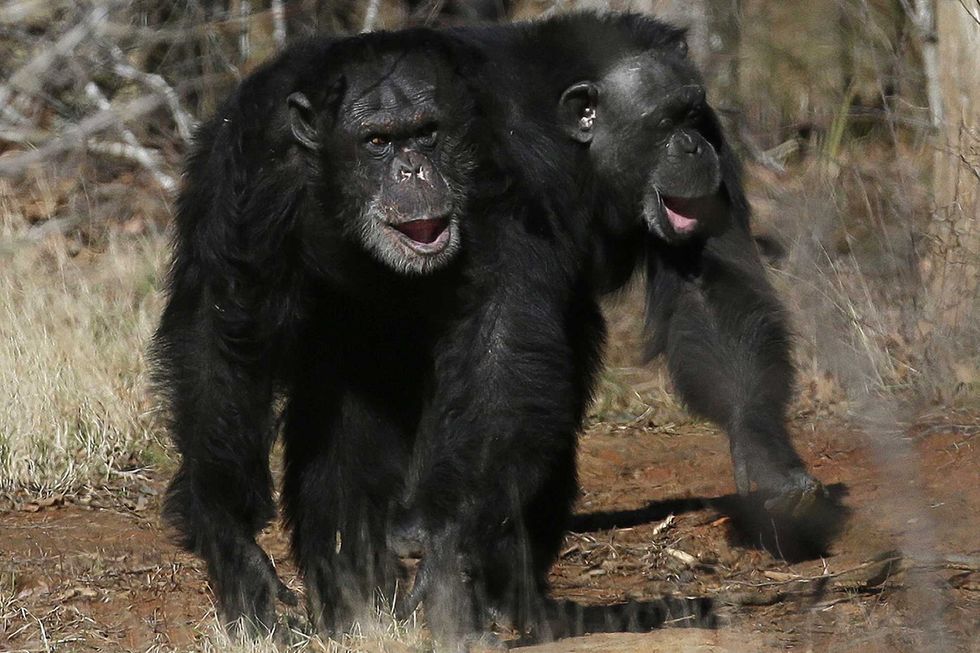 Two chimps walk together at Chimp Haven in Keithville, La., Feb. 19, 2013AP Photo/Gerald Herbert, File
Ms Florkiewicz expressed a desire for comparable recordings from other animals known for playful facial expressions, such as dogs, horses, and cats. Such research could illuminate more about laughter's evolution, helping us "understand what makes us uniquely human, but also what is similar between humans and other animals."
While studying the origins of laughter might seem trivial, it is a crucial aspect of human communication that can deepen our understanding of others, including how we developed speech. As sounds do not fossilise, scientists meticulously piece together the available evidence, tracing back our shared history one chuckle at a time.