
The Conversation (0)
Japanese walking method vs 10000 steps a day
Lumen5
First, came Japanese walking came for our 10,000 steps per day, closely followed by Tai Chi walking - and now, experts say we may not even need 10,000 steps per day at all if it's weight maintenance we're aiming for.
For context, studies indicate that 80 to 90 per cent of people who lose a significant amount of weight will regain it within two to five years.
Living through the Ozempic era, it's a conversation that's becoming more prevalent, not least because users regain 60 per cent to two-thirds of the weight they lost in the first place by going down this route, too.
With longevity at the front and centre of the health space now, it's not just about quick fixes anymore, but looking ahead to the long-term.
However, new research from scientists in Italy and Lebanon suggests that perhaps we don't even need to be aiming for 10,000 steps each day in order to stay on top of our health and avoid regaining the weight lost - and by simplifying our routines even further, we could already be doing enough.
 iStock
In a rather complex study, 14 randomised controlled trials involving 3,758 people, classed as overweight or obese, were reviewed.
The participants, who had an average age of 53 and came from the United States, the United Kingdom, Australia, and Japan, were divided up into groups of those actively trying to lose weight, and those trying to maintain.
1,987 of those people were enrolled in lifestyle change programs, while the remaining 1,771 were either put on diets, or given no weight intervention at all.
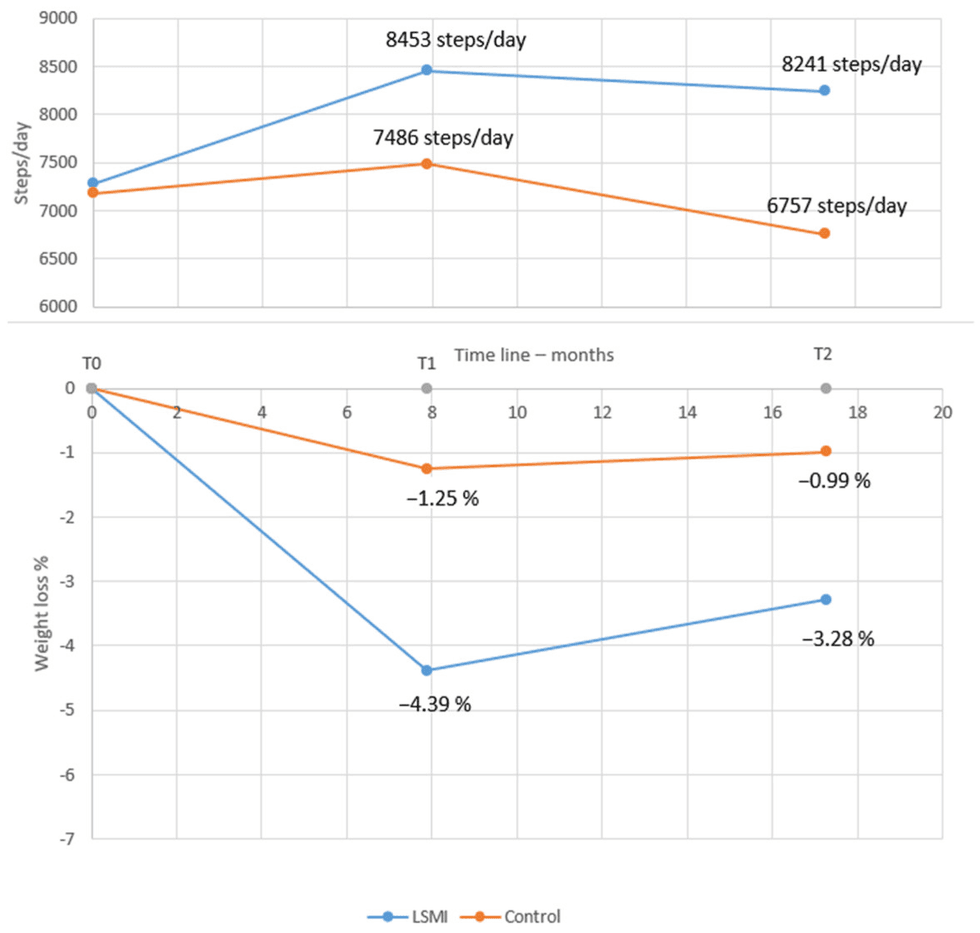
Both groups began the study walking an average of about 7,200 steps per day for eight months, before the lifestyle change group increased their steps to 8,500 each day.
While no weight loss was reported during that initial eight months, the lifestyle group achieved an average weight loss of nearly 9 pounds (or 4 per cent of their baseline weight) after increasing their steps in conjunction with eating healthily.
During a 10-month follow-up period, those participants only regained an average of about two pounds, suggesting that perhaps 10,000 steps isn't a minimum, but goes beyond what's needed to maintain weight loss.
 MDPI
MDPI
“On a general level, the significance of this work to public health lies in assessing the association between lifestyle modification programs and weight-related outcomes, given their potential as an affordable way for obesity management,” the researchers wrote.
While their loss and subsequent maintenance could've been down to a number of factors, it's worth noting that Randomized Controlled Trials (RCTs) help remove bias from studies, and experts now believe their step count formed a big part of the outcome...particularly as the step increase triggered those results.
"Patients should be encouraged to adopt an active lifestyle with the aim to increase their average daily steps during the WL [weight loss] phase targeting approximately 8500 steps/day, and such a level should be maintained during the maintenance phase, an important strategy since it appears to be associated with maintaining significant WL in the long term", the study concludes.
While researchers say the new findings should be treated as "hypothesis-generating rather than prescriptive", it's only fuelled further evidence that by making small changes to our lifestyle, we could quietly be making some big differences to our health.
Why not read...
A 'dopamine diet' could hold the key to improving your mood through food
Everyone’s ditching 75 Hard for 75 Medium this January - here are the lifestyle changes to take part
Sign up to our free indy100 weekly newsletter
Top 100