The Conversation (0)
News
When was the last time you turned on the news and they actually had something positive to say?
What's more, the bad news is near-impossible to escape now that we're plugged into our phones, smart speakers, and other devices on a constant loop.
In particular, you might be feeling unsettled by news emerging from the Middle East.
Over the last few days, we've seen headlines of the US and Israel launching attacks on Iran, and Iran subsequently retaliating by targeting the likes of Qatar and the United Arab Emirates - a country which has, until now, largely avoided conflict when its neighbouring countries have been at war. The Switzerland of the region, if you will.
Three people have been killed and 58 others injured by Iranian attacks on the United Arab Emirates, according to the country's defence ministry. Footage from emirates including Abu Dhabi and Dubai show major infrastructure affected by intercepted missile and drone strikes, including the US consulate, and the luxurious Fairmont hotel situated on The Palm.
Global conflict isn't new, and it's certainly not new in that part of the world, either. However, as a location that serves millions of tourists each year and houses a large expat community (approximately 89 per cent of its population), this is the first time that it's felt closer to home for many people.
Whether you're concerned about potential escalations, people you know in the region, or just want to keep on top of updates, the biggest risk posed to the rest of us is doom-scrolling.
"Even if it's far away geographically, in many ways we feel drawn to it", Alexandra Negoita, a psychologist from Coventry University tells us, citing that even if we don't know people in the Middle East, parasocial relationships with influencers can heighten the reality.
She warns that consuming so much content can have a negative impact on our mental health, not only in the moment, but over long periods of time, too.
 Pexels
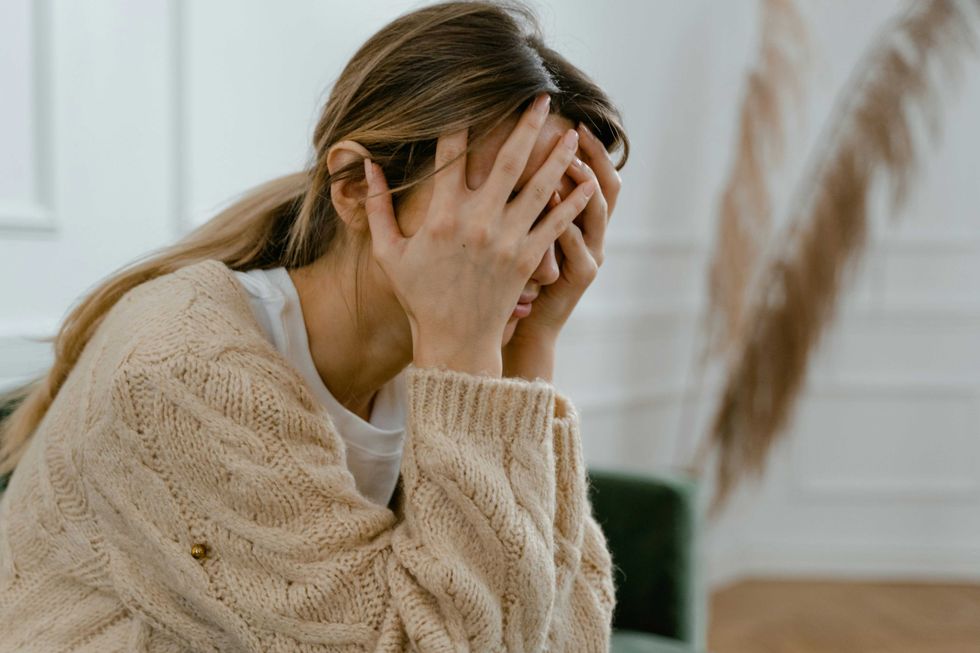
"When we see images of violence, threats, or escalating conflict, our brain activates its threat response system - even if we are physically safe our body can react as if we are in danger", she adds, noting that you may feel more anxious, alert, or unsafe during this time.
"Over time that repeated exposure can shift the way we feel day-to-day - it can challenge our core assumptions about safety, predictability, control, and trust in the world."
Recent international research shows that people are feeling emotionally overwhelmed by continuous exposure to challenging global news. We're also now taking on a new battle against misinformation and fake news, and that's attempting to stay informed while figuring out what's reliable.
One example you may have seen is that of a viral video documenting an "explosion" close to Dubai's Burj Khalifa. The video was shared thousands of times before it was eventually debunked as the iftar cannon signalling the end of fasting for those partaking in Ramadan.
However, for those who watched it, a seed of concern and worry had already been planted in their brains. For some, it will have been enough to prompt a subconscious negativity bias - which our body sees as self-preservation.
Over time, it can even lead to desensitisation, because we grow so used to seeing content, no matter how terrible it is in nature.
"We are over-exposed to information which makes it difficult for most people to know what to believe any more", Alexandra says of the current state of content consumption. "The information itself is a problem because we are programmed to absorb so many negative facts all at the same time.
 iStock
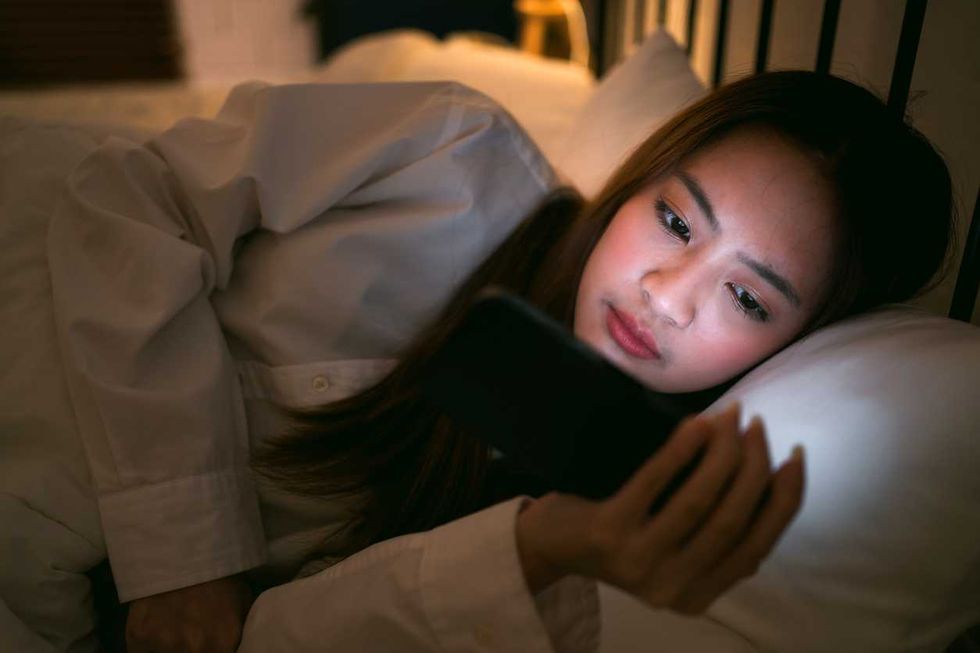
"It takes a lot of brain power to think about global issues - we can really easily get overwhelmed with this - even the most resilient of us.
"Adding a layer on top of that and considering how polarised views are online makes it even harder to process."
"It's so important to moderate media consumption during this time or actively seek positive news to counterbalance this negativity bias", she continues.
"I absolutely think we should take misinformation seriously because it doesn't just mislead us, it can amplify fear, and all of the emotional distress we already feel.
"It can make situations feel more extreme or hopeless than they actually are."
So, what now? Well, Alexandra says it's actually a little easier to protect yourself than you might think.
She advises having a 10 or 20 minute scroll up to twice a day is "more than enough" to get the information you need without falling down a rabbit hole of doom and gloom.
"It's important to balance out this information", she adds. "There are still many good things happening in the world, it may just take a little more intentional digging at the moment."
She advises that you should also be prepared to scrutinise sources of news more closely: "Digital literacy is crucial at this time - there is so much misinformation at the moment and everyone has an opinion about everything.
"If you can, take a break and ask yourself some critical questions: Where is this information coming from? Who is this information benefitting?"
She concludes: "This is on top of what we already advise for everybody to look after their wellbeing - being active, being connected to others, having meaningful conversations, and don't make the conflict the topic of conversation non-stop."
If you are experiencing feelings of distress and isolation, or are struggling to cope, The Samaritans offer support; you can speak to someone for free over the phone, in confidence, on 116 123 (UK and ROI), email [email protected], or visit the Samaritans website to find details of your nearest branch.If you are based in the USA, and you or someone you know needs mental health assistance right now, call National Suicide Prevention Helpline on 1-800-273-TALK (8255). The Helpline is a free, confidential crisis hotline that is available to everyone 24 hours a day, seven days a week. If you are in another country, you can go to www.befrienders.org to find a helpline near you.
Why not read...
Sign up to our free indy100 weekly newsletter
Have your say in our news democracy. Click the upvote icon at the top of the page to help raise this article through the indy100 rankings.