The Conversation (0)
Hegseth says press and 'ungrateful allies' should thank Trump for ‘winning’ war
Reuters
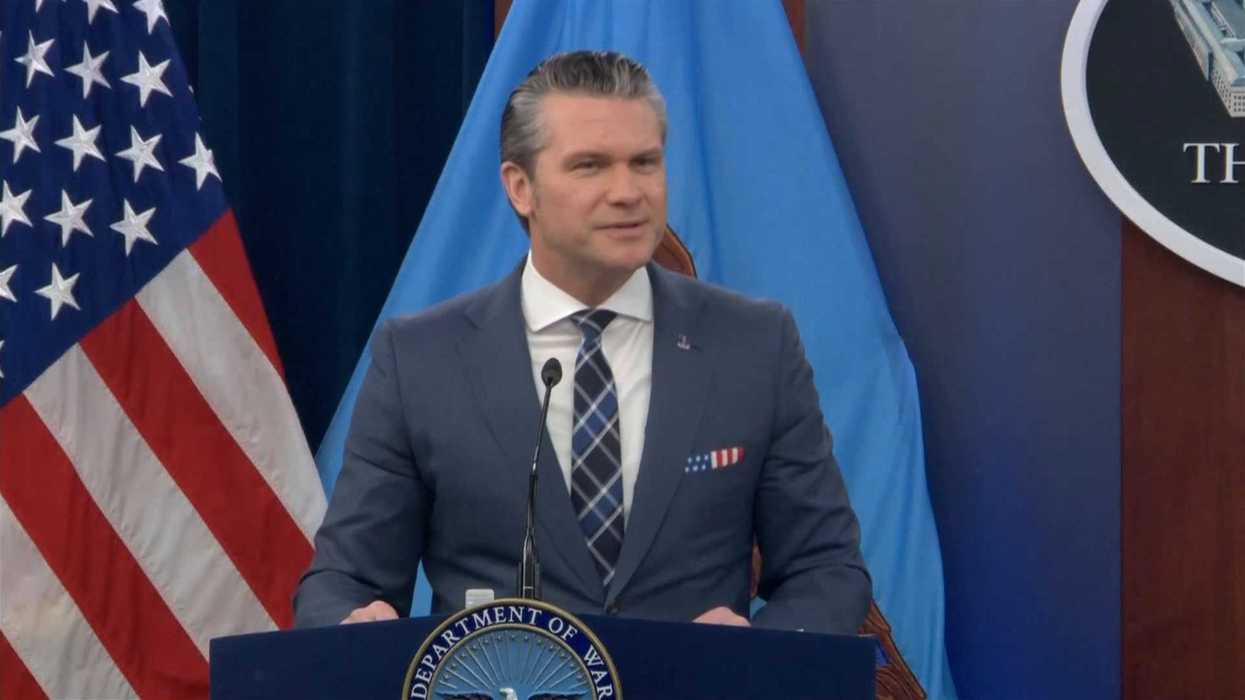
Defence Secretary Pete Hegseth has consistently infused his conservative evangelical beliefs into the Pentagon’s operations since taking office, a practice now under heightened scrutiny amid the United States’ conflict with Iran.
Hegseth hosts monthly Christian worship services for employees and has overseen the display of Bible verses alongside military footage in departmental promotional videos. In public speeches and interviews, he frequently asserts that the US was founded as a Christian nation and encourages troops to embrace God, raising concerns about the military’s secular mission and its hard-won pluralism.
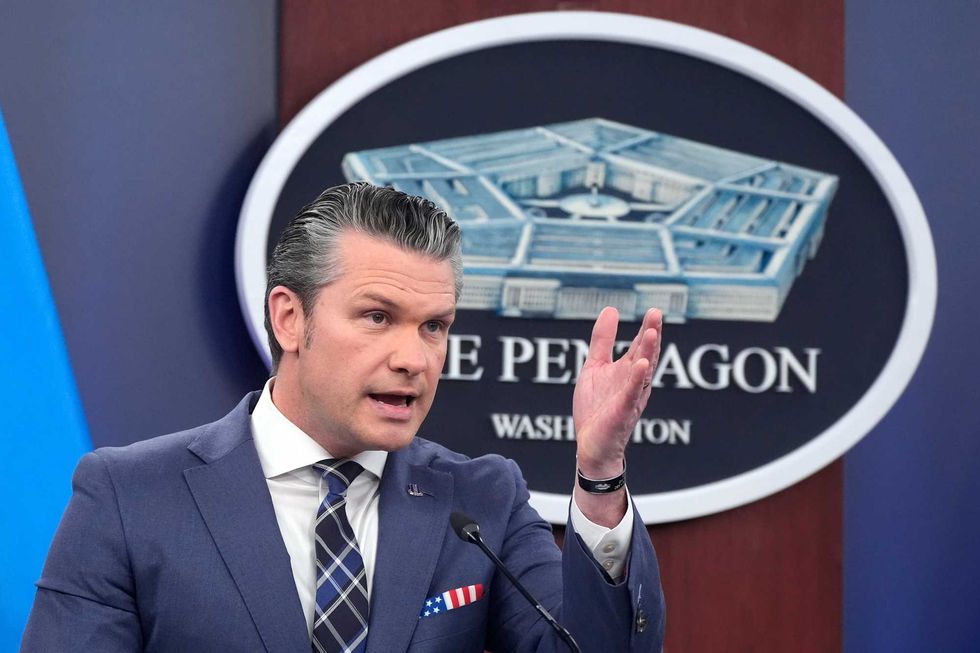
His Christian rhetoric has taken on new significance following the outbreak of war between the US, Israel, and Iran, an Islamic theocracy. At a recent Pentagon press briefing, Hegseth referred to Iran’s Shiite Muslim clerics, stating: "The mullahs are desperate and scrambling." He then recited Psalm 144, a passage shared by Jews and Christians: "Blessed be the Lord, my rock, who trains my hands for war and my fingers for battle."
Hegseth has a documented history of defending the Crusades, the brutal medieval conflicts between Christians and Muslims. In his 2020 book, "American Crusade," he wrote that those who appreciate Western civilisation should "thank a crusader." He also bears two tattoos drawing from crusader imagery: the Jerusalem Cross and the phrase "Deus Vult," or "God wills it," which he has described as "the rallying cry of Christian knights as they marched to Jerusalem."
 AP Photo/Manuel Balce Ceneta
Matthew D. Taylor, a visiting scholar at Georgetown University who studies religious extremism and has been a vocal critic of Hegseth, expressed grave concerns. "The U.S. voluntarily going to war against a Muslim country with the military under the leadership of Pete Hegseth is exactly the kind of scenario that people like me were warning about before the election and throughout his appointment process," Taylor said. He added that Hegseth’s rhetoric and leadership "can only inflame and reinforce the fears and deep animosity that the regime in Iran has towards the U.S."
When questioned about whether Hegseth views the war in Iran in religious terms, a Defence Department spokesperson referenced a recent CBS interview where Hegseth appeared to confirm this perspective. "We’re fighting religious fanatics who seek a nuclear capability in order for some religious Armageddon," Hegseth said of Iranian leaders. He added: "But from my perspective, I mean, obviously I’m a man of faith who encourages our troops to lean into their faith, rely on God."
Unverified allegations have also emerged that US military commanders cited biblical prophecies to troops regarding the Iran war. Generations of evangelicals have been influenced by interpretations of Armageddon and the end of the world, popularised by books such as the "Left Behind" series. Some evangelicals believe that warfare involving Israel is crucial for the return of Jesus. Christian Zionist pastor John Hagee, head of Christians United for Israel, commented on the Iran war, saying: "Prophetically, we’re right on cue."
However, the co-founder of Hegseth’s own denomination, Pastor Doug Wilson of the Communion of Reformed Evangelical Churches (CREC), identifies as a postmillennialist, believing most apocalyptic biblical events have already occurred, paving the way for gradual Christianisation before Christ’s return. Hegseth himself has not explicitly stated the Iran war is part of Christian prophecy. Yet, days after the conflict began, claims went viral that US military commanders were telling troops the war fulfilled biblical prophecies about Armageddon and Christ’s return.
The Associated Press has been unable to verify these claims, which originate from Mikey Weinstein, head of the Military Religious Freedom Foundation, a watchdog group. Weinstein, who cited allegations from hundreds of troops, declined to provide documentation or original emails, stating troops feared retaliation. Three other major religious watchdog groups – the Freedom From Religion Foundation, the Anti-Defamation League, and the Council on American-Islamic Relations – have not received similar complaints. The Pentagon declined to comment on the allegations.
 AP Photo/Manuel Balce Ceneta
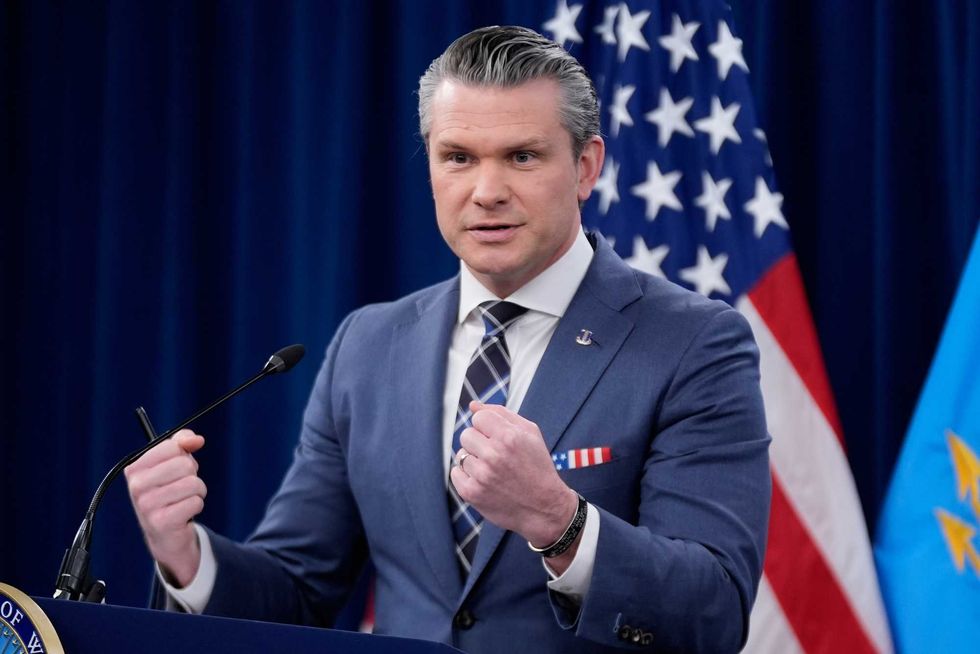
Hegseth’s church network, the CREC, preaches a patriarchal form of Christianity, prohibiting women from leadership roles and advocating for the criminalisation of homosexuality. Last year, Hegseth reposted a video in which a CREC pastor opposed women's right to vote. Doug Wilson, the network’s most prominent leader and a self-identified Christian nationalist, preached at the Pentagon in February at Hegseth’s invitation.
Both Wilson and Hegseth have questioned Muslim immigration to the United States. Wilson argues the country should restrict Muslim immigration to maintain its predominantly Christian character. In "American Crusade," Hegseth expressed concern over growing Muslim birth rates and the popularity of Muhammad as a boys’ name in the US.
As head of the armed forces, Hegseth has overseen policy changes aligning with his conservative Christian worldview, including banning transgender troops, curtailing diversity initiatives, and reviewing women in combat roles. Youssef Chouhoud, a political scientist at Christopher Newport University, remarked: "The intrusion of Christian nationalist policy, not just Christian nationalist rhetoric … that is what’s troubling."
Hegseth has also pledged to reform the military’s chaplain corps, which provides spiritual care to service members of all faiths and none. He scrapped the 2025 US Army Spiritual Fitness Guide and aims to renew chaplains’ religious focus, which he stated in a December video message had been minimised "in an atmosphere of political correctness and secular humanism."
Rabbi Laurence Bazer, a retired US Army colonel and chaplain, warned that such language from military leadership risks alienating service members when it draws exclusively from one faith tradition. "The U.S. military reflects the full diversity of this country — people of every faith step forward to serve," Bazer said. "That diversity is a strength worth protecting."
Top 100