The Conversation (0)
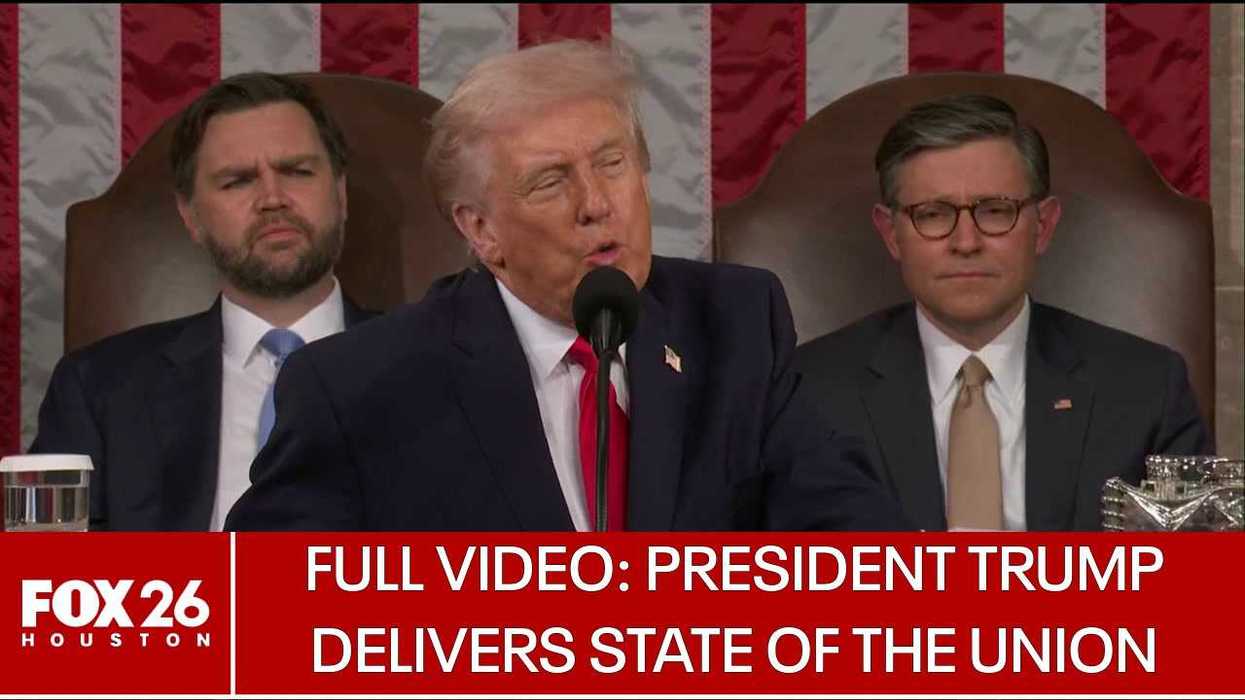
FULL VIDEO: President Donald Trump delivers State of the Union
Fox - 26 Houston / VideoElephant
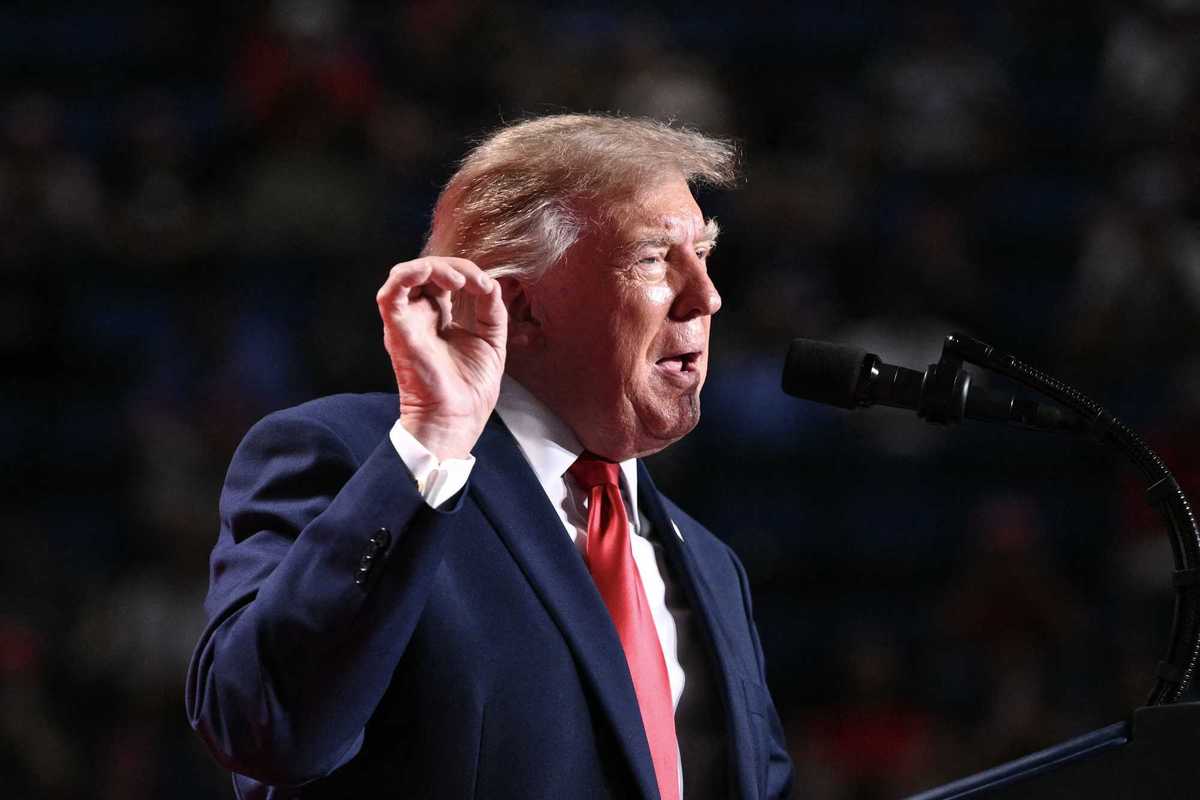
Donald Trump delivered a marathon State of the Union address on Tuesday, proclaiming "we’re winning so much" as he sought to convince a wary nation of an economic boom at home and a new world order abroad. The speech, a record 108 minutes long, aimed to bolster his standing and encourage support for Republicans in the upcoming November midterm elections.
The president largely eschewed his usual bombast, though he occasionally veered off-script to criticise Democrats. Following a pattern from previous addresses, Mr Trump strategically deployed surprise special guests to underscore his message, including US military heroes and a political prisoner released after US forces intervened in Venezuela.
One of the evening’s loudest ovations came when Mr Trump invited the Olympic gold medal-winning US men’s hockey team into the House chamber. "Our country is winning again. In fact, we’re winning so much that we really don’t know what to do about it. People are asking me, 'Please, please, please, Mister President, we’re winning too much. We can’t take it anymore,'" Mr Trump declared before introducing the team. The players, adorned with medals and "USA" sweaters, received a bipartisan standing ovation, prompting Mr Trump to quip to the Democratic side, "That’s the first time I ever I’ve ever seen them get up."
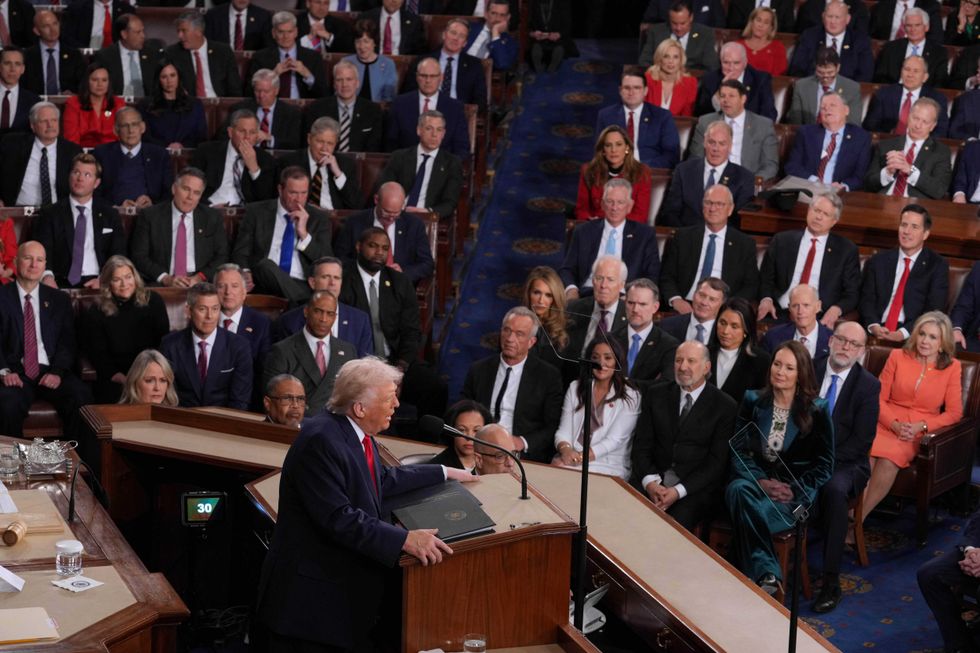 President Donald Trump gives his State of the Union address to a joint session of Congress, at the Capitol in WashingtonAP Photo/J. Scott Applewhite
In a moment seemingly tailored for television, the president announced he would award the Presidential Medal of Freedom, America’s highest civilian honour, to the hockey team’s goaltender, Connor Hellebuyck. He also bestowed the Purple Heart upon Andrew Wolfe, a National Guard member shot while deployed in the nation’s capital, who made his first public appearance since the incident during the speech. This echoed a similar surprise announcement in 2020, when Mr Trump presented the Medal of Freedom to conservative radio host Rush Limbaugh during his State of the Union address.
Mr Trump championed his immigration crackdowns and his efforts to maintain widespread tariffs, despite the Supreme Court having recently struck them down. He described the high court's decision as "an unfortunate ruling," drawing applause only from Democrats. The president vowed to press ahead, asserting that "Congressional action will not be necessary" as he planned to use "alternative" laws to impose import taxes. He maintained that foreign countries bear the cost of these tariffs, despite evidence suggesting American consumers and businesses ultimately pay. "It's saving our country," he insisted.
Only a handful of Supreme Court justices attended, including Chief Justice John Roberts, Justices Brett Kavanaugh, Amy Coney Barrett, and Elena Kagan. Mr Trump greeted them personally, despite having criticised Justice Coney Barrett, whom he appointed, just last week for siding with the majority against his tariffs.
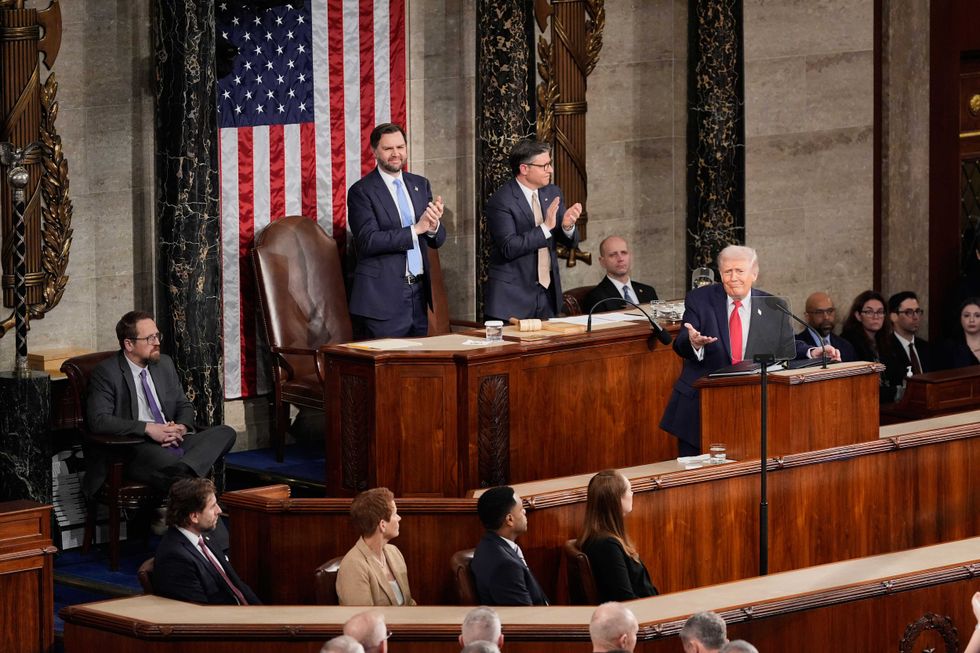 Vice President JD Vance, left, and House Speaker Mike Johnson applaud President Donald TrumpAP Photo/Alex Brandon
Democrats also stood when Mr Trump pledged to halt insider trading by members of Congress, though some heckling ensued. Representative Mark Takano, a California Democrat, shouted, "How about you first!" while Michigan Democrat Representative Rashida Tlaib called out, "You’re the most corrupt president!" Mr Trump responded to the continued heckling by proclaiming, "You should be ashamed of yourselves," and later, pointing at Democrats, declared, "These people are crazy." Democratic Representative Al Green was escorted from the chamber early in the speech after unfurling a protest sign reading "Black People Aren’t Apes!" – an apparent reference to a video the president posted depicting Barack Obama and Michelle Obama as primates. Mr Green had also been removed during Mr Trump's address the previous year.
While largely optimistic and patriotic, Mr Trump adopted a darker tone in significant portions of his speech, warning of dangers posed by immigrants. He urged lawmakers from both parties to "protect American citizens, not illegal aliens" and advocated for proposals to limit mail-in ballots and tighten voter identification rules.
Efforts to lower the cost of living received comparatively little attention, despite polling indicating that Mr Trump’s handling of the economy and household finances has become a political vulnerability. Concerns over high living costs contributed to Democratic victories in last November’s elections. Fears persist that tariffs could inflate prices further, potentially harming the economy and job creation, particularly as economic growth slowed in the final quarter of last year. This presents a potentially perilous political landscape ahead of November’s elections, which could see Democrats gain congressional seats, mirroring the 2018 "blue wave" that challenged his administration during his first term.
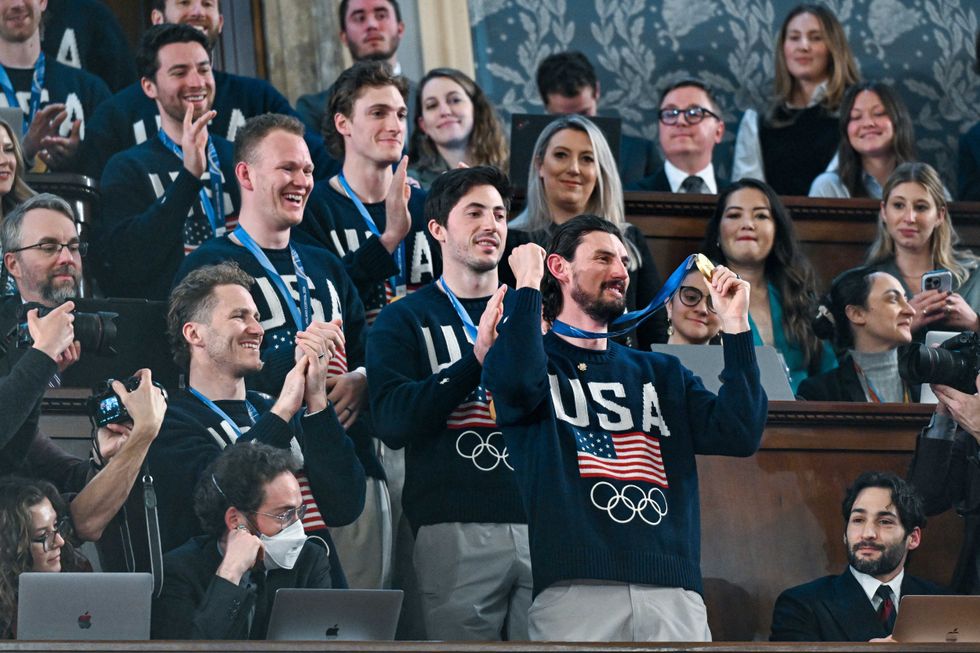 Members of the United States' Olympic hockey team, goalie Connor Hellebuyck in front, attend President Donald Trump's State of the Union Kenny Holston/The New York Times via AP, Pool
Mr Trump attributed rising prices and healthcare costs to his predecessor, Joe Biden, and Democratic lawmakers in the chamber, issues his political opponents have frequently raised against him. "You caused that problem," Mr Trump stated regarding affordability concerns, adding, "They knew their statements were a dirty, rotten lie."
He also proposed pressing artificial intelligence tech companies to pay higher electricity rates in areas hosting their data centres, noting their substantial power consumption could increase costs for other consumers. Another notable unscripted moment occurred when discussing prescription drug prices, Mr Trump remarked, "So in my first year of the second term — should be my third term — but strange things happen," which prompted chants of "Four more years!" from some in the chamber.
Virginia Governor Abigail Spanberger, delivering the Democratic response, criticised the president’s aggressive immigration policies, federal government cuts, and tariffs. "Even though the Supreme Court struck these tariffs down four days ago, the damage to us, the American people, has already been done. Meanwhile, the president is planning for new tariffs," she said. "Another massive tax hike on you and your family."
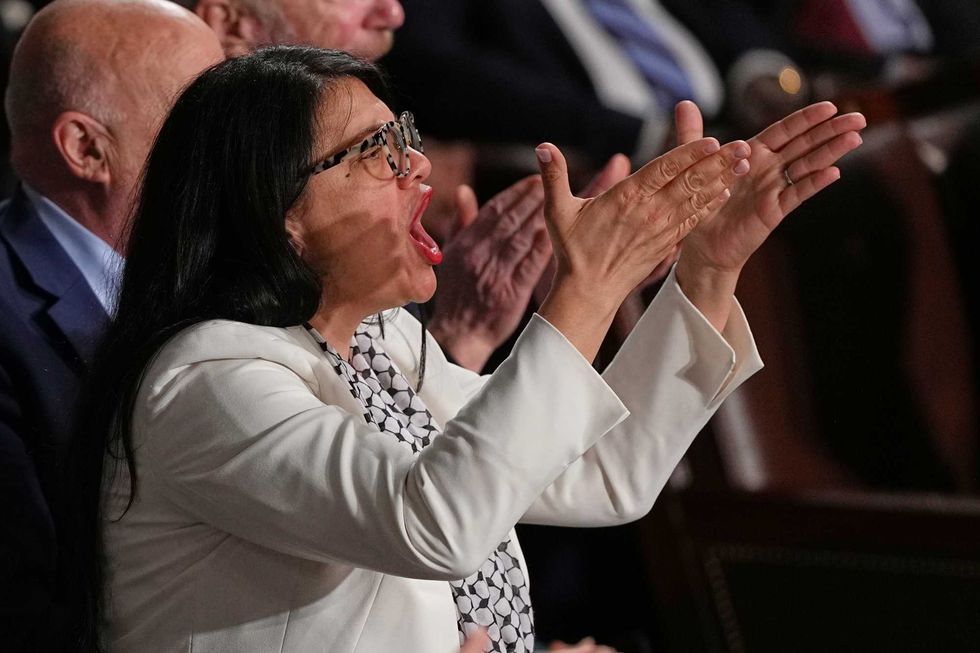 Rep. Rashida Tlaib, D-Mich., shouts as President Donald TrumpAP Photo/Matt Rourke
The address coincided with the deployment of two US aircraft carriers to the Middle East amid tensions with Iran. Mr Trump stated, "My preference is to solve this problem through diplomacy." He added, "But one thing is certain, I will never allow the world’s number one sponsor of terror — which they are, by far — to have a nuclear weapon." The president also referenced US airstrikes last summer targeting Tehran's nuclear capabilities, praised the operation that ousted Nicolás Maduro in Venezuela, and lauded his administration’s brokering of a ceasefire in Israel’s conflict with Hamas in Gaza. "As president, I will make peace wherever I can," Mr Trump concluded. "But I will never hesitate to confront threats to America, wherever we must."
Top 100