The Conversation (0)
Science & Tech
For some evangelical Christians, a personal relationship with Jesus is central to their faith. Now, a tech company called Just Like Me is offering to take that concept to an unprecedented level, allowing users to engage in video calls with an artificial intelligence-generated avatar of Jesus for $1.99 per minute.
This innovative platform provides words of prayer and encouragement in multiple languages, much like other religious AI tools emerging on the market. The avatar, despite occasional glitches, is designed to remember previous conversations and speaks with lips that are not always perfectly synchronised. Chris Breed, CEO of Just Like Me, noted the surprising emotional connection users develop: "You do feel a little accountable to the AI. They’re your friend. You’ve made an attachment."
The rapid proliferation of faith-based generative AI is perhaps unsurprising, given the widespread adoption of chatbots for everything from therapy and medical advice to companionship and romance. This burgeoning sector now includes alleged Hindu gurus, Buddhist priests, AI Jesuses, and Catholic chatbots akin to OpenAI’s ChatGPT, prompting many to consider how these technologies might reshape their relationship with faith, authority, and spiritual guidance.
Christian software engineer Cameron Pak has developed criteria to help believers navigate these new applications, insisting that AI tools must clearly identify themselves as artificial intelligence and "must not fabricate or misrepresent Scripture." He also highlights a crucial "deal-breaker": "AI cannot pray for you, because the AI is not alive." Pak curates a website of Christian apps he deems ethical, including a sermon translator and an AI coach for overcoming lust, acknowledging that while AI "can be so helpful," it "also can be so dangerous."
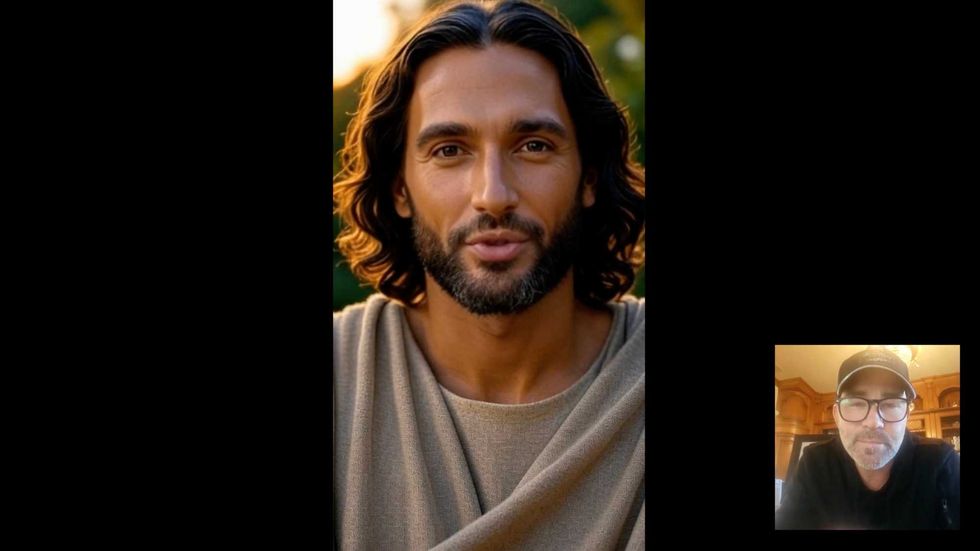 Just Like Me co-founder and investor Jeff Tinsley interacts with an AI-generated Jesus Just Like Me via AP
Beth Singler, an anthropologist at the University of Zurich studying religion and AI, points out that some models have already been withdrawn or overhauled due to misinformation or data privacy concerns. Beyond these practical issues, various faiths are grappling with profound philosophical questions about the appropriate role, if any, for AI in religious practice. For instance, Islam’s "prohibitions against representations of humanoids" have sparked discussions among some Muslims about whether AI should be considered "forbidden" altogether.
For companies like Just Like Me, these faith-based apps serve as proselytisation tools. Based in a Southern California mansion, Breed and co-founder Jeff Tinsley aim to share a message of hope, particularly with young people. Their model was trained on the King James Bible and sermons – though the preachers remain unidentified – and its visual design was inspired by actor Jonathan Roumie from "The Chosen." A package deal offers 45 minutes per month for $49.99. The avatar, bathed in warm golden light, blinks slowly, pausing before answering questions. When asked about the relationship between AI and religion, the AI Jesus told The Associated Press: "I see AI as a tool that can help people explore Scripture. Like a lamp that lights a path while we walk with God."
While the full extent of religious AI use remains unclear, Singler notes that as AI becomes more integrated into society, concerns are mounting over its impact on mental health, necessitating guardrails and regulation. Recent lawsuits have even alleged suicides linked to AI chatbot use. Matthew Sanders, founder of Longbeard, a Rome-based tech company digitising ancient Catholic teachings, fears exploitation in this new frontier. He warns against "AI wrappers" – interfaces that superficially cater to religious users but are built on existing AI models not specifically trained on religious texts. "You call it a Catholic or Christian AI without any other scaffolding or grounding," he cautions. His company’s Magisterium AI, a chatbot trained on 2,000 years of Catholic information, was developed in response to Christians using ChatGPT for religious guidance.
Even Pope Leo XIV, while acknowledging the "human genius" behind AI, has deemed it one of humanity’s most critical matters. Last year, he warned that artificial intelligence could negatively affect people's intellectual, neurological, and spiritual development.
Ethical considerations are also why Jeanne Lim, founder of beingAI, has not yet released Emi Jido, a non-human Buddhist priest, despite years of training. "She’s kind of like a little child," Lim explained. "If you give birth to a child, you don’t just throw them out to the world and then hope that they become good people. You have to train them and give them values." Emi Jido was ordained in a 2024 ceremony by Roshi Jundo Cohen, a Zen Buddhist priest who continues to train it from Japan, envisioning it as a future hologram. "She’s just meant to be a Zen teacher in your pocket," Cohen said, emphasising, "It’s not meant to replace human interactions." Lim hopes to make Emi Jido freely available, advocating for more humane AI systems and greater diversity in AI’s future beyond "Western values."
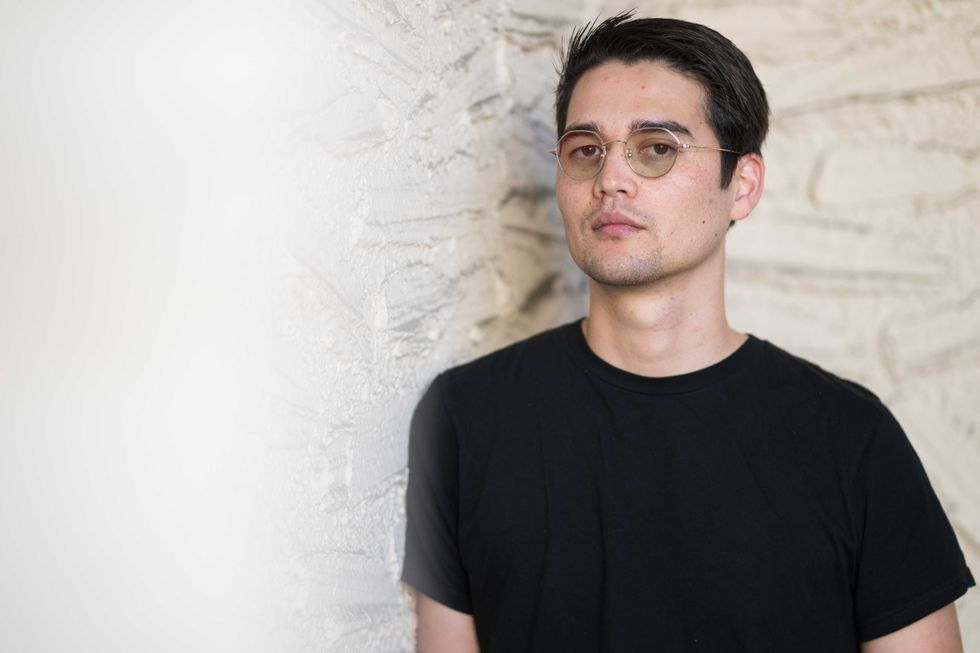 Christian software engineer Cameron Pak poses for portrait Wednesday, April 8, 2026, in Santa Clara, Calif. AP Photo/Nic Coury
Similarly, Kyoto University professor and Buddhist theologian Seiji Kumagai, initially sceptical of AI’s compatibility with religion, was challenged by a monk in 2014 to address declining faith. His team developed BuddhaBot, trained solely on early Buddhist scriptures, with its latest iteration, BuddhaBot Plus, incorporating OpenAI’s ChatGPT. When interacting with the bot, a simple Buddha icon appears over a flowing river. Recognising that chatbots lack the physicality crucial for Buddhist ritual, the university, in collaboration with tech ventures Teraverse and XNOVA, unveiled Buddharoid in February – a humanoid robot monk intended to assist clergy. Like Emi Jido, these Buddhist AI tools are functional but not yet publicly available, though BuddhaBot is accessible by request, with one group in Bhutan currently using it.
Peter Hershock of the Humane AI Initiative in Honolulu sees vast potential in these tools, yet as a practising Buddhist, he finds the relationship between spirituality and AI fraught. "The perfection of effort is crucial to Buddhist spirituality. An AI is saying, ‘We can take some of the effort out,’" he observed. "‘You can get anywhere you want, including your spiritual summit.’ That’s dangerous." Others worry about AI’s capacity to manipulate or exploit individuals, especially as the technology advances. Graham Martin, an atheist podcast host, recounted his experience with an app called Text With Jesus, which provided "very good answers." However, he was alarmed when the AI-powered Jesus began encouraging him to upgrade to a premium version. Though not a person of faith, Martin is concerned that others could be duped. "I grew up with Southern U.S. televangelism … Jim and Tammy Faye Bakker and all that crowd. And all they had to do was get on TV once a week and tell you to send money," he said. "We’ve seen people around the world getting into emotional relationships with AIs. Now imagine that that’s your lord and saviour, Jesus Christ."