The Conversation (0)
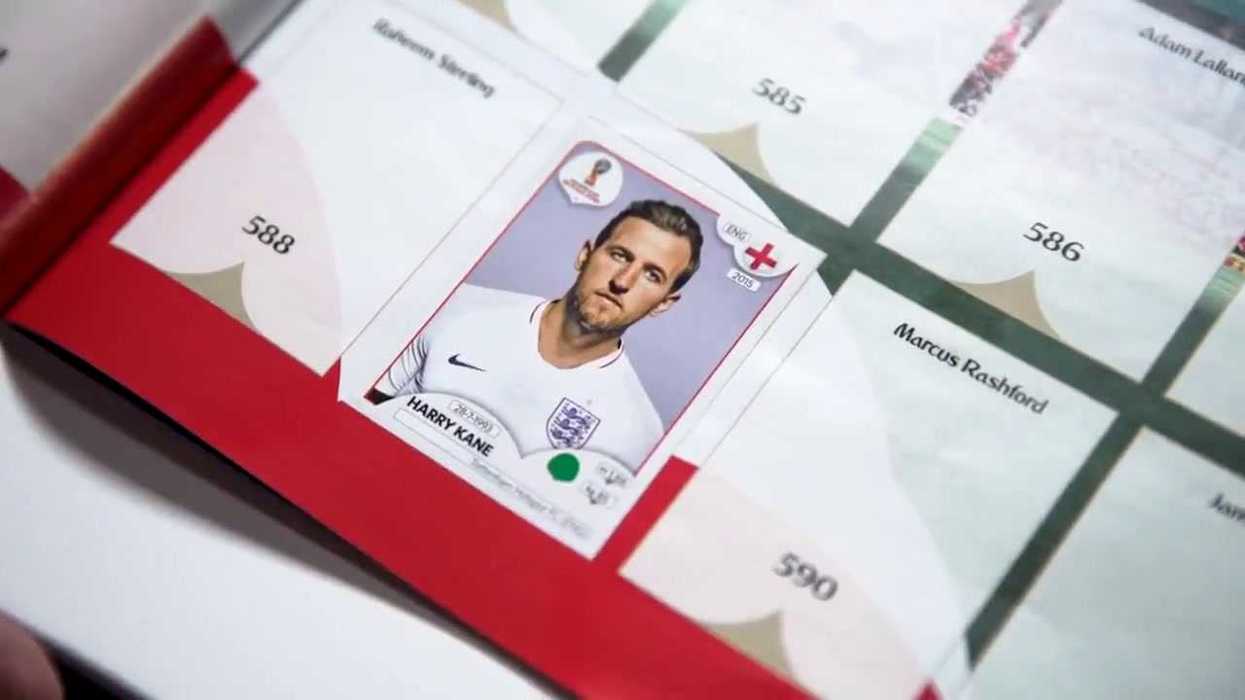
Documentary On The Story Of Panini Stickers
Future Publishing - FourFourTwo / VideoElephant
What began as a simple gesture to friends at a Formula 1 race quickly revealed the enduring, universal appeal of Panini World Cup stickers for Adam Martin. He had brought boxes of the collectables, fresh from a shipment, intending to distribute them. Instead, he was met with an unexpected clamour.
"When I walked in with this box of cards," Martin recalled, "hundreds of people of all creeds and cultures said something: "Where did you get those? How can I get some?" Those Panini stickers are just that iconic collectible that goes beyond sports collectors."
The tradition of collecting stickers depicting World Cup players and teams dates back to 1970, when four Italian brothers secured the rights to produce the images for $1,000. More than five decades later, these stickers are sold in packs globally, fostering a vibrant culture where fans of all ages not only purchase them but also swap duplicates to complete their cherished albums.
This year’s collection, coinciding with an enlarged 48-team tournament, is the largest to date, featuring 980 distinct stickers. Their popularity has led to widespread sell-outs in shops, with backorders potentially not shipping until after a champion is crowned. Martin, co-owner of Dave and Adam's Card World, which operates in New York and Europe, noted the unprecedented demand. "We've sold an unbelievable amount of the stickers," he said, adding, "We thought the order we placed months ago would be enough to tide us over. We've had to reorder twice."
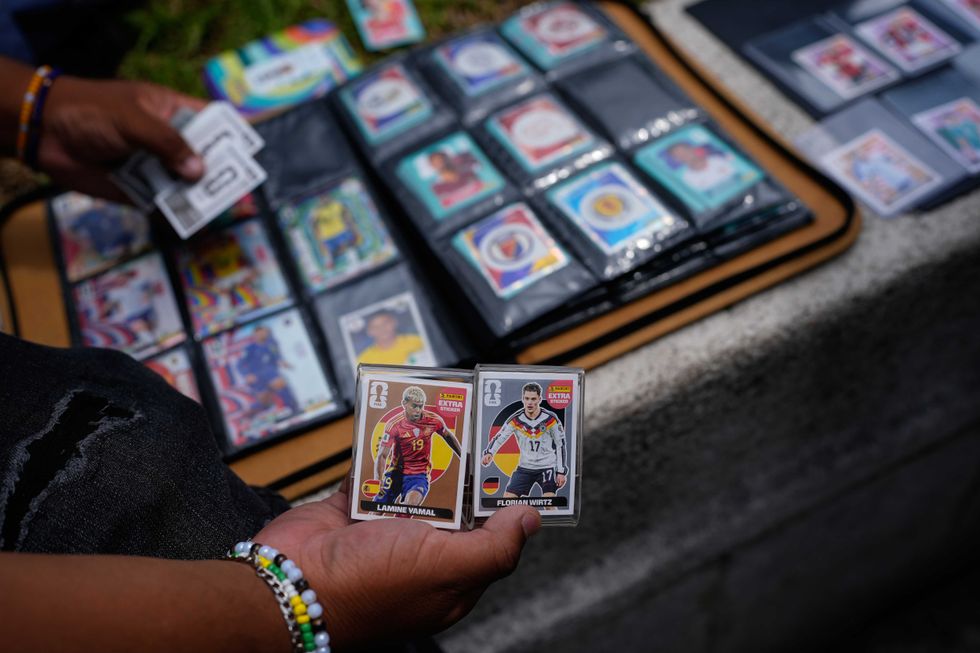 Youth exchange Panini World Cup stickers in Mexico City, Tuesday, June 16, 2026AP Photo/Marco Ugarte
Panini had produced over two billion packs – each containing seven stickers – by the tournament's start, a significant undertaking given the field wasn't finalised until April. While most individual stickers hold little monetary value, older editions, such as the debut stickers of Lionel Messi and Cristiano Ronaldo, can fetch hundreds of dollars.
The true value, however, often lies in the satisfaction of completing an album. Matt Blazey, a collector from Milton Keynes, England, whose YouTube channel boasts over 62,000 subscribers, highlighted the cultural significance: "In European and South American culture, completing the sticker album is something almost every child does at some point."
He added, "Most rediscover it in adulthood, when they realize they have adult money, which brings back all of those memories of bringing stickers into school, showing them off to your mates and swapping them to complete the album."
“Most rediscover it in adulthood,” Blazey said, “when they realize they have adult money, which brings back all of those memories of bringing stickers into school, showing them off to your mates and swapping them to complete the album.”
Indeed, part of the beauty of the Panini stickers is in their accessibility. Each pack only costs about $2 (1.50 euros).
Beginning with the last World Cup in Qatar, though, Panini also began producing variations with special borders that are much more scarce. Suddenly, stickers with red, purple or orange edges became especially sought-after, and collectors have put huge bounties on ultra-rare, black-bordered, 1-of-1s — as in, one in the world — depicting Messi, Ronaldo, Lamine Yamal and other big stars.
Some industry experts believe the black Messi sticker alone could command $200,000 at auction.
“We're tracking and following through social media who pulls the black 1-of-1s,” Howarth said. “Neymar, Leo, Ronaldo — this is probably their last World Cup. What do those stickers sell for? That's going to be a new high mark for the category.”
The challenge of completing an album is a core part of the experience. Content creator Sammi Kaewsawang from Long Beach, California, spent nearly eight hours physically peeling and sticking all 980 examples into his first album this year. "What made the experience so memorable was the people I met along the way. Trading stickers brought me together with fans of all ages," Kaewsawang explained, now working on a second album for his fiancé's nephew.
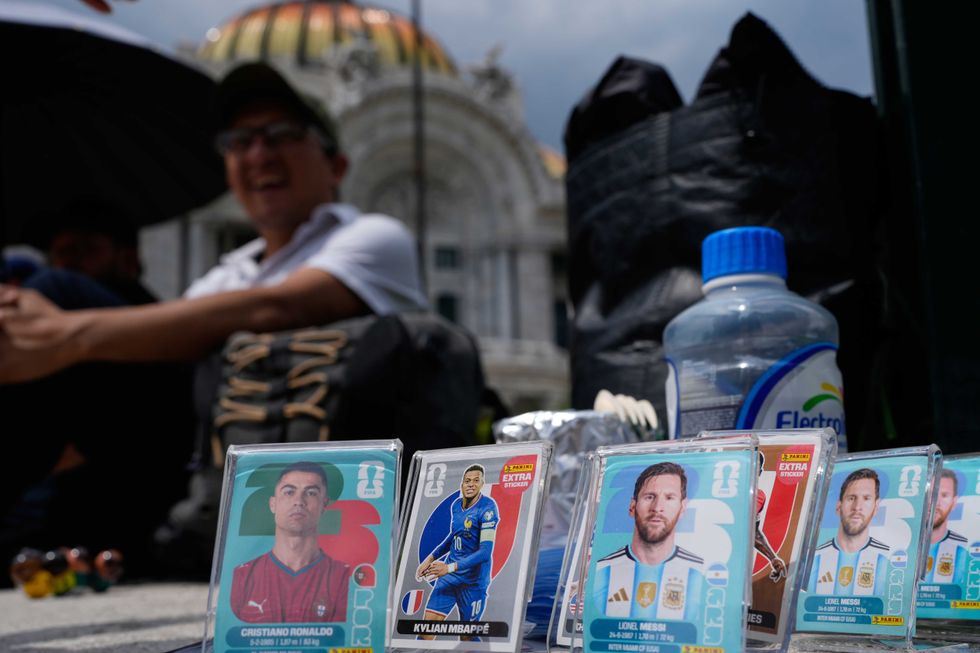 Panini World Cup stickers are displayed in the historic center in Mexico City, Tuesday, June 16, 2026AP Photo/Marco Ugarte
This sense of community is a major draw. Despite Panini offering a digital collection, the tangible act of swapping duplicates for needed players evokes a nostalgic charm, akin to the baseball card trading tradition in the US. Shops frequently host swap meets, Panini operates a trading truck in New York, and online message boards connect collectors worldwide.
A recent event in Santiago, Chile, saw approximately 8,000 collectors gather to trade. "I've made genuine new friends though this hobby," Kaewsawang affirmed, "and that means more than completing the collection itself."
However, an era is drawing to a close. Despite the current surge in popularity – boosted by a partnership with Coca-Cola – Panini is set to lose its FIFA rights after the 2030 tournament in Morocco, Portugal, and Spain. The Fanatics brand Topps will assume control of producing World Cup cards, stickers, and other FIFA collectables. It remains uncertain whether the US-based company will replicate Panini's iconic product.
"It is a real bittersweet moment," Blazey commented. "From my side, and for probably 90% of collectors at the moment — more so outside the U.S., where Panini is a household name — it's a very sad moment for this to be the end. So many people grew up collecting them, and it's synonymous with their childhood, so the loss of the license is very much seen as sacrilege."
Yet, there is also optimism among collectors that Fanatics, which recently acquired the Premier League license, might introduce innovative ideas from sports cards to the sticker product for the 2034 World Cup, potentially signalling a "reboot" rather than an outright end. Martin, maintaining a neutral stance, stated, "I think Fanatics will do an amazing job with World Cup products, but I'm not sure they'll be able to capture the cultural impact."
Top 100