The Conversation (0)
Why your vitamin D supplements might not be working
Money Talks News / VideoElephant
Every so often, a wellness trend comes along that completely rewrites what we thought we knew before - and ends up becoming more than just a fleeting moment on social media.
Pumpkin seed oil has evolved as the go-to for hair, red light therapy is boosting our skin, and now, NAD+ is supercharging longevity routines.
Thanks to the likes of Bryan Johnson and Gary Brecka, we're thinking more about longevity; whether that's living well for longer, ageing gracefully, or realising what's inside our bodies counts just as much as outside.
In its simplest form, NAD stands for nicotinamide adenine dinucleotide, found in every cell of the body and responsible for energy production, DNA repair, reducing inflammation, and maintaining overall cellular health.
While it's been around in supplement form for a while, it's rapidly picking up popularity thanks to the longevity movement, and even making its way into the likes of skincare, too.
 iStock
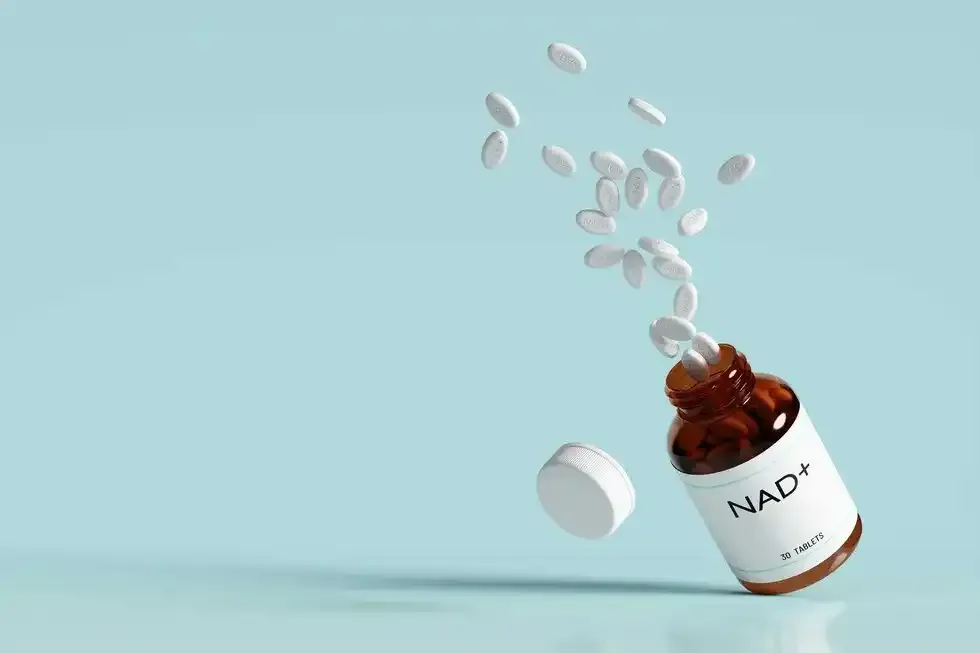
That's because our NAD levels naturally decline as we age, and by re-inserting it into our routines via supplements, research suggests we could remain mobile and reduce our probability of contracting certain age-related illnesses.
"The popularity of NAD+ has been driven by a mixture of genuine scientific curiosity and cultural anxiety about ageing, because while the science clearly shows that NAD+ is essential for life and that declining levels are associated with ageing and disease", says Dr Suzanne Wylie, GP and medical adviser for IQdoctor.
"The majority of the strongest evidence still comes from animal studies or small, early-stage human trials, meaning that claims about dramatic life extension or powerful anti-ageing effects in humans are not yet supported by robust clinical data, even though the underlying biology is plausible and interesting."
Dr Wylie notes that regular users of NAD+ supplements have reported subtle improvements in energy levels, mental clarity or exercise tolerance over time, but that results are more likely to be "gradual and long-term."
Searches for NAD supplements were up more than 200 per cent in 2025, and you may now be wondering which type is best for you.
"Different methods of using NAD+ are often marketed as being dramatically different, but the reality is more nuanced", Dr Wylie tells us.
 Pexels
"Oral supplements such as nicotinamide riboside or NMN have the best safety data and can raise NAD+ levels in the body, whereas intravenous NAD+ is frequently promoted as more powerful - despite limited evidence that it leads to better or more durable outcomes.
"It also carries higher costs and medical risks, while topical or skincare products may improve the skin’s appearance locally but are unlikely to have meaningful effects on whole-body ageing or cellular NAD+ levels."
That means that NAD+ as a skincare ingredient could prove popular at surface level when it comes to anti-ageing, but is unlikely to prompt any major skin barrier repair or cell turnover underneath.
"One of the biggest misconceptions surrounding NAD+ is the idea that it can reverse ageing or act as a shortcut to longevity, along with the belief that higher doses automatically lead to greater benefits or that intravenous treatments are inherently superior, none of which has been convincingly proven in well-designed human studies", she adds.
But that doesn't mean this is a supplement to be slept on. New data is emerging about its potential every day, and if anything, Dr Wylie says we could be seeing more of it.
"While it is unlikely to disappear completely given the real biology behind it, at present it should be viewed as an interesting and evolving area rather than a medical essential", she concludes, noting; "It's certainly not a replacement for the fundamentals of good health that we know make the biggest difference over the long term."
Why not read...
Partying could actually be the key to living longer, according to longevity experts
A 'dopamine diet' could hold the key to improving your mood through food
Sign up to our free indy100 weekly newsletter
Top 100