The Conversation (0)
Yojo
Wellness has entered an era where there seems to be a solution for almost everything. Sleep? Take a supplement. Stress? Splurge on a wearable. Focus? Dedicate yourself to a protocol. Recovery? Take your pick of 50.
The upside is that we have more tools at our disposal than ever before. The downside is navigating which ones are actually worth our time and money among the noise.
I’m in a somewhat fortunate position that I can usually snag access to many of the most-coveted treatments and supplements before they even hit the market. In turn, that allows me to skip the expense and subsequent frustration of trying 10 different solutions for a problem before deciding it’s the right one.
One that has piqued my interest in particular over the last year is VNS (or vagus nerve stimulation), after seeing it featured in Bryan Johnson’s Don’t Die documentary on Netflix, and noticing an influx of influencers making a tiny, Black Mirror-adjacent earpiece their new Instagram accessory.
In its simplest form, VNS is characterised as a treatment which sends mild electrical pulses to the vagus nerve (the longest cranial nerve that dictates our bodily functions) to alter brain activity and manage specific chronic conditions, such as treatment-resistant depression, anxiety, and epilepsy.
Once a surgical procedure carried out under the close supervision of anesthetists and doctors, smaller, more pocket-sized devices that can be used on-the-go are on a trajectory to becoming as commonplace as smartwatches.
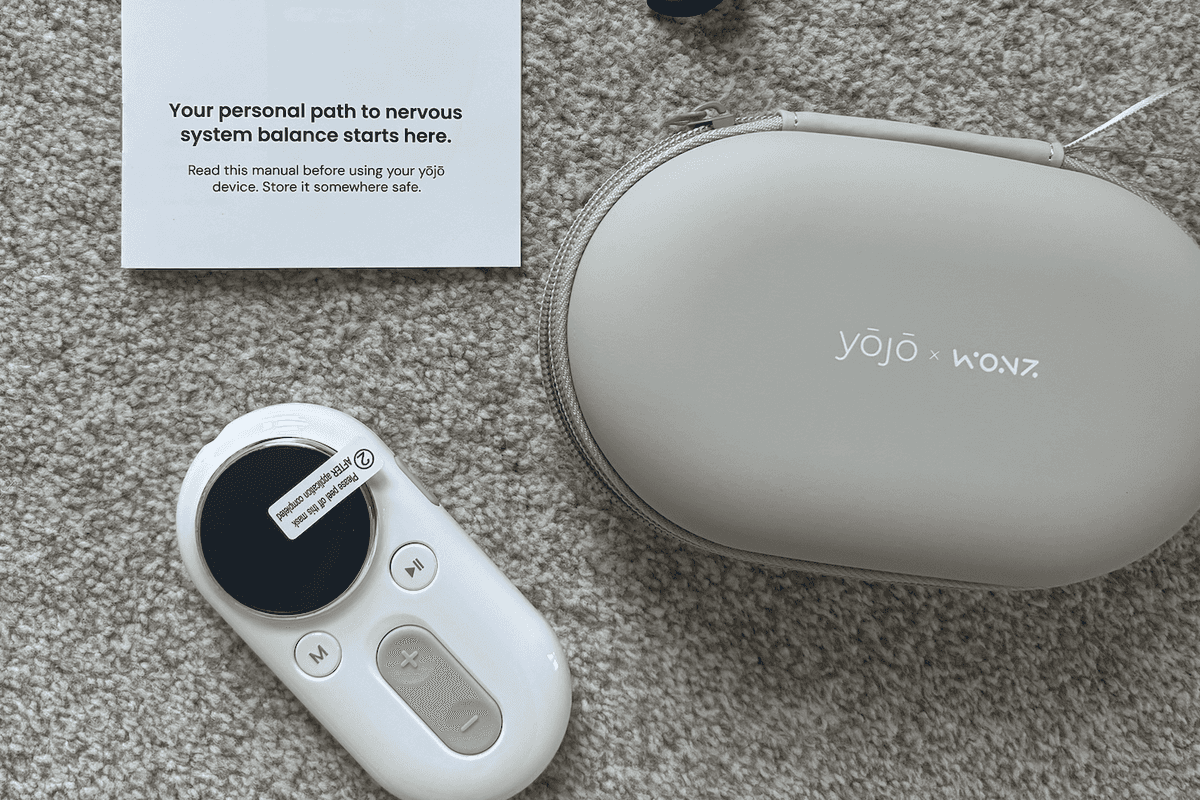
One of the names making huge waves in that space right now is yōjō - a science-backed wellness ecosystem that provides non-invasive vagus nerve stimulation, biofeedback, expert support, and personalised guidance through its app and handheld pod.
When I first met the brand during their UK launch, its experts told what seemed like too-good-to-be-true stories of Covid patients who’d regained their smell after two weeks of use, and insomniacs undergoing major sleep transformations.
As someone who believes in a prescriptive approach to wellness (“we don’t all use the same skincare, but we all take the same approach to health”, as one expert put it), I needed to try it for myself.
For context, I have a long, messy history with anxiety - and not the type of anxiety that makes you overthink about the drunk text you sent to an ex. The type that’s somehow unexplainable, yet makes it impossible to walk into a supermarket without feeling dizzy over the brightness of the lights, or spiral over whether the world around you is even real at all.
Ultimately, it’s rooted in poor nervous system functioning - and if there was anyone that could put this device through its paces, I was well-qualified.
The device has four modes each lasting 30 minutes per session. There's one for sleep, one for energy boosting, one for relaxation, and the one I’d end up being drawn to most: stress.
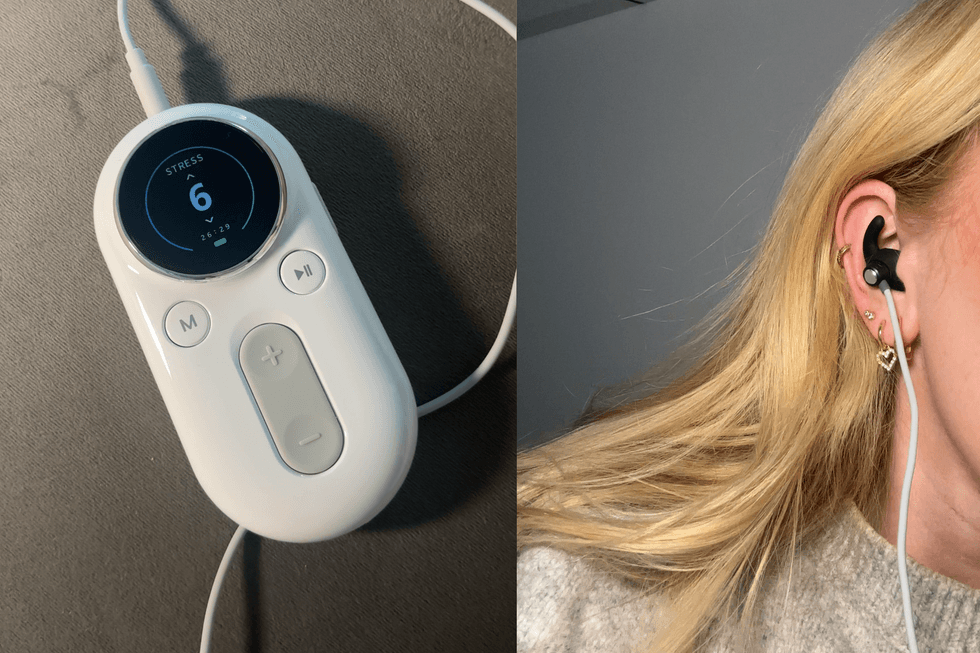
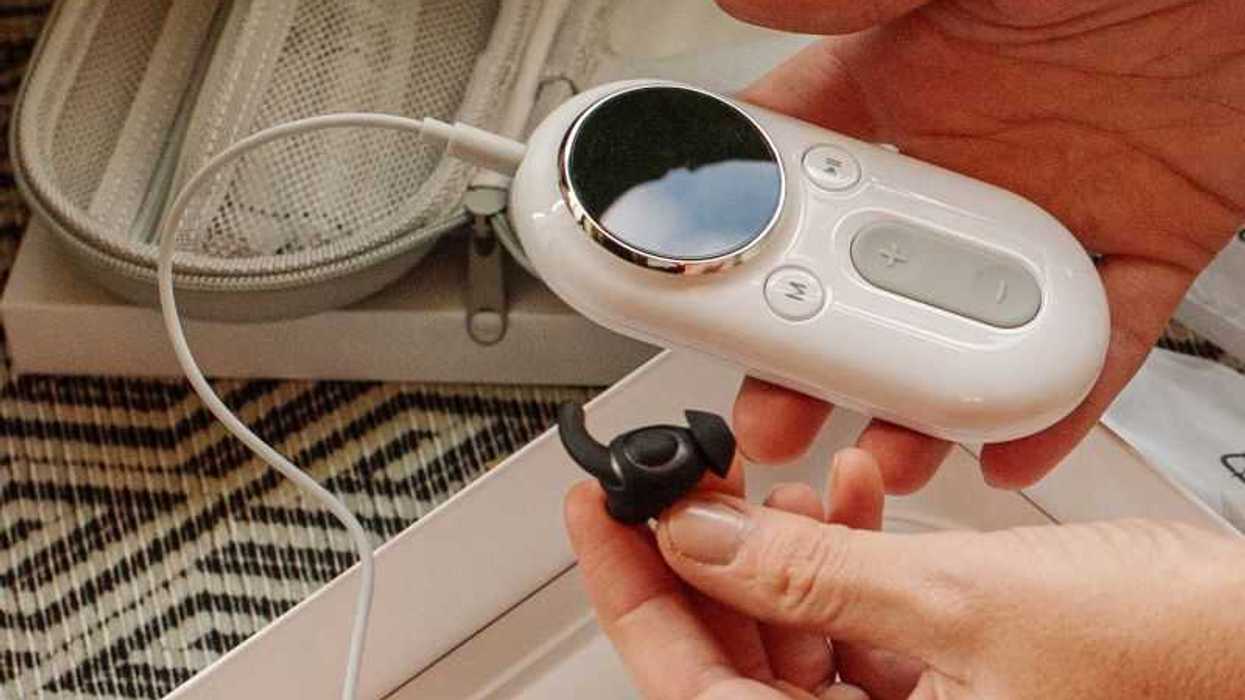
The handheld contraption is akin to a small games console complete with mall security guard-esque earpiece, which would be responsible for sending electrical pulses to my vagus nerve, and prompting my body to go into reset mode.
While the device itself is free, it requires a £399-per-year subscription to use: including access to the app, and a personal coach that you can message at any time.
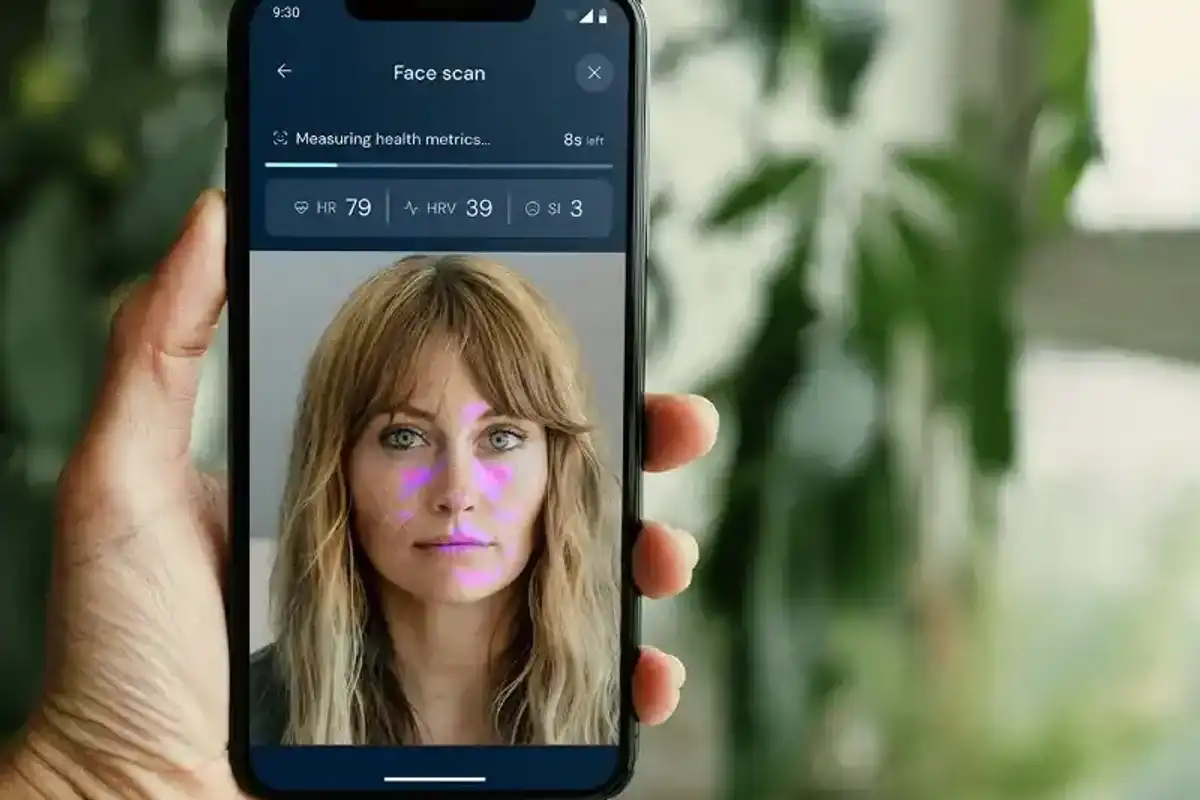
A session starts with a face scan using your iPhone camera - smartphones have only had the technology good enough to measure microchanges under the skin in the last couple of years. During the 30 second video, the app calculates blood flow to get a relatively accurate idea of blood pressure, heart rate, and, in turn, your heart rate volume and stress index.
Once you’ve chosen your mode, and popped your earpiece in, you can then connect to your phone via Bluetooth, and set the session’s intensity up to the highest mode, level 30. I could only manage level 3 on the first go, before the electrical pulses started to sting; however, yōjō’s coaches claim that the intensity has no effect on how well the device is working.
Apart from the occasional buzzing sound and pop of electricity, it’s relatively easy to forget you’ve got it in, and you can carry on as usual.
After the session is done, you commit to a second face scan, and the app compares and stores your results.
Arguably the biggest challenge is initially implementing it into your daily routine, and making it as consistent as remembering to brush your teeth.
In that spirit, for three months, I vowed to replace my ‘Songs that went Triple Platinum in my Living Room’ playlist on my morning commute with my new, slightly-less catchy wellness habit.
Then, every couple of weeks, I’d catch up with one of yōjō’s coaches over Zoom, who would go through my results - including changes in HRV, vagal tone, and stress index - assigning me short, daily tasks that would also help to aid any positive improvements.
 Yojo
Yojo
That could include things like going for a 30-minute walk, mindful breathing exercises, or journaling instead of scrolling.
The guidance element is a standout for me among other VNS programs on the market, as it’s a great opportunity to discuss your results on a more granular level, and what you might have experienced that day or week that could have contributed.
However, it wasn’t until we sat and combed the numbers that I realised real progress was happening beneath the surface, even when I didn’t feel a dramatic shift.
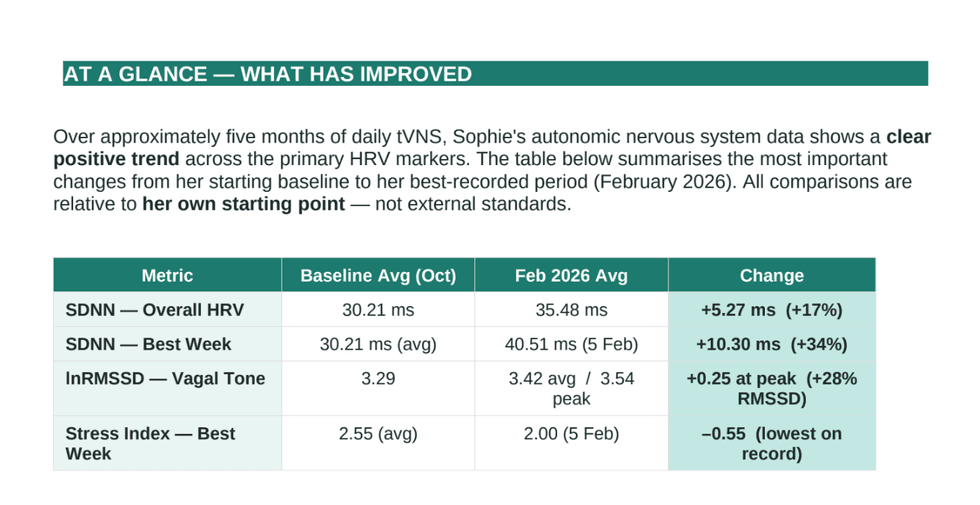
The first sign of real change came within just a matter of weeks. Despite changing nothing else about my lifestyle, my HRV began improving, meaning that my body could better handle the continuous demands of daily life - work, emotion, and movement - with more ease and less strain.
At its peak, my vagal tone also functioned at 28 per cent better than where I’d started, which translates to a calmer emotional responses (the vagus nerve is a key regulator of the stress response), better gut function (the vagus nerve innervates the digestive system, so vagal improvement often reduces stress-related gut symptoms), lower resting heart rate, and improved sleep depth.
While my stress index experienced some fluctuations - which you might think isn’t necessarily a good thing - it actually proves that my body is more adaptable than I ever thought it could be.
A nervous system that can appropriately raise its stress response when needed (a stressful week, poor sleep) and then return to calm, is considered a healthier nervous system than one that stays flatly elevated.
What’s more, one week saw my body do something it had not done at any prior point: all three primary markers peaking at the same time. High HRV, strong vagal tone, and the lowest sympathetic stress reading on record occurring together is a coherent physiological picture — and is what a well-regulated, genuinely calm nervous system looks like in the data.
I began to feel it, too.
Not in the loud, overnight-transformation way that I’d probably expected going into this, but in smaller, harder-to-dismiss ways that correlated with the numbers.
One of the biggest shifts I witnessed was sleep. While I’ve always been smug about nailing my eight hours, for the first time, I was actually waking up feeling more restored and energised for the day ahead - and had the bragging rights of a 100 sleep score on my Apple Watch to prove it.
No more yawning at 10am or requiring a two-hour sofa doomscroll before heading to the gym.
More so, my rush-hour commute had become less cortisol spike-inducing, and the claustrophobia of 50 other office dwellers towering over me left me noticeably more unbothered than usual.
I felt mental clarity and was able to think more clearly in formerly stressful situations: I was no longer the chronic overthinker I once was, and felt safe in knowing I could switch off those thoughts by dedicating just 30 minutes to myself.
Does that mean I’ve never felt the rush of adrenaline of anxiety since? Of course not - but this time, things feel… manageable. And sometimes that’s more than enough.
Most importantly, these quiet, yet significant changes didn’t really require me to do anything at all: I didn’t overhaul my diet, I didn’t suddenly start meditating for an hour every morning or training twice a day.
Where some wellness habits fall off over time, yōjō has now cemented itself as an essential part of my daily routine, and is one of few pieces of kit I’ll loudly promote to all of my equally-overworked, burnt out peers.
A new way of thinking for less than the price of a daily coffee? That’s a habit worth keeping around.
Why not read...
I’ve spent 6 months perfecting my seasonal hair shedding routine - here’s what actually works
Sign up to our free indy100 weekly newsletter
Top 100