The Conversation (0)
Where is Bolotana? Inside new 'Blue Zone' that could hold key to women's longevity
Where is Bolotana? Inside new 'Blue Zone' that could hold key to women's longevity
Researchers think they've just discovered a potential new Blue Zone, also known as an area of the world where people live to be 100 years old at a higher-than-average rate - and it's safe to say the longevity crowd are getting excited.
What's more - it's located just 70 miles away from an already-existing Blue Zone - and on the same island.
The original five Blue Zones were named as Okinawa (Japan), Sardinia (Italy), Nicoya (Costa Rica), Ikaria (Greece), and Loma Linda (USA) - all of which share similar traits in terms of lifestyle and diet.
Dan Buettner's Netflix documentary Live to 100: Secrets of the Blue Zones from 2023 became Emmy-winning, and took a peek inside just why some people are living longer than others, based on location, and has gone on to pique the interest of wellness circles since.
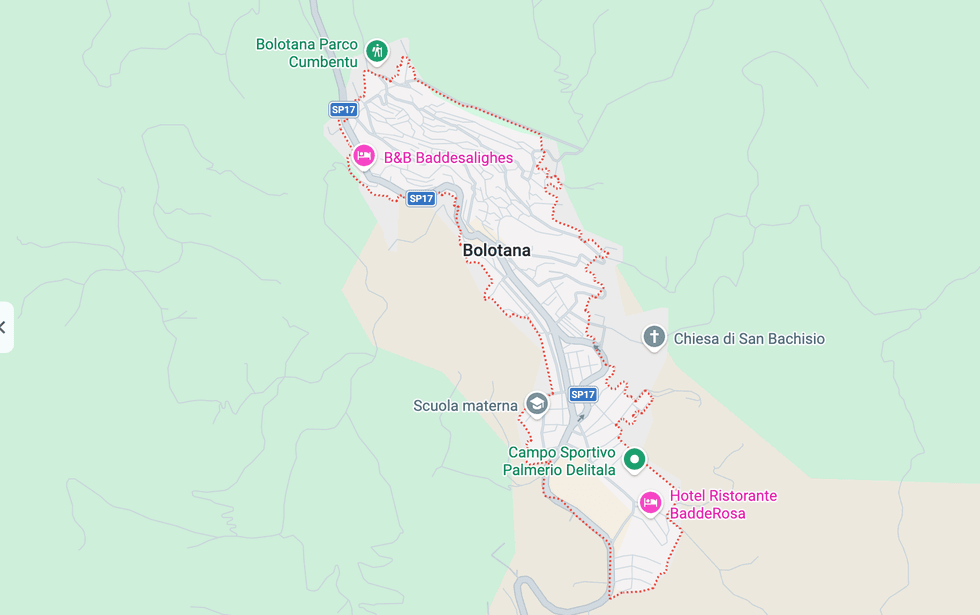
Now, attention is turning to a second destination in Sardinia, which is being closely-monitored as a potential sixth Blue Zone. But, what make it even more special, is that it's championing female longevity specifically.
 Google Maps
Blue Zone research on the island was once centred around a cluster of remote villages including Ogliastra, and Barbagia - however, they could now be joined by one more far-removed with its own USP.
Researchers at Sardinia’s University of Sassari and the University of Alabama at Birmingham in the US, have found that 13.8 per cent of women in Bolotana, a mountainous town located in the Margine area of central Sardinia, who reach the age of 70 will live to 100 – placing it second in the world for female longevity after Hong Kong.
Despite having just 2,266 residents, a report in Frontiers in Aging found that in 2025, there were 12 centenarians. While it may not sound like a lot, that's 12 times the Sardinian average. For context, 3.5 per cent of women in Italy will reach the same milestone compared to Bolotana's 14 per cent.
By the end of 2027, there are expected to be even more centenarians.
So why are people in places such as Bolotana living so long?
 Pexels
"Blue Zones tend to be in remote areas", Dan Buettner, who has dubbed the findings "extraordinary", notes in an Instagram video on the topic. "They are typically villages, they're typically walkable places, but a key feature it seems of most Blue Zones is they're insulated from the corrosive effects of modernisation."
He continues: "The American food culture hasn't arrived yet - they're not eating chips, sodas and pizzas - cars are slow to arrive so that's more decades where they're actually walking, and social media isn't completely adopted yet so people are still talking with each other face-to-face."
In short - they're still adopting slow living as a way of life, and haven't yet let modernisation take joy out of the simple things.
That might be growing and eating their own fresh foods, meeting friends regularly to engage in great conversation, and choosing to walk around the area where they live without any real aim or pressure.
But while Sardinia's Blue Zone population has largely been dominated by men until now, this new discovery is opening up conversations around the future of female longevity too.
Now, researchers have vowed to conduct "longer observation periods, continued demographic validation, and individual-level comparative studies" to "determine the persistence and possible determinants of its exceptional longevity profile."
Watch this space.
Why not read...
Real reason 'Blue Zone' residents live to over 100, according to longevity expert
A 'dopamine diet' could hold the key to improving your mood through food
Sign up to our free indy100 weekly newsletter
Top 100