The Conversation (0)
Trump ducks question about Iran invasion
The White House
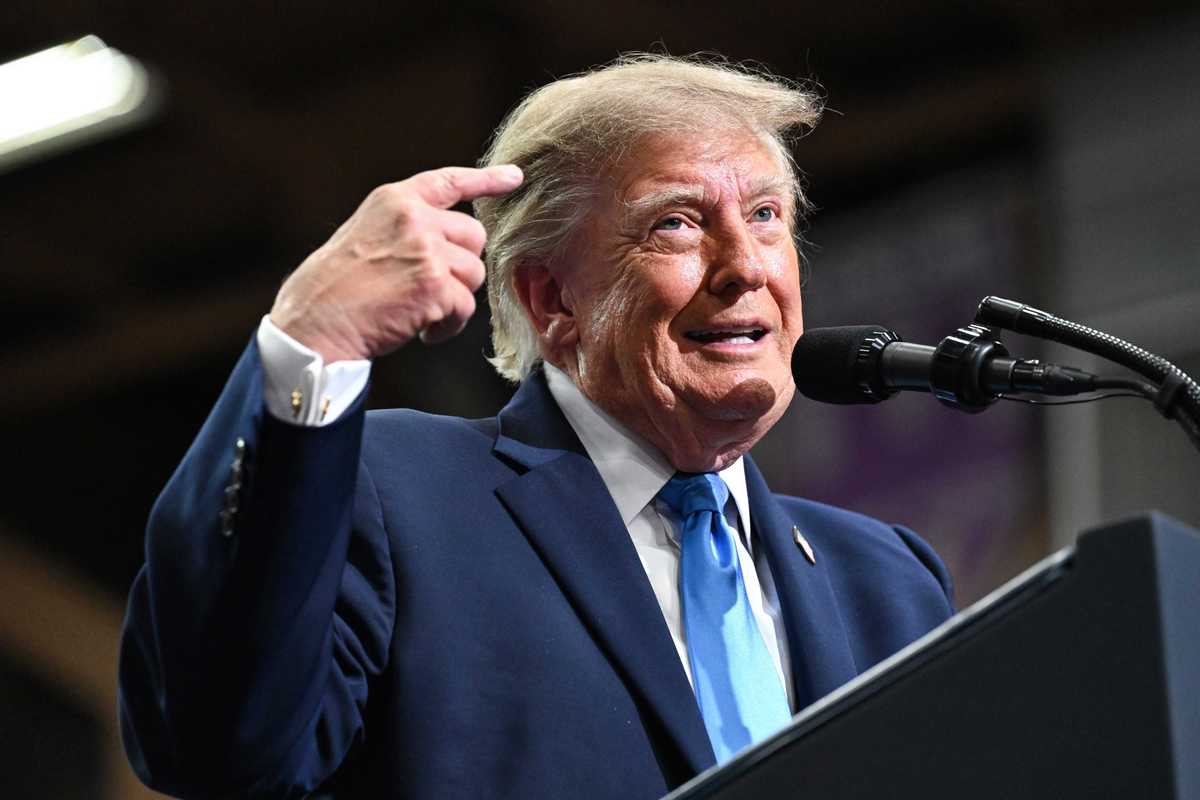
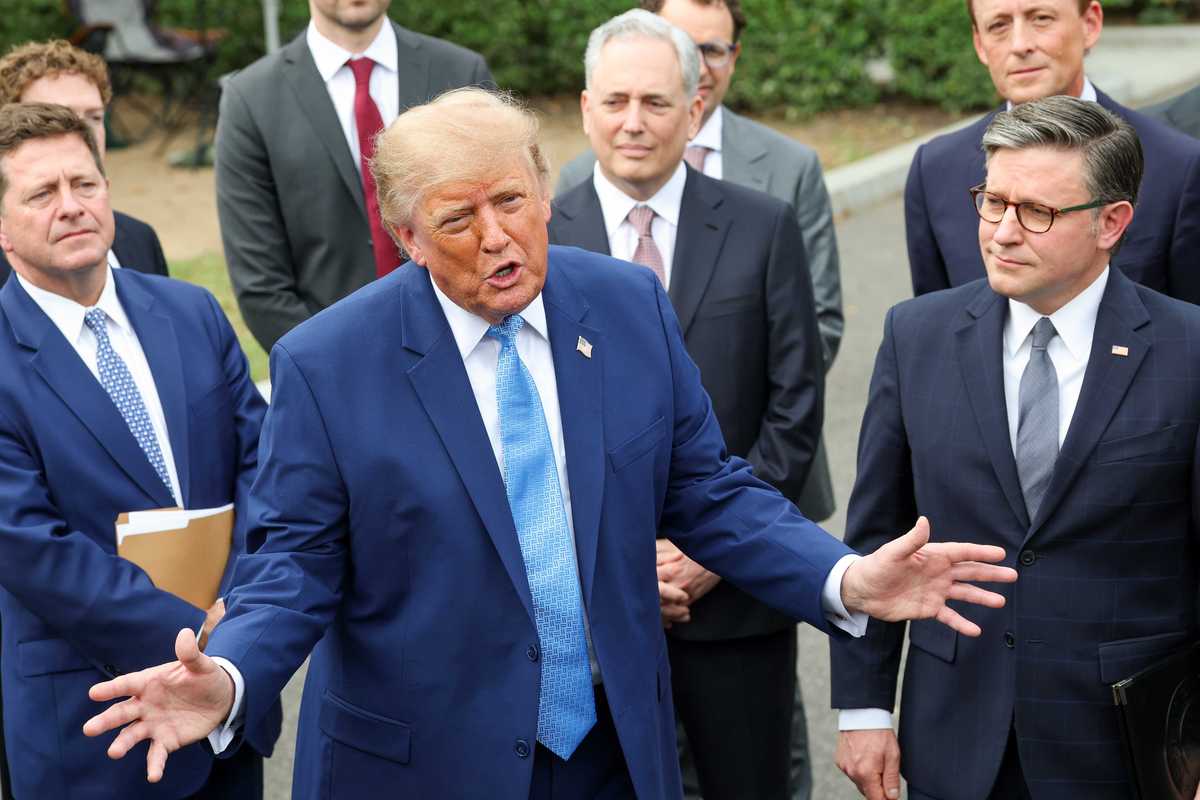
As thousands of additional American troops deploy to the Middle East, President Donald Trump has declared the United States is "winning the war" with Iran, a claim that stands in stark contrast to his administration's often contradictory and shifting rhetoric on the escalating conflict.
Mr Trump has publicly criticised other nations for their lack of support, only to later assert that their assistance is not required. His administration has twice postponed deadlines for Iran to reopen the Strait of Hormuz. In a series of conflicting statements, he has threatened to "obliterate" Iran's energy infrastructure if the vital waterway remains largely closed, while simultaneously stating the US was "not affected" by its closure.
Earlier this month, Mr Trump suggested that a predecessor – strongly implied to be a Democrat – had privately expressed regret for not taking similar action against Iran. However, representatives for every living president swiftly denied any such conversation had taken place.
As the conflict entered its second month, Mr Trump's characteristic use of embellishments, exaggerations, and falsehoods is being scrutinised in an environment where the stakes are considerably higher than a typical political dispute. A president known for employing bluster and salesmanship to shape narratives is now confronting the inherent unpredictability of war.
Leon Panetta, who served Democratic presidents as defence secretary, CIA director, and White House chief of staff, observed that he has "seen enough wars where truth becomes the first casualty." He added: "It’s not the first administration that has not told the truth about war. But the president has made it kind of a very standard approach to almost any question to in one way or another kind of lie about what’s really happening and basically describe everything as fine and that we’re winning the war."
Michael Rubin, a historian at the American Enterprise Institute and a former staff adviser on Iran and Iraq at the Pentagon, noted that Mr Trump is "the first president of any party in recent history that hasn’t self-constrained to live within rhetorical boundaries. So of course it creates a great deal of confusion."
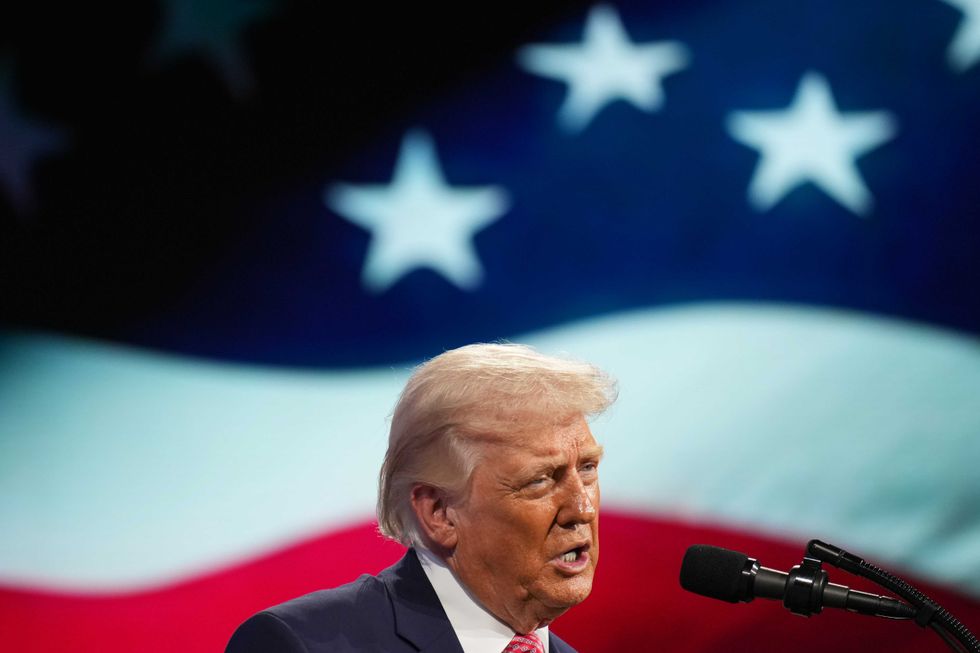 AP Photo/Mark Schiefelbein
For critics, Mr Trump's inconsistent style suggests a lack of coherent long-term strategy. Yet, for the president, these "zigs and zags" appear to be a deliberate tactic, designed to keep opponents – and indeed, almost everyone – constantly off balance. This approach was evident this week when, hours before announcing the second delay for Iran to reopen the strait, Mr Trump claimed he was unsure of his decision, remarking to his Cabinet, "In Trump time, a day, you know what it is, that’s an eternity."
However, investors remain unconvinced, with US stocks recording their worst week since the conflict began. On Capitol Hill, this freewheeling approach is proving more frustrating than amusing. Representative Gregory Meeks of New York, the leading Democrat on the House Foreign Affairs Committee, lamented that Mr Trump is "going back and forth and constantly contradicting himself. The administration is winging it. So how can you trust what the president says?"
While Republicans have not gone as far in their criticism, concern was palpable ahead of a two-week congressional recess. Senator John Kennedy of Louisiana stated that his constituents "support what the president has done. But most of my people are also equally or even more so concerned about cost of living." Republican Representative Chip Roy of Texas, a member of the House Budget Committee and the conservative House Freedom Caucus, acknowledged his constituents were on board with "blowing some crap up." Nevertheless, he expressed reservations about the prospect of ground troops and criticised the administration for not providing sufficient detail in briefings for lawmakers, which he said only reveal information already "read in the papers."
"Taking out bad guys, taking out conventional (weapons), taking out or at least working to take out nuclear capability, pressing to keep the straits open, all those are good things and I’ve been supportive and will continue to be supportive," Mr Roy said. "But we’ve got to have a serious conversation about how long this is going to go, boots on the ground, all those things, press for further briefings and understanding of where it’s all headed."
Despite Mr Trump's strong support among Republicans, a recent poll by The Associated Press-NORC Center for Public Affairs Research indicates he risks alienating his base if the US becomes embroiled in a prolonged Middle East conflict, something he vowed to avoid. While 63% of Republicans back airstrikes against Iranian military targets, only 20% support deploying American ground troops. This highlights the political challenges for Mr Trump, who did not prepare the nation for such an extensive overseas engagement. Should the conflict escalate or drag on, pressure on Republicans could intensify ahead of the November elections, where their congressional majorities are at risk. Some within the party have indicated that sending in ground troops would constitute a red line.
The administration would also likely require congressional approval for an additional \$200bn to fund the war. This sum, which Mr Trump described as "nice to have" even as he claimed the war was "winding down," would be a difficult vote at any time, but poses particular risks for budget-conscious Republicans in an election year.
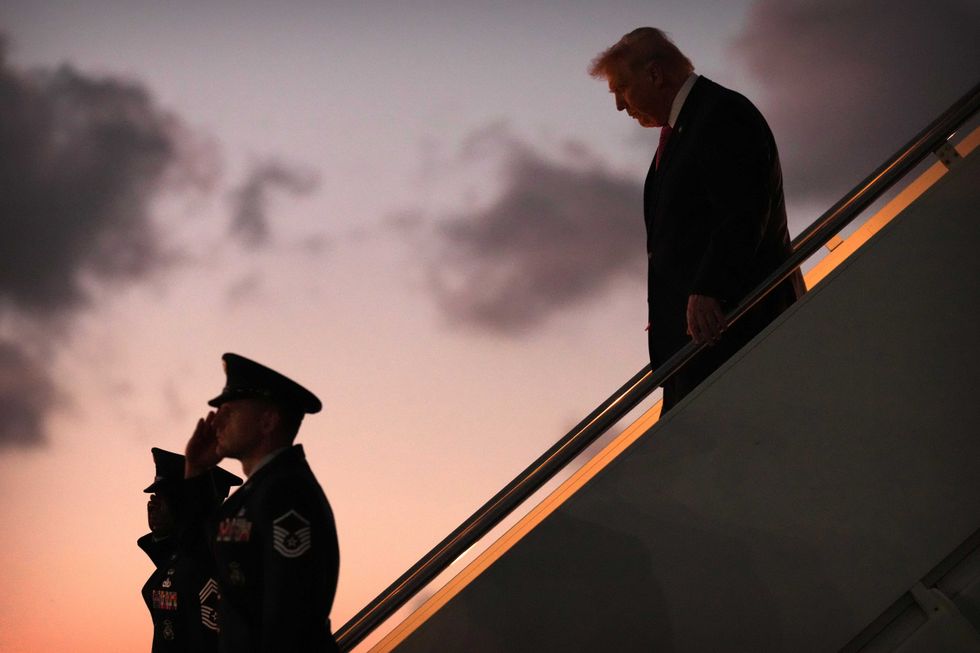 AP Photo/Mark Schiefelbein
White House spokesperson Anna Kelly stated that Mr Trump is "right to highlight the vast success of Operation Epic Fury. Iran desperately wants to make a deal because of how badly they are being decimated, but the President reserves all options, military or not, at all times."
Mr Rubin, the former Pentagon adviser, suggested there might be a "logic" to the president's evolving rhetorical approach, noting that Mr Trump's initial comments about ongoing negotiations, which Iran denied, could "spread suspicion and fear within the regime circles." He added: "Perhaps Donald Trump or those advising him simply want the Iranians to grow so paranoid they refuse to cooperate with each other or perhaps they even turn on each other. But then again, there's always a danger with Donald Trump of assuming that his rhetoric is anything more than shooting from the hip."
Representative Adam Smith of Washington state, the top Democrat on the House Armed Services Committee, believes Mr Trump will not fully achieve his objectives, including the complete elimination of Iran's nuclear programme, "in the current trajectory." If this proves to be the case, Mr Smith suggested the president could simply rely on his rhetorical skills to declare the US victorious and end the conflict. "As I've jokingly said, nobody I have ever met or heard of in human history is better at exaggerating his own accomplishments than Donald Trump," Mr Smith remarked. "So go knock yourself out and claim this was some great success."
Top 100