The Conversation (0)
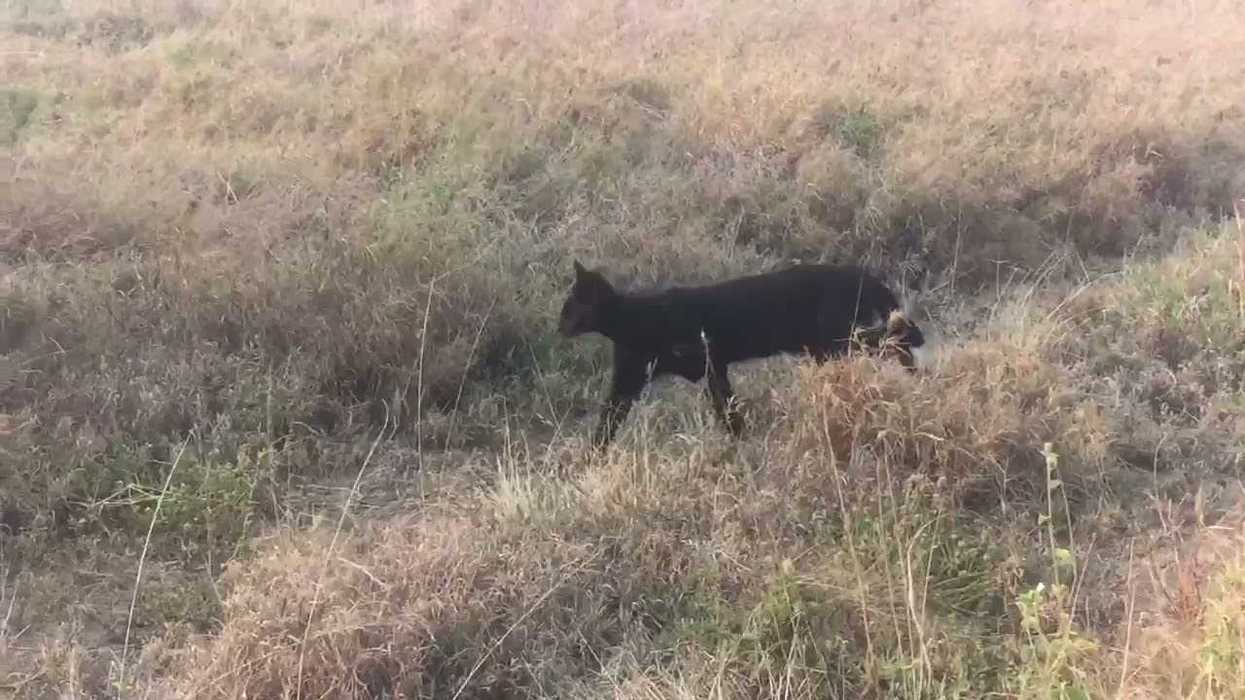
Rare sighting of melanistic serval cat
Sell A Moment / VideoElephant
They're a medium-sized wild cat in Africa - but how much do you know about the black serval (Leptailurus serval)?
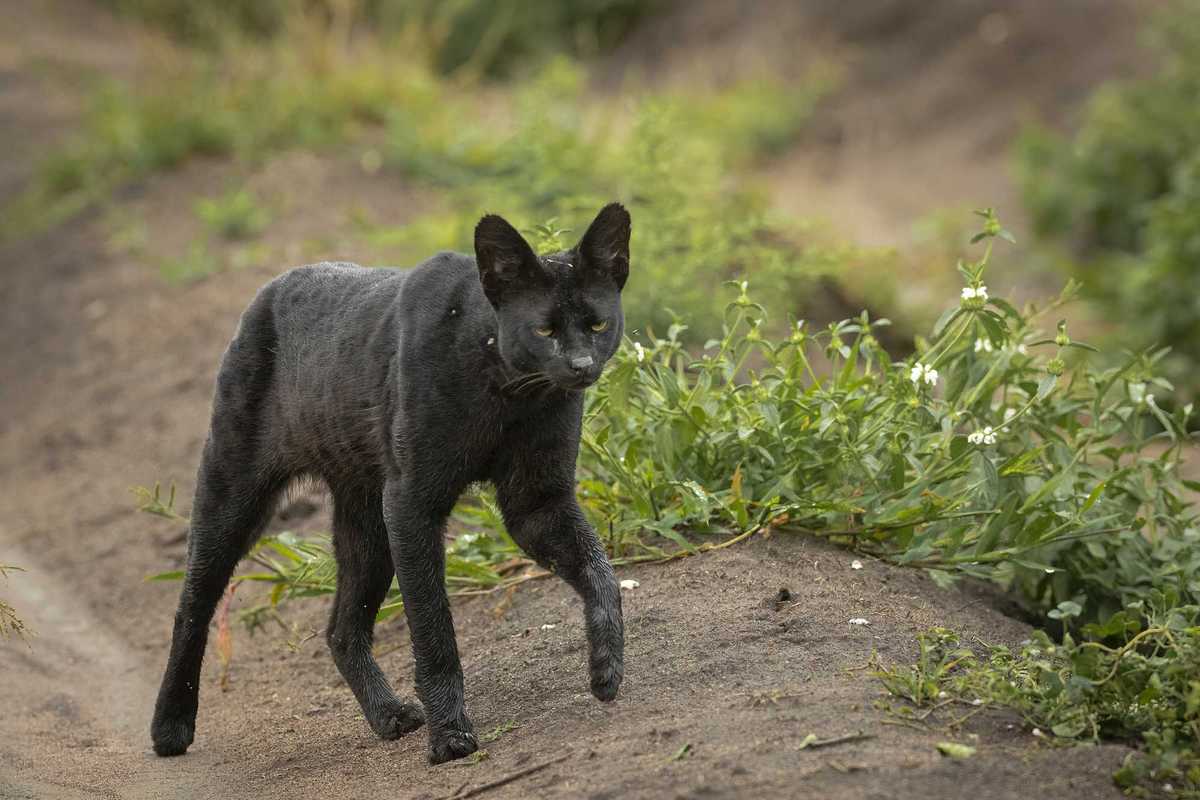
They differ from regular spotted cheetah-like severals in that their distinct black colour (sometimes with faint ‘ghost’ spots) is down to a difference in their genetic code which affects their cells that produce their pigment.
As for their build, servals stand half a metre tall (1.6ft), and have the longest legs relative to the body size of any cat. With their long legs they can run up to 40 miles per hour (64km/h) and leap up to 3m (9.8ft) high, according to BBC's Science Focus.
Those abilities are essential for their survival as it helps them get away from predators such as leopards, hyenas and African wild dogs but are also used to hunt down their food which can range from small mammals, reptiles and amphibians.
Another distinct characteristic of servals is their massive ears - we're talking the largest ears relative to head size of any cat.
 iStock by Getty Images
But why are they so big? Well, there are 22 muscles which allow the animals to independently rotate each ear through 180 degrees - something which is needed for them to be able to hunt small prey in tall grass.
To understand just how big serval's ears truly are, if us humans had ears like servals they would be the size of dinner plates - now that's certainly an interesting image.
Altogether these qualities as a whole mean servals one of the most successful hunters in the wild cat kingdom, with a higher than 50 per cent success rate - compare that with lions and leopards whose success is around a third.
Black servals typically live in areas such as Aberdare Mountains in Kenya or the Ethiopian Highlands, where there is densely forested areas above 2,000m where their coats help them blend into the shadows. But they have also been seen in the grasslands of the Tsavo Ecosystem too.
In the years 2011-2016, a survey done by Sheldrick Wildlife Trust and Wildlife Works found that 47 per cent of serval sightings in Tsavo were Black servals - a higher amount compared to ones spotted in the forested habitats.
There are a number of theories being floated as to why this may be the case - the first being a sampling error due to black servals being easier to spot, and recorded in the lighter environment compared to the forested parts.
The second that it is simply down to genetic chance as a result of random gene frequencies, while the third is that the animal's genes provide them with qualities which give them an increase chance of survival and pass melanistic genes down to their offspring. Some of these traits include improved thermoregulation or enhanced disease resistance.
But at the end of the day, scientists and experts at this moment in time aren't quite sure of the cause.
Why not read...
- India is starting to split in two, new study discovers
- Scientists discover creature 'beyond imagination' encased in amber
Sign up to our free indy100 weekly newsletter
Have your say in our news democracy. Click the upvote icon at the top of the page to help raise this article through the indy100 rankings.
Top 100