The Conversation (0)
Science & Tech
Related: NYC/Boston Marathon Resurgence: Behind the Numbers
The gruelling Boston Marathon, a test of endurance for over 32,000 runners, is set to become a smoother experience this year, thanks to the intervention of a crowd science expert. Organisers of the world's oldest annual marathon have enlisted Marcel Altenburg to navigate the challenges posed by its historic, narrow streets and ever-growing field.
Mr Altenburg, a senior lecturer of crowd science at Manchester Metropolitan University in Britain, emphasised the delicate balance between innovation and tradition. "There are certain things that we can’t change — that we don’t want to change — because they make the Boston Marathon," he said. "Like, I’m a scientist, but I can’t be too science-y about the race. It should stay what it is because that’s what I love. That’s what the runners love."
The Boston race, inspired by the inaugural modern Olympics in 1896 and the legendary messenger Pheidippides – who famously declared "Rejoice, we conquer!" before collapsing – has seen its participant numbers swell dramatically. From just 15 runners in 1897, the field peaked at 38,000 for its 100th edition in 1996, settling around 30,000 since 2015. This expansion has increasingly strained the narrow New England roads and the host communities eager to resume normal life.
Race director Dave McGillivray highlighted the core dilemma: "It would be kind of great someday to be able to grow the race a little bit more. The problem with this race is that it’s about two things: time and space. We don’t have either. … So, we’re trying to be innovative."
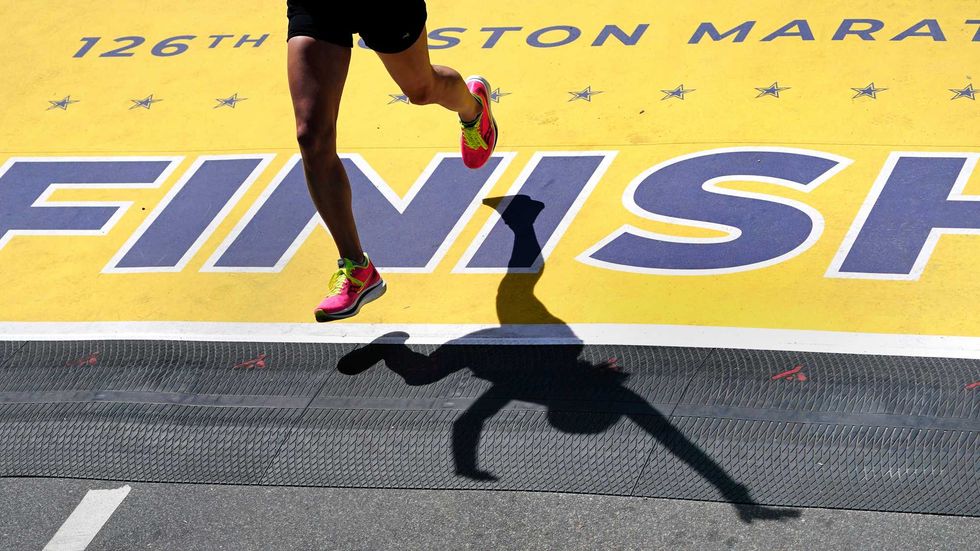 A runner crosses the finish line of the Boston Marathon AP Photo/Charles Krupa
This is where Mr Altenburg, a former German army captain and ultra-marathon runner, steps in. Having previously advised major sporting events, airports, and exhibitions on crowd management, he applies sophisticated models to simulate the Boston Marathon over 100 times. "We have simulated the Boston Marathon more than 100 times to run it once for real. That is the one that counts," Mr Altenburg explained. "They gave me, pretty much, all creative freedom to simulate more waves, simulate more runners and — within the existing time window — they allowed me to change pretty much anything for the betterment of the running experience."
The most visible change for participants will be the introduction of six starting waves, up from four, to better distribute runners along the course. This strategy, first employed in Boston in 2011, aims to prevent bottlenecks, particularly on Hopkinton’s Main Street, which narrows to just 39 feet wide at the start. Less obvious adjustments include optimising bus unloading, the placement of water and aid stations, and the flow through the finish line chutes, where runners receive medals, blankets, and medical attention.
Lauren Proshan, chief of race operations and production for the Boston Athletic Association, described the process as a rebirth for the historic event. "For an event that’s as old as ours, 130 years, it allowed us to be a startup all over again," she said. The goal, she added, is a seamless experience: "The change isn’t meant to be earth-shattering. It’s to be a smooth experience from start to finish. It’s one of those things that you work really, really hard behind the scenes and hope that no one notices — a behind-the-curtain change that makes you feel as if you’re just floating and having a great day." Shorter queues for facilities are also a hoped-for benefit.
Mr Altenburg praised the BAA’s meticulous approach. "What I loved about working with the BAA was how aware they are of what the Boston Marathon is. And they won’t change anything lightly," he noted. "So it was very detailed work from literally the moment the race last year ended to now. That we check every single option. That we really make sure that if we change something about this historic race, then we know what we’re doing."
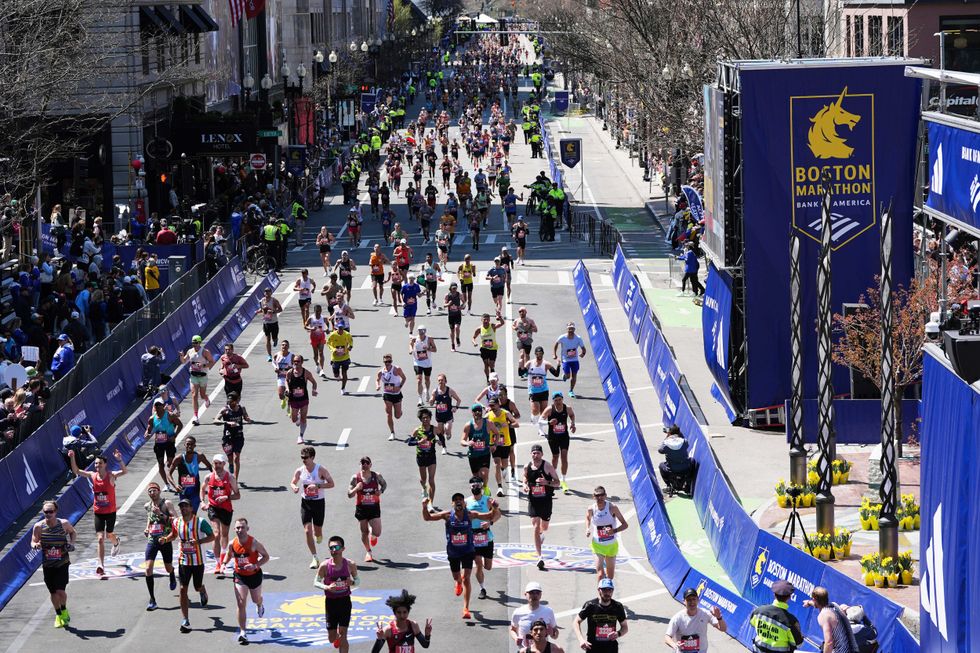 Runners approach the finish line during the Boston Marathon, April 21, 2025, in BostonAP Photo/Charles Krupa, File
The BAA plans to gather feedback over the next three years before considering further expansion or alterations. "Fingers crossed, hope for the best, but we’ll get feedback from the participants," Mr McGillivray said. "And they’ll let us know whether or not it worked or not." However, with the course length and route fixed, and keeping the roads open longer not an option, there are inherent limits to what crowd science can achieve.
Ultimately, while science can optimise the logistics, the fundamental challenge remains with the athletes. As Mr Altenburg concluded: "I can talk. I’m a scientist. I just press a button and it’s going to be. But the runners still have to do it."