The Conversation (0)
Why This Queen Bee Could Be The Answer to Our Global Warming …
ZMG - Amaze Lab / VideoElephant
For decades, scientists believed the destiny of a honeybee larva to become a queen, rather than a worker, was solely determined by its diet of nutrient-rich royal jelly. However, groundbreaking new research suggests that the physical and chemical environment of the larval chamber itself plays a crucial role in shaping a queen's development.
A study published in the journal Nature indicates that the unique wax chamber constructed by worker bees for a future queen is far more than a passive container. Kai Wang, a scientist with the Institute of Apicultural Research at the Chinese Academy of Agricultural Sciences and a leader of the study, emphasised this point, stating: "A royal diet means nothing without a royal palace."
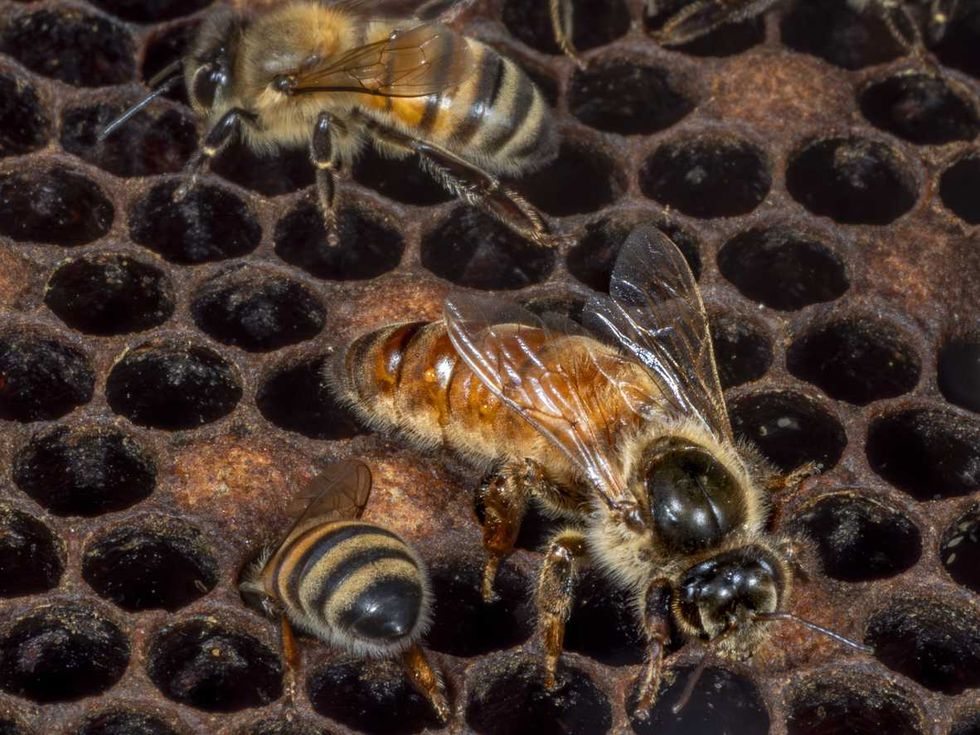
Honeybee nests are typically composed of hexagonal wax cells, secreted by female workers, used for food storage or rearing offspring. Yet, colonies also build a distinct third type of chamber specifically for future queens. These structures, often noticed by beekeepers as indicators of swarming or queen replacement, resemble peanut shells and hang downwards from the comb.
"Our study shows it is actually an active, highly engineered 'smart incubator'," Wang explained, referring to these specialised chambers. The research, which focused on the western honeybee, revealed that the wax used for these royal cells possesses unique properties. It is softer, melts at a higher temperature, and emits a distinct chemical "perfume."
Researchers propose that the softer walls provide ample space for the growing larva to expand, while the specific scents could act as vital hormonal triggers. The study found that even when fed royal jelly, larvae exposed to worker-cell wax exhibited poorer queen development and significantly higher mortality rates. This suggests that the "smell and feel" of the royal wax are essential for their survival and transformation into a queen.
 iStock/Getty
The worker bees responsible for constructing these queen cells also displayed remarkable adaptations. They were observed to have unusually high thoracic temperatures and distinct gene activity. Wang elaborated on this demanding task: "To mould this special, high-melting-point wax, these young bees have to turn their bodies into tiny 'living furnaces,' heating their thoraxes to over 39 degrees Celsius (102 degrees Fahrenheit), like running a fever."
These bees are not a permanently specialised caste, but rather "ordinary, flexible young workers" undertaking a temporary, emergency role. Their gene expression shifts short-term to help them process the wax, allowing them to be "the ultimate multitaskers" – building queen cells while simultaneously performing everyday hive duties such as sharing food and inspecting other cells.
Wang expressed his surprise that the "deeply rooted dogma" of nutritional determinism – the belief that royal jelly alone dictates queen development – was found to be incomplete. While the study has not yet pinpointed the exact aspect of the wax responsible, the next step is to identify the molecular switch. Wang articulated this goal: "Which specific chemical scent or physical touch actually tells the queen larvae's DNA, 'You are the queen.'"
The implications of this research extend beyond honeybees. Wang suggested that similar effects might be present in other social insects, where structures like termite mounds or wasp paper nests could offer more than just shelter, potentially influencing colony development.
From a practical standpoint, the findings could significantly benefit beekeepers in breeding healthier queens, according to Boris Baer, professor of pollinator health at the University of California, Riverside, and another leader of the study. Healthy queens are fundamental to maintaining robust colonies, which are crucial for pollinating over 80 major agricultural crops. Baer noted that a deeper understanding of how colonies naturally produce high-quality queens could support more resilient bee populations, especially as beekeepers globally report substantial colony losses.
Ultimately, Wang views these discoveries as highlighting the honeybee colony as a "superorganism," where bees collectively guide an ordinary larva to become their future mother. He concluded: "Eating well is important, but living in the perfect home is what truly changes your destiny."
Top 100