The Conversation (0)
Why Is This Skull So Important in Understanding Human History?
ZMG - Amaze Lab / VideoElephant
A cornerstone of understanding the earliest human presence in the Americas, the Monte Verde site in Chile, is now facing a significant challenge to its long-held age. For decades, evidence from the site, including footprints, wooden tools, building foundations, and an ancient fire pit, pointed to human settlement around 14,500 years ago. However, a new study suggests Monte Verde could be considerably younger, sparking a fierce debate within the scientific community.
The new research, published in the journal Science, re-examines sediments from nine areas along the Chinchihuapi Creek near the site. Scientists uncovered a layer of volcanic ash dating back approximately 11,000 years ago. According to study co-author Claudio Latorre, from the Pontifical Catholic University of Chile, anything found above this ash layer must be more recent.
"We basically reinterpreted the geology of the site. And we came to the conclusion that the Monte Verde site cannot be older than 8,200 years before present," Latorre stated. The researchers propose that landscape changes, such as stream erosion, may have mixed older and newer geological layers, leading previous studies to misdate ancient wood as part of the Monte Verde settlement.
However, these findings have met with strong opposition from numerous scientists, including those involved in the original excavations. Michael Waters of Texas A&M University, who was not involved in either study, commented: "They have provided, at best, a working hypothesis that is not supported by the data they presented."
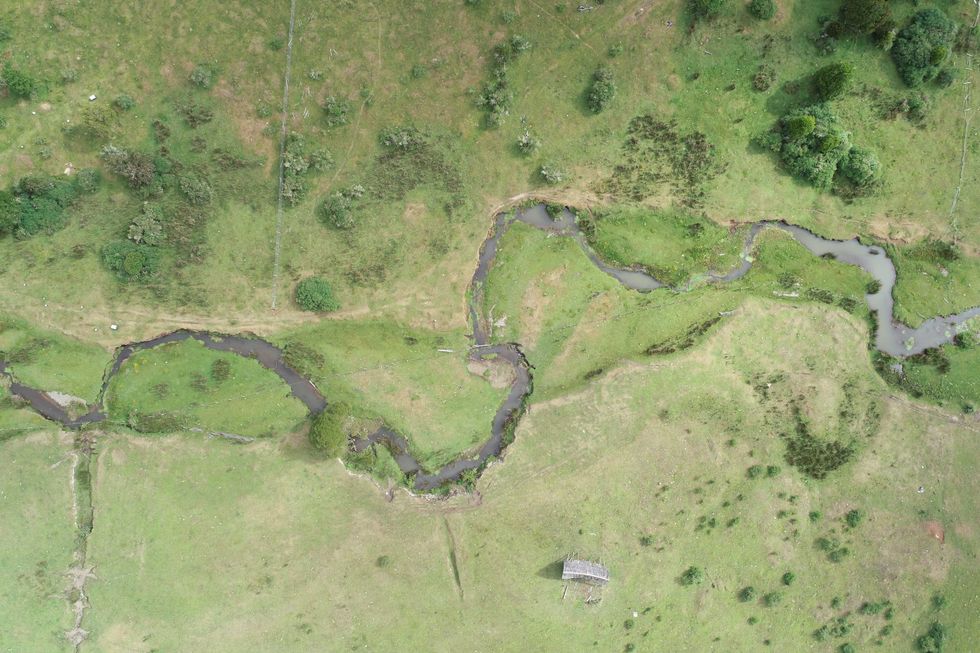 Monte Verde archaeological site in ChileTodd Surovell via AP
Critics argue that the new study’s analysis relies on samples from the area surrounding Monte Verde, where the geology may not be comparable to the site itself. They also contend there is insufficient evidence to prove the volcanic ash layer once covered the entire landscape. Furthermore, the study is criticised for failing to adequately explain artifacts directly dated to 14,500 years ago, such as a mastodon tusk fashioned into a tool, a wooden lance, and a digging stick with a burned tip.
Archaeologist Tom Dillehay of Vanderbilt University, who led Monte Verde's initial excavation, expressed his concern via email: "This interpretation disregards a vast body of well-dated cultural evidence." The new study's authors, including Todd Surovell of the University of Wyoming, defend their work, asserting they sampled within, upstream, and downstream of the site, and question the reliability of the older artifact dating.
The age of Monte Verde is crucial to understanding how humans first arrived in the Americas. Its initial discovery and dating, despite early controversy, helped to overturn the long-standing "Clovis-first" theory, which posited that the first arrivals were a group making distinctive stone tools 13,000 years ago.
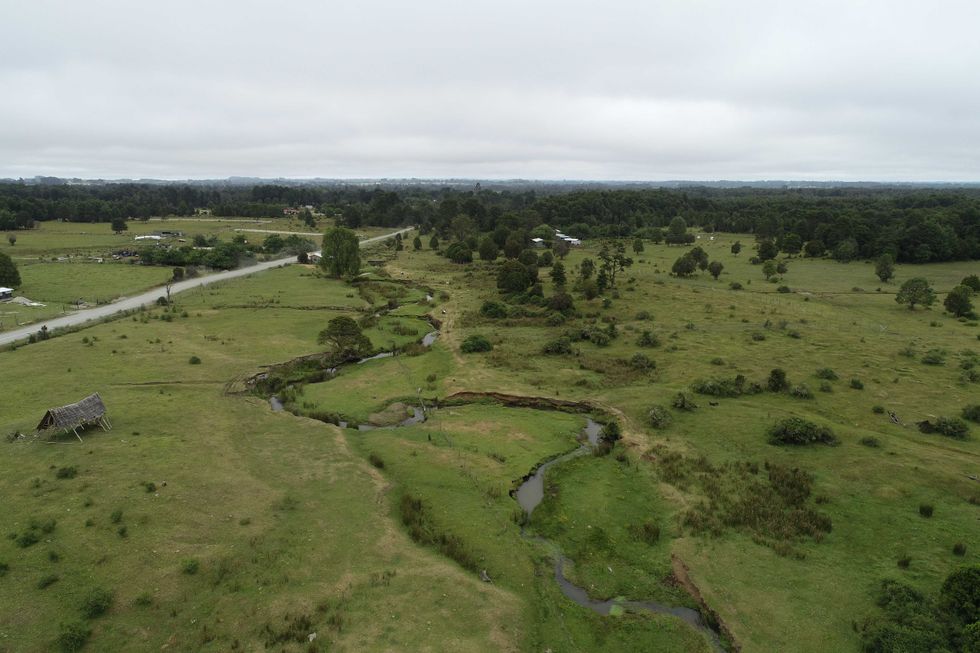 This 2023 image provided by Todd Surovell shows the Monte Verde archaeological site and Chinchihuapi Creek in ChileTodd Surovell via AP
While other pre-Clovis sites like Cooper’s Ferry in Idaho and the Debra L. Friedkin site in Texas have since been found, a revised date for Monte Verde could reignite debates about early human migration routes from Asia – whether via an ice-free corridor, coastal boats, or a combination.
Surovell believes a new date for Monte Verde could reopen discussions on the most likely routes taken by early humans. He concluded: "Given enough time and given the ability to do science, science is self-corrective. It eventually reaches the truth."
Top 100