The Conversation (0)
NASA's discontinued MAVEN reveals Mars aurora clues
USA Today - Vertical / VideoElephant
NASA’s Curiosity rover has been roaming Mars for a while now (14 years and counting) since it landed back in 2012 and it has just come across a new notable discovery.
Last month, it found ‘honeycomb-like’ patterns on the planet’s surface, located in the Martian valley known as “Valle Grande," and scientist have described the find as a ‘field of honeycomb textures’.
Size-wise, the polygons are between 1.3-3 inches in diameter, and appear on the side of hill nicknamed “Miraflores" which stands at 20 feet (6 meters) and is located close by, in the 360-degree panorama images captured on June 19 and 20.
Although polygonal shapes have been spotted before on in this mission, experts say it's the most they've ever seen in one place.
But the question is, how were they made? At the moment, this is something scientists are still trying to answer but are carrying out further research to find the answer.
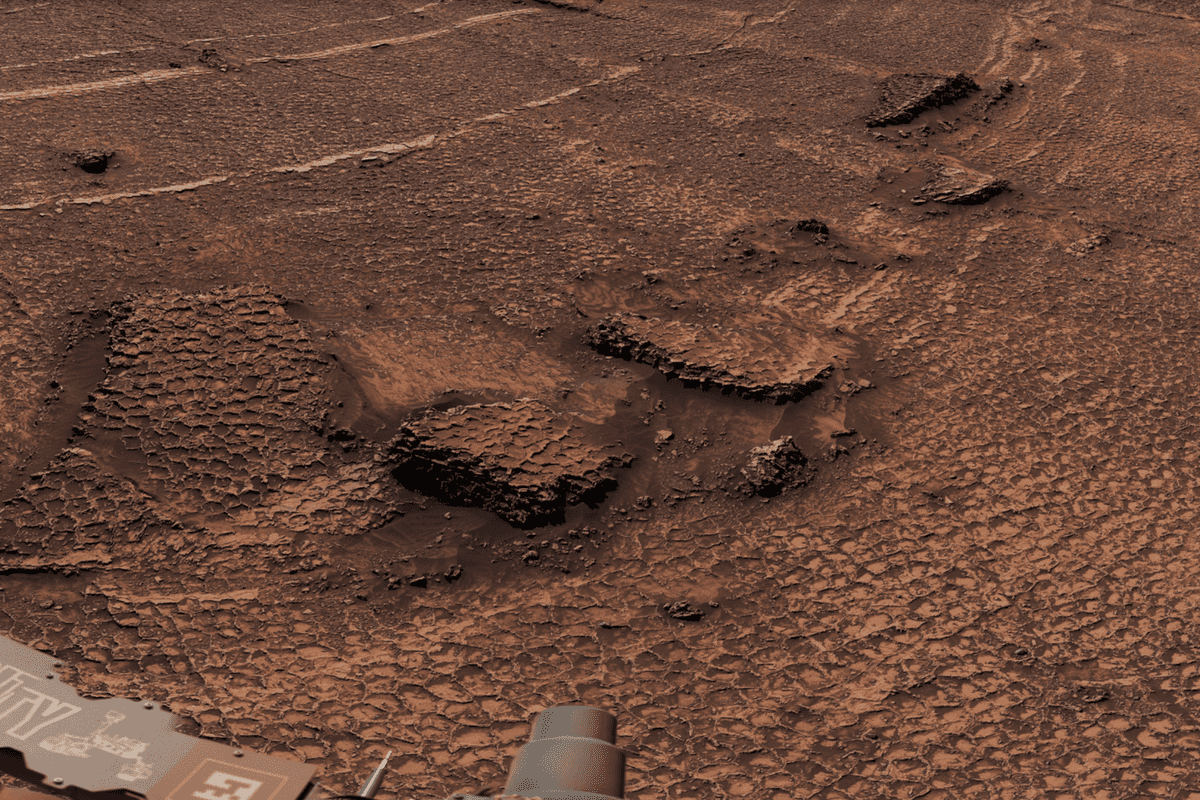 A close-up of the polygon fractures discovered by NASA’s Curiosity Mars rover highlights their honeycomb-like textures.NASA/JPL-Caltech/MSSS
In a statement Curiosity mission project scientist Ashwin Vasavada, of the agency’s Jet Propulsion Laboratory in Southern California commented on the finding.
"We’ve seen a lot of fascinating landscapes through Curiosity’s eyes, but this sea of polygons took our breath away," he said. “We measured their shapes and chemistry carefully and are hopeful there are clues in the data as to how these features formed.”
Some of the polygons previously discovered by the mission "clearly formed as mud cracks," but how their honeycomb textures came to be can be put down to a variety of processes, these include "cycles of warm and cold temperatures or compression that squeezed water out of the sediment when the surface was buried," according to NASA.
Among the other discoveries the Curiosity has found includes evidence that microbial life was supported on ancient Mars along with sulfur crystals and shiny meteorites.
As for it's research area, Curiosity has been climbing the three-mile-tall mountain, Mount Sharp, which was covered with lakes and streams billions of years ago.
Why not read...
- 'God of Chaos' asteroid will fly past Earth soon
- This is how long we have before the universe disappears completely
Sign up to our free indy100 weekly newsletter
Have your say in our news democracy. Click the upvote icon at the top of the page to help raise this article through the indy100 rankings.
Top 100