The Conversation (0)
Science & Tech
The latest Doomsday Clock, a symbol scientists use to show how close humanity is to destruction, has been updated.
On 27 January 2026, the clock was moved to 85 seconds to midnight, the closest it has ever been in history.
The Bulletin of the Atomic Scientists’ Science and Security Board (SASB), which determines the time, warned that urgent action is needed to limit nuclear arsenals, set international rules for AI, and create global agreements to address biological threats.
Since its creation in 1947, the clock has been reset 27 times, each shift sparking questions and concern worldwide. The most recent move, from 89 seconds to 85 seconds to midnight, has once again captured global attention.
Here’s everything you need to know about the Doomsday Clock, its history, and what this latest reset really means.
The Doomsday Clock is a symbolic tool that shows how close humanity is to a global disaster caused by human technology and decisions. Instead of measuring actual time, the Clock uses its hands to signal risk: midnight represents catastrophic destruction.
Originally created in 1947, the Clock focused on the dangers of nuclear weapons during the early Cold War. Over time, its scope has grown to reflect other major threats to humanity, including climate change and emerging technologies. Experts review global events and adjust the Clock’s position to highlight urgent risks that require action.
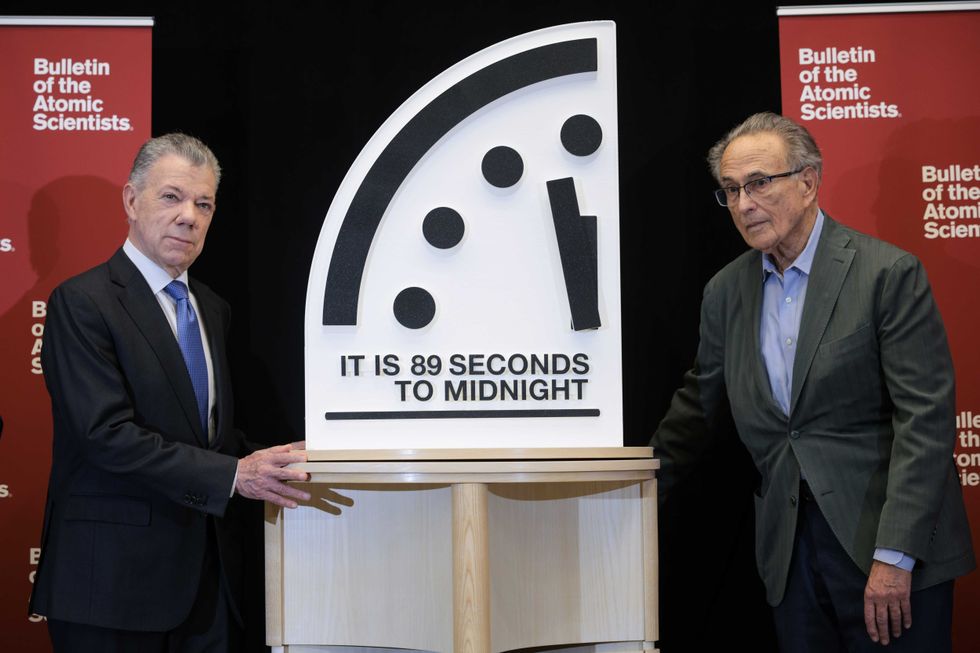 Juan Manuel Santos and Robert Socolow reveal the 2025 Doomsday Clock time held by The Bulletin of the Atomic ScientistsGetty Images
The Doomsday Clock was designed in 1947 by artist Martyl Langsdorf for the Bulletin of the Atomic Scientists’ first magazine edition.
She was inspired by discussions with scientists who had worked on nuclear weapons and wanted a visual symbol to show the urgency of controlling these new technologies. Instead of other ideas, she chose a clock to represent how little time humanity had to address the threat.
Originally, Bulletin editor Eugene Rabinowitch set the Clock based on discussions with scientists and experts around the world. After his death in 1973, the responsibility shifted to the Bulletin’s Board.
Since 2008, the Science and Security Board has managed the Clock.
Made up of scientists and specialists in nuclear technology, climate, and other global risks, the board meets regularly to review world events and decide if the Clock needs adjusting. They also consult with other experts, including Nobel laureates, to guide their decisions.
According to the Bulletin of the Atomic Scientists’ 2026 press release, the Doomsday Clock has been moved to 85 seconds to midnight due to a combination of escalating global risks.
"Major factors in 2026 included growing nuclear weapons threats, disruptive technologies like artificial intelligence (AI), multiple biological security concerns, and the continuing climate crisis," it shared.
You should also read...
How to join the indy100's free WhatsApp channel
Sign up for our free Indy100 weekly newsletter
Have your say in our news democracy. Click the upvote icon at the top of the page to help raise this article through the indy100 rankings.