The Conversation (0)
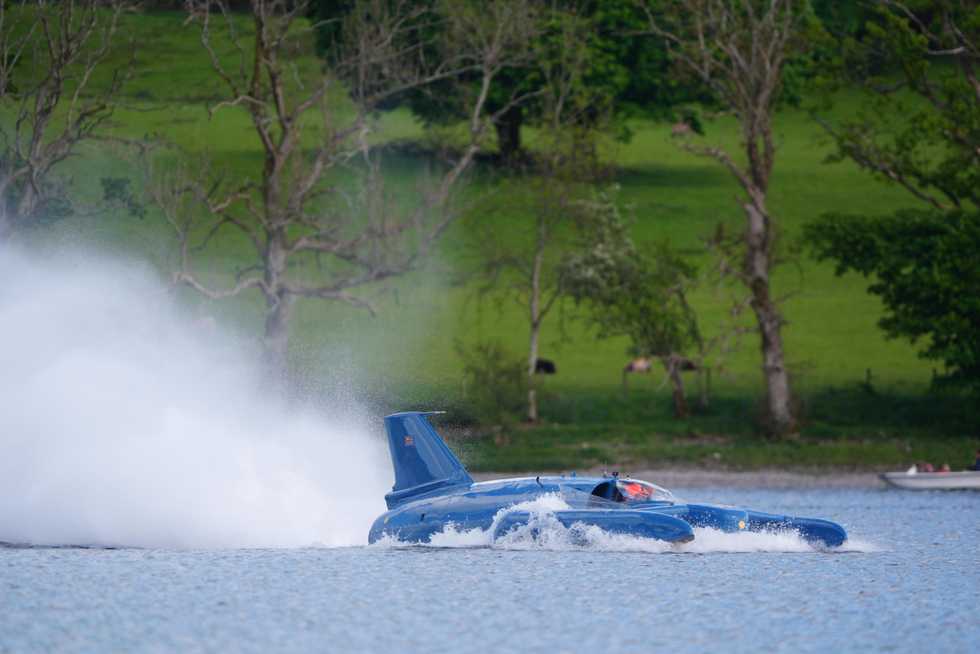
The restored Bluebird K7 has once more taken to the water in the Lake District (Owen Humphreys/PA)
PA Wire/PA Images - Owen Humphreys
Record-breaking hydroplane Bluebird K7 has returned to Coniston Water for the first time since Donald Campbell died as he attempted to set a new water speed record.
Campbell was killed when the vessel flipped into the air and disintegrated on January 4 1967, when he was trying to beat his own world water speed record of 276.33mph.
The wreckage, along with Campbell’s body with his race suit intact, was recovered in 2001 by engineer Bill Smith, who restored the hydroplane with a team of volunteers at the Bluebird Project in North Shields.
It is now housed by the Ruskin Museum in Coniston, in the Lake District, and returned to the water on Monday, the first day of Bluebird K7 The Festival, which runs until Sunday.
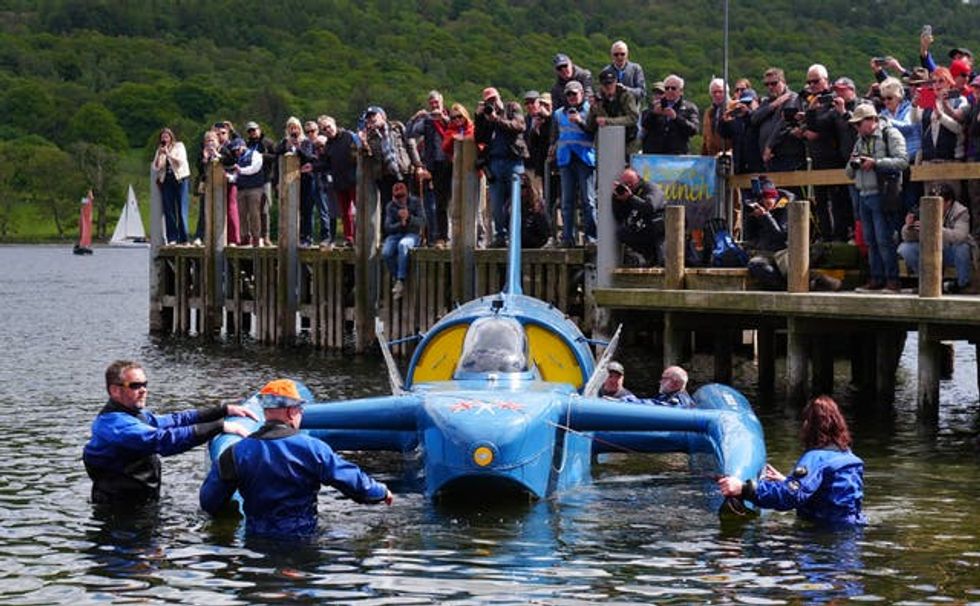 The restored Bluebird K7 takes to the water in the Lake District as crowds look on (Owen Humphreys/PA)PA Wire/PA Images - Owen Humphreys
Campbell’s daughter, Gina Campbell, was among the crowds which gathered to see the Bluebird K7 back on the water.
Onlookers lining the lakeside applauded and cheered as the hydroplane was taken out onto the lake by Australian David Warby, son of current world water speed record holder, Ken Warby.
Visitors to the festival will have the chance to see Bluebird K7 run every day, subject to weather conditions.
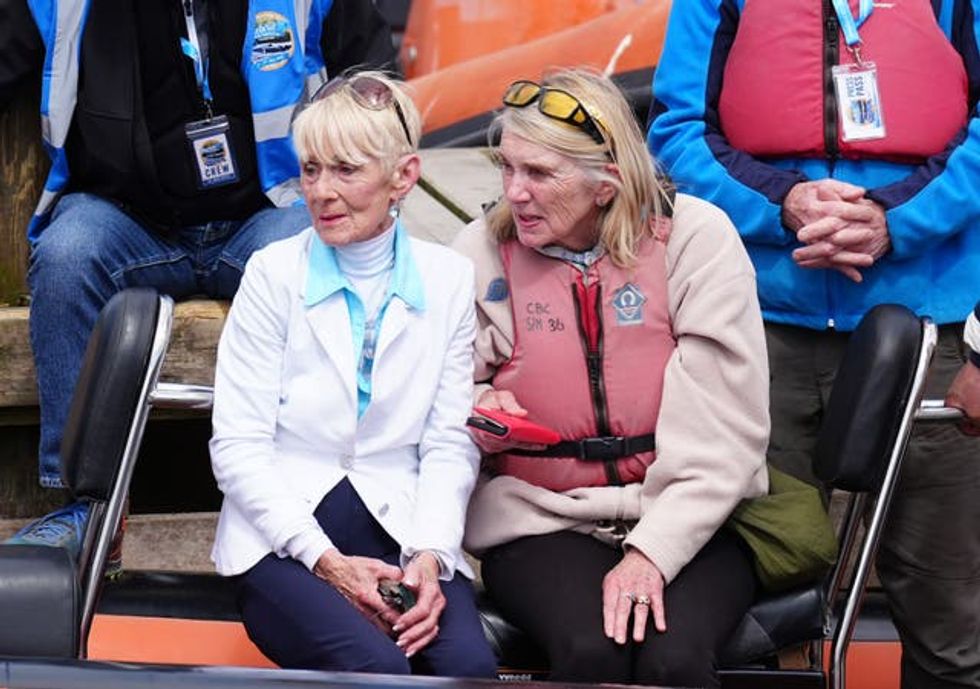 Donald Campbell’s daughter, Gina, left, watches as the restored Bluebird K7 takes to the water (Owen Humphreys/PA)PA Wire/PA Images - Owen Humphreys
Campbell broke eight world speed records on water and on land in the 1950s and 1960s.
This year marks the 70th anniversary of Donald Campbell’s first world water speed record on Coniston Water, which took place on September 19 1956, when he reached a speed of 225.63mph.
Campbell, the son of Sir Malcolm Campbell – himself a speed record holder on land and water – was trying to reach 300mph on Coniston Water in the attempt which he died.
In August 2018, the reconstructed craft, fitted with a new jet engine, took to the water again on Loch Fad in Scotland where it hit speeds of about 150mph.
Top 100