









The Conversation (0)
Bo Erickson
May 26, 2026
Trump preaches in 'rigged election' rant after primary wins
Reuters
Donald Trump has reiterated his unsubstantiated claim that the 2020 election was stolen from him at least 107 times in the past six months, keeping the grievance at the forefront of his public discourse even as he navigates new political challenges, including a conflict with Iran and impending midterm elections.
A Reuters analysis of his public appearances, interviews, and online posts reveals that Mr Trump dedicates almost daily attention to the issue, often in concentrated bursts. One Saturday in April, amidst a delicate ceasefire with Iran, he posted allegations about the 2020 election – which he lost to his successor Joe Biden – seven times on his Truth Social account.
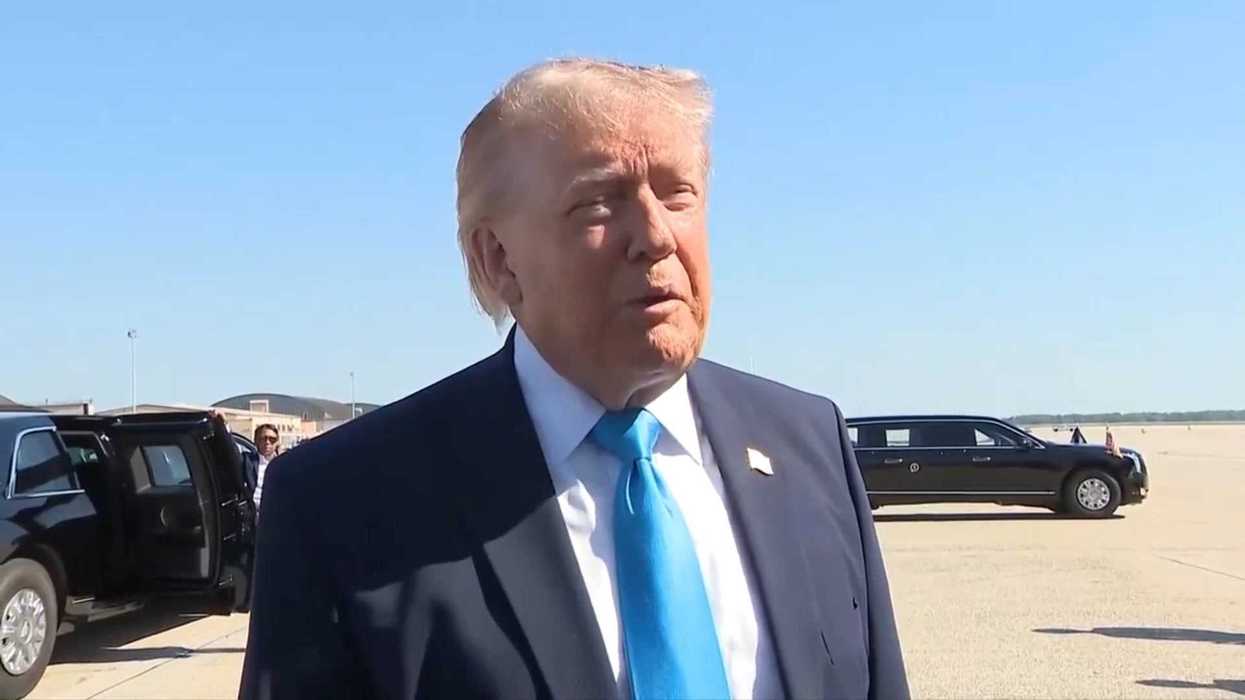
He has repeated these claims during at least six meetings with world leaders, two celebrations for professional sports teams, and at White House observances for Hanukkah and Christmas. In unscripted remarks at the World Economic Forum in Davos, Switzerland, in January, he asserted that "people will soon be prosecuted for what they did." He further reiterated his claims of a rigged election at a White House picnic for lawmakers last week and again to reporters before boarding Air Force One.
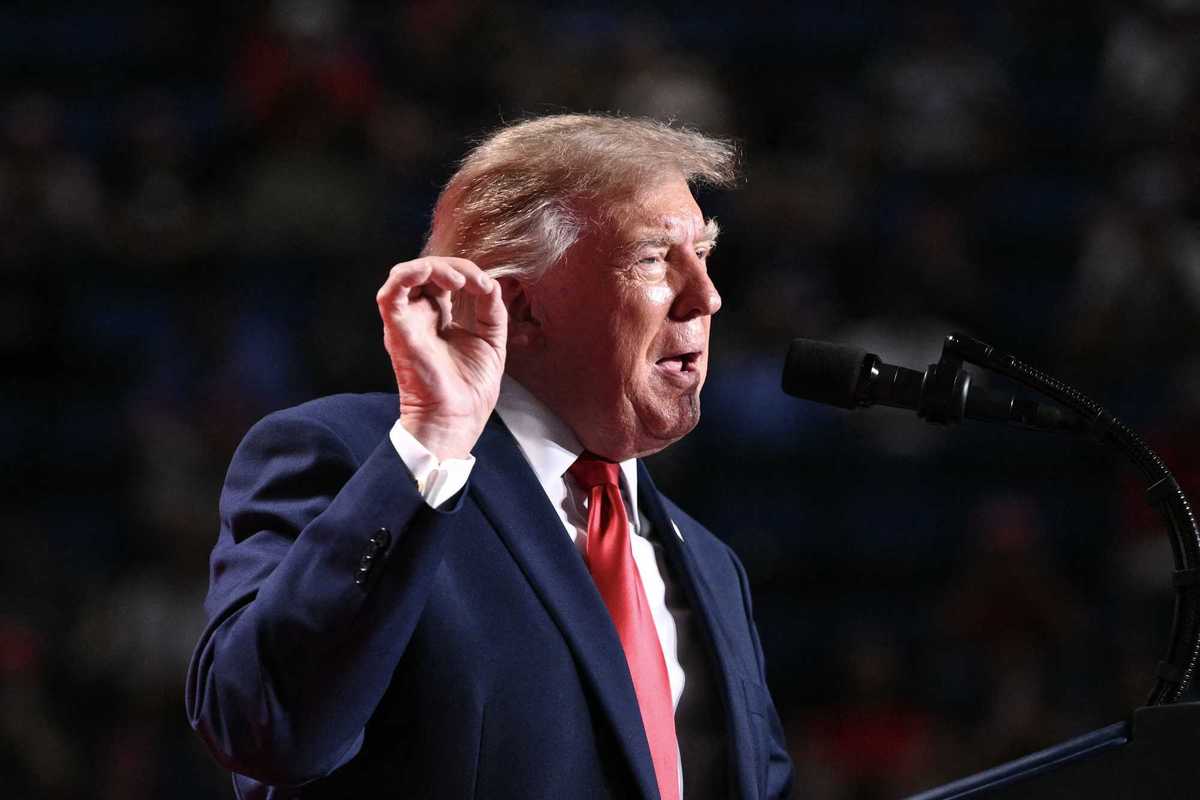
"If we had Jesus Christ come down and count the votes, I would have won California," Mr Trump stated, referring to the reliably Democratic state he lost by 29 percentage points in 2020 and more than 20 percentage points in 2024. "But it's a rigged vote."
While aides and interviewers frequently dismiss his comments, and critics brand them as the musings of a sore loser, Mr Trump’s relentless focus on 2020 signals a forward-looking strategy. According to two White House officials and two individuals familiar with the matter, who spoke anonymously, this approach aims to justify new voting restrictions, bolster party loyalty, and energise supporters ahead of the November elections that will determine control of Congress.
By portraying the 2020 election as illegitimate, he is also laying the groundwork to challenge Republican losses and undermine Democrats should they regain power, multiple election experts have noted.
"He’s not looking back; this is about the midterms," said Alexandra Chandler, an election expert at the non-partisan advocacy organisation, Protect Democracy. "He’s trying to create a fog of disinformation with this. So then if he dials it up further with federal interference, the public will not react as surprised."
In April, despite having initiated a national redistricting dispute months earlier, Mr Trump denounced the results of Virginia's election to redraw US congressional district maps as "rigged," offering no evidence of fraud.
White House spokeswoman Abigail Jackson stated: "President Trump is committed to ensuring that Americans have full confidence in the administration of elections, and that includes totally accurate and up-to-date voter rolls free of errors and unlawfully registered non-citizen voters."
Mr Trump's rhetoric has resonated with Republican voters. A Reuters/Ipsos poll in April found that 63 per cent of Republican voters believe his false claim that the 2020 election was stolen, a proportion that has remained largely consistent in recent years. An even larger share of Republicans – 82 per cent – agreed that significant numbers of fraudulent ballots are cast by non-citizens in US elections.
In contrast, only 9 per cent of Democrats and 21 per cent of independents believed Mr Trump lost in 2020 due to wrongdoing, and 18 per cent of Democrats and 38 per cent of independents shared concerns about non-citizens casting fraudulent ballots.
Multiple courts, state officials, and previous reviews have found no evidence of widespread fraud in the 2020 election.
Nevertheless, Mr Trump last year appointed an election-security czar to re-investigate his 2020 loss. These fresh probes have yielded no new evidence, Reuters reported in April. Administration officials also sought last year to ban voting machines used in over half of US states as they considered how the federal government could assume control over state-run elections, Reuters reported last week.
Mr Trump's 2020 rhetoric intensified in December after he sought to pardon Tina Peters, a Colorado county clerk convicted by the state of tampering with voting machines following that election. He repeated the allegations as he pressed congressional Republicans to pass his Save America Act, which would mandate proof of citizenship for voting, and again while escalating attacks on postal voting.
Although the US Senate has failed to advance Mr Trump's nationwide voting changes, numerous states have implemented similar proof-of-citizenship requirements and stricter identification rules. Mr Trump has also signed executive orders attempting to limit postal voting, but these actions are currently being challenged in court by Democrats.
Meanwhile, Mr Trump has used his 2020 claims to deflect blame for intractable global conflicts and domestic policy disputes.
In December, as the war in Ukraine persisted despite Mr Trump's 2024 campaign pledge to resolve it in a day, the US president informed Ukrainian President Volodymyr Zelenskiy that the "rigged" US election had enabled Russia's 2022 invasion. In February, he told families who had lost loved ones in immigration-related crimes that they would be "home with your son, daughter" if the election had not been "rigged."
The 2020 election has also become a loyalty test for many of Mr Trump's nominees for key federal roles, including judicial appointments, who have refused under oath to tell Democratic senators that Biden won. Instead, they merely state that Congress certified the election in his favour.
Despite this, some Republicans are pushing back.
RightCount, a group of Republicans in swing states, recently relaunched a campaign to defend the integrity of state-administered elections and counter Mr Trump's efforts to nationalise them.
"All the accusations that have been made have all been refuted, but he doesn't want to listen," said former Arizona Governor Jan Brewer, a supporter of Mr Trump and a member of the group.
After losing his Republican primary in Louisiana last week following Mr Trump's refusal to endorse him, US Senator Bill Cassidy criticised the president's election rigging claims in his concession speech. Mr Cassidy had drawn the president's ire by supporting his impeachment after the 6 January 2021 Capitol attack by Trump supporters attempting to halt the 2020 election certification.
"When you participate in democracy, sometimes it doesn’t turn out the way you want it to," Mr Cassidy said. "But you don’t pout. You don’t whine. You don’t claim the election was stolen."