The Conversation (0)
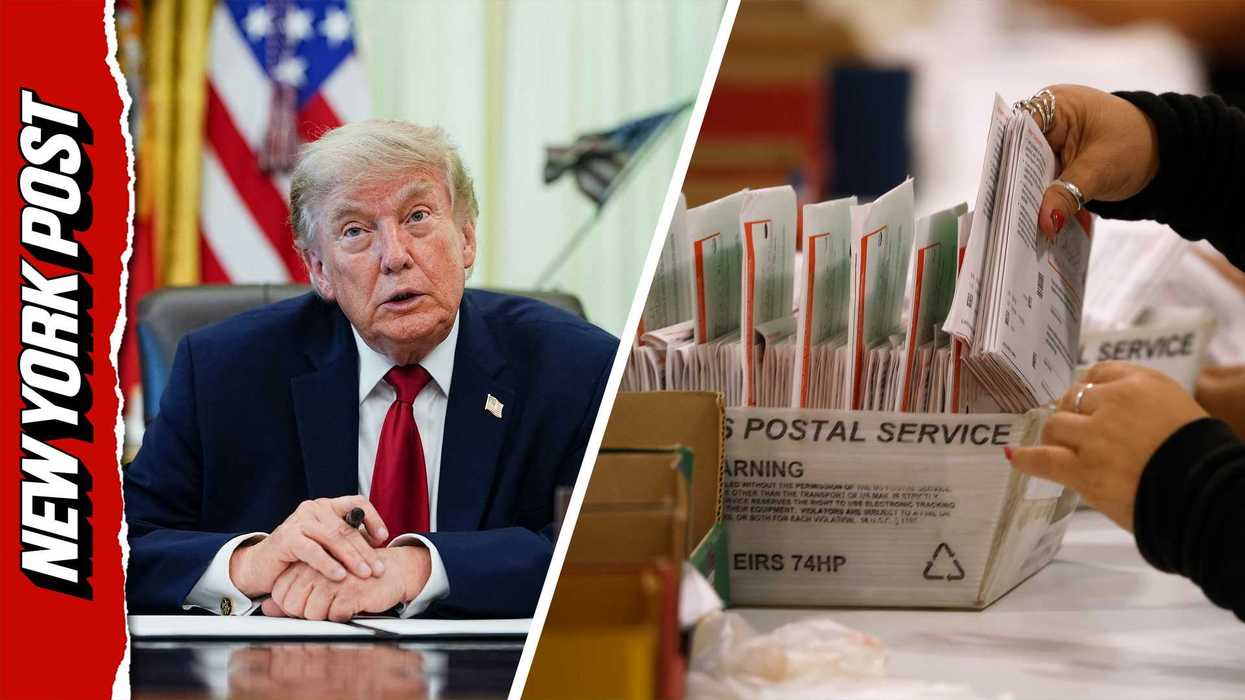
Trump slams Supreme Court mail-in ballot ruling: 'Detrimental to honest elections'
New York Post / VideoElephant
Donald Trump has consistently sought to exert greater control over US elections, employing various strategies from executive orders to advocating for restrictive legislation in Congress. The recent Supreme Court decision, which upheld states' rights to accept late-arriving postal ballots, serves as the latest illustration of the limitations to his influence.
This ruling follows a series of setbacks last week, including two judgments that blocked his sweeping executive orders aimed at altering national election regulations.
Further court decisions have prevented his Department of Justice from acquiring detailed state voter data, and his attempts to pass the SAVE Act in the Senate have stalled. This proposed legislation would effectively eliminate most absentee voting, mandate citizenship documents for voter registration, and impose nationwide photo identification requirements just before the midterm elections.
"It’s been a mixed bag for Republicans," observed University of Notre Dame law professor Derek Muller, adding that the president "has come up mostly empty-handed."
Despite these challenges, Mr Trump's efforts have not been entirely without impact. Republican-controlled states have acceded to his demands to redraw congressional district lines, a process bolstered by the Supreme Court's earlier decision to strike down a key section of the Voting Rights Act.
Furthermore, he has directed his Department of Justice to investigate voting and election operations, a move Democrats interpret as a potential precursor to federal involvement in the November elections.
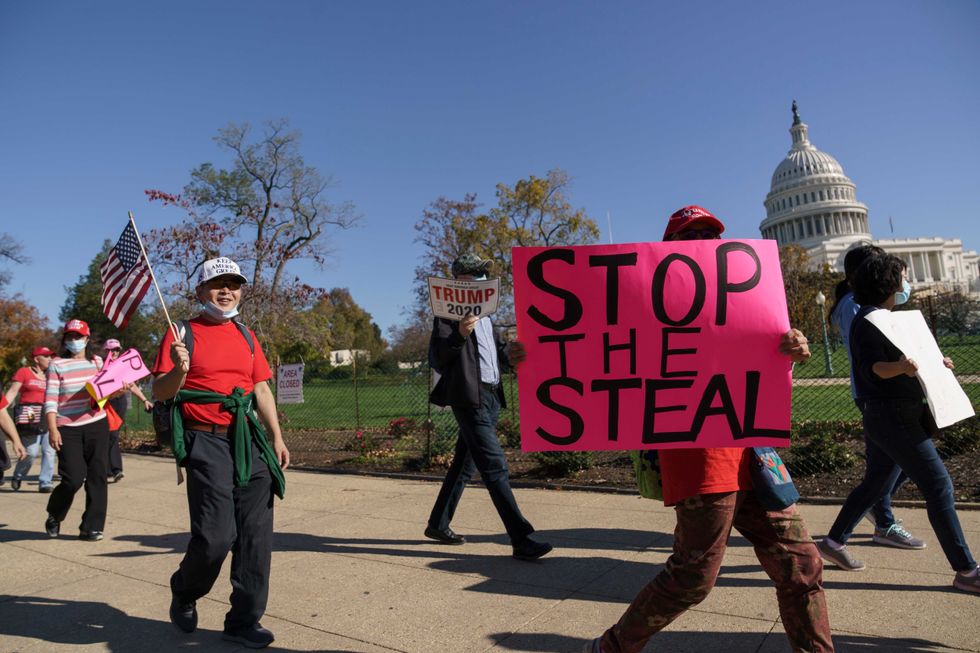
The intense focus on how the nation votes and conducts its elections reflects the president's enduring preoccupation with his unsubstantiated claim that his 2020 election defeat was rigged. His frustration over the Senate's inability to pass the SAVE Act has even led him to refuse to sign a bipartisan housing bill.
 AP Photo/Jacquelyn Martin
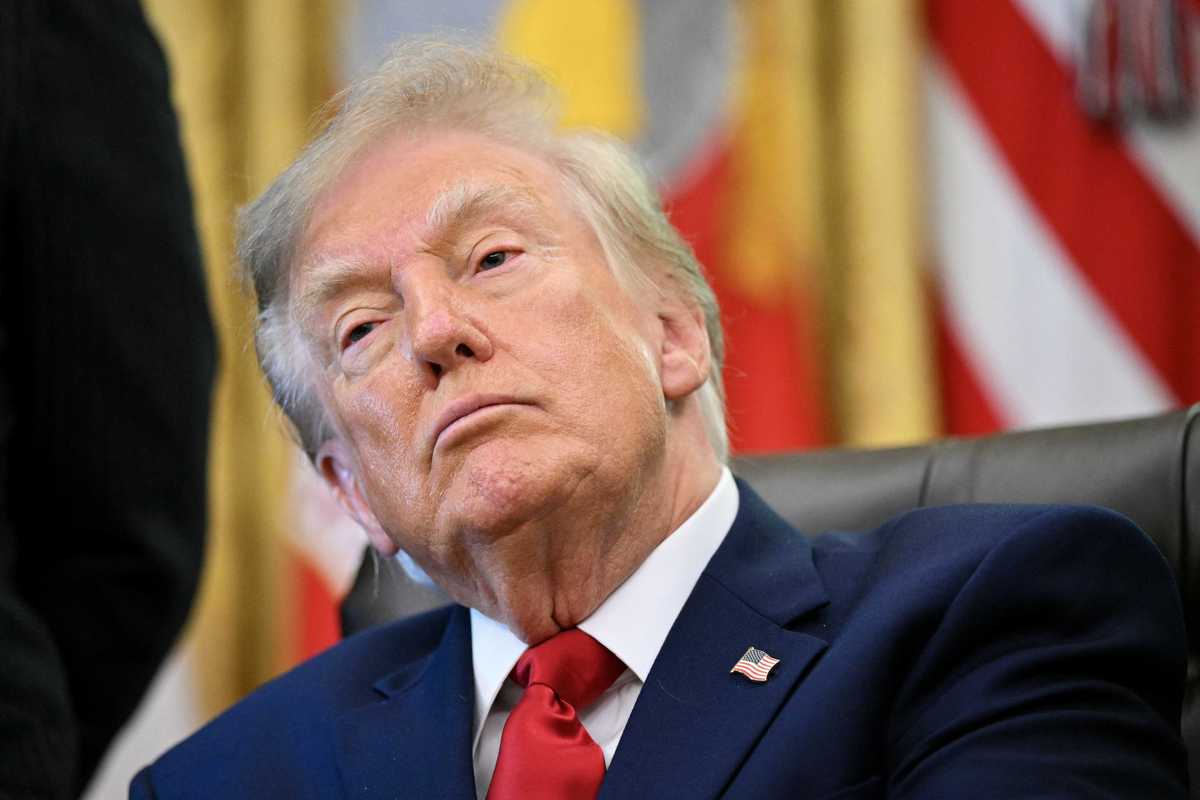
Following the Supreme Court's decision on postal ballot deadlines, Mr Trump reiterated his stance on Monday via social media, stating he is trying to "save America from crooked elections."
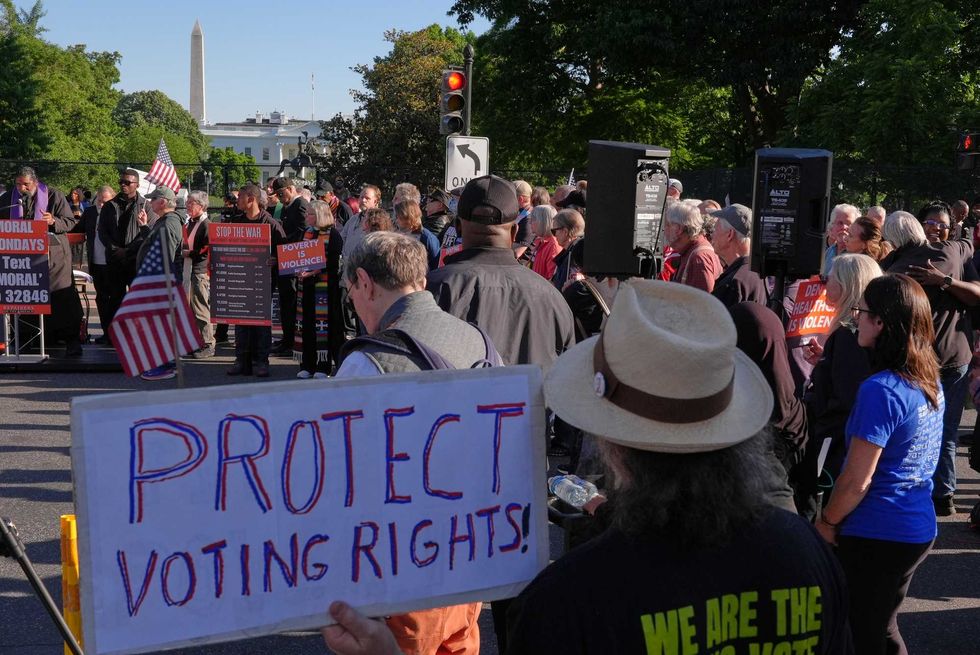
Voting rights organisations and Democrats, however, view his actions as an abuse of power and an attempt to suppress legal voters to gain an advantage in the upcoming midterms, where control of Congress hangs in the balance.
Regardless, Mr Muller highlighted the legal and political realities facing Mr Trump: the US Constitution grants authority over elections to the states and Congress, with no such role for the president. "That’s how federalism works," Muller explained.
Mr Trump's focus on non-citizens and voter data has encountered significant roadblocks. He has repeatedly asserted that US elections are plagued by fraud due to non-citizen voting, a claim contradicted by research showing such instances to be exceedingly rare, accounting for a minuscule fraction of fraud cases. Convictions are typically measured in the hundreds over periods when tens of millions of ballots are cast.
This perspective led to a multi-agency push to centralise voter data and utilise federal resources to assist states in removing voters from electoral rolls. The Department of Justice sought detailed voter files, including dates of birth and partial Social Security numbers, from multiple states. However, Democratic and some Republican secretaries of state resisted, leading to federal lawsuits, all of which the administration has lost so far.
The Department of Homeland Security, in an effort to identify potentially ineligible voters, revamped a government tool known as SAVE (Systematic Alien Verification for Entitlements). This programme was a central pillar of Mr Trump's strategy to purge state electoral rolls. Last week, a federal judge blocked its use as a mass citizenship check.
According to its own news releases, the administration had permitted local election administrators to search users in large numbers, employing a broader range of metrics beyond DHS-issued identification numbers. At least 67 million registrations, predominantly in Republican-controlled states, were analysed. While tens of thousands were flagged as potential non-citizens or deceased individuals, some voters were incorrectly identified as ineligible.
US District Court Judge Sparkle L. Sooknanan ruled that Mr Trump’s modifications aggregated Americans’ sensitive personal data in a manner that could lead to voters being wrongly removed from the rolls. "All in all, the federal government has knowingly trampled on the privacy rights of American citizens in a manner that threatens the sacred right to vote," Judge Sooknanan stated in her order.
Like presidents before him, Mr Trump resorted to signing executive orders when Congress failed to enact his preferred policies. His first order underscored his emphasis on non-citizens. Similar to the SAVE Act pending on Capitol Hill, it aimed to require prospective voters to provide citizenship documentation to register.
US District Court Judge Denise Casper issued a temporary block on the order last year while considering the case, making her decision permanent last week. The Constitution, Judge Casper wrote, "does not grant the President any specific powers over elections."
Mr Trump issued a second order in March, as the difficult path of the SAVE Act through Congress became apparent. This order called for a national voter list using data from US Citizenship and Immigration Services and the Social Security Administration. Furthermore, it would have empowered the US Postal Service to determine who receives an absentee ballot and threatened local election officials with prosecution.
Absentee voting is a fundamental aspect of US elections, yet Mr Trump incorrectly characterises the practice as enabling fraud, despite having used it himself. A 2025 report by the Brookings Institution found that mail voting fraud occurred in only 0.000043% of total postal ballots cast.
Democratic secretaries of state launched legal challenges, and US District Court Judge Indira Talwani reached the same legal conclusion as Judge Casper. The provisions, she wrote last week, "unconstitutionally violate the separation of powers." The White House has indicated its intention to appeal these decisions.
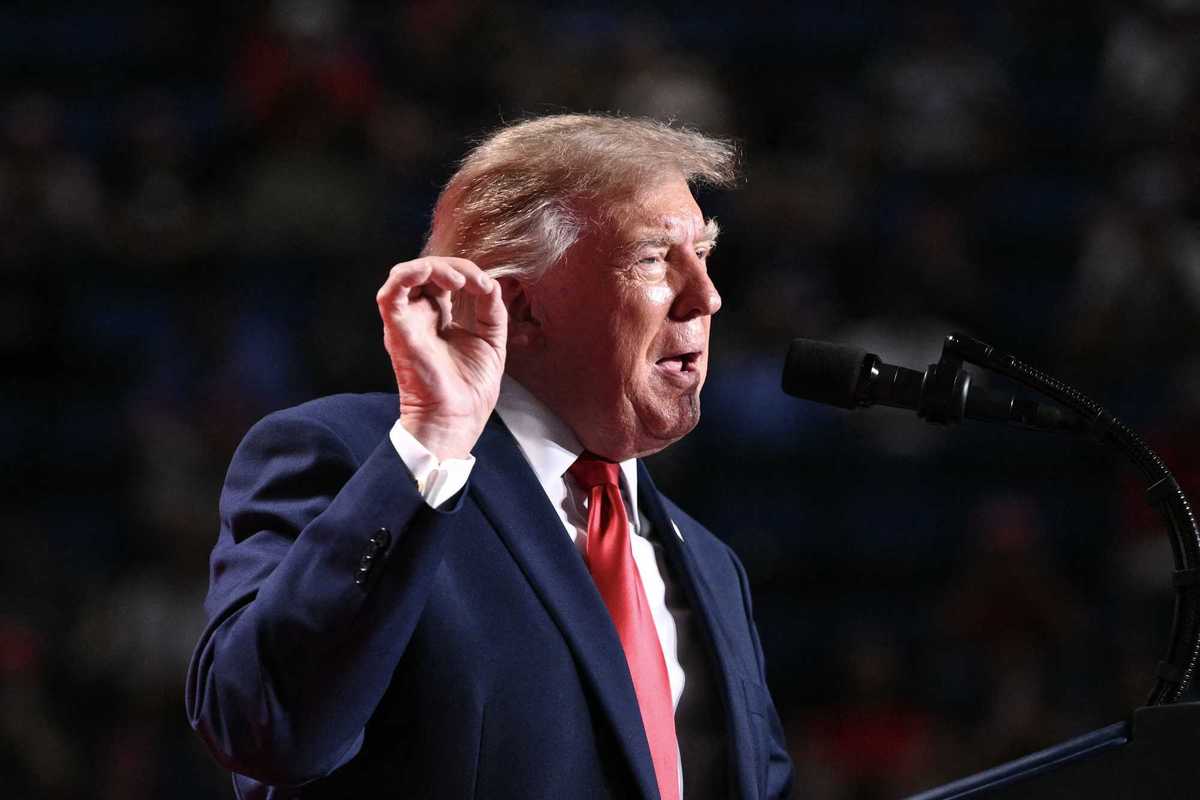
Even Mr Trump has acknowledged the slim chances of the SAVE Act passing, describing the Senate logjam as "crazy" on Monday and labelling Republican Alaska Senator Lisa Murkowski, one of the holdouts, as "Trump-deranged."
This latest legislative dispute prompted Mr Trump to demand that Republicans abolish the filibuster, which typically requires 60 votes in the 100-member Senate for most major legislation to pass.
However, this would likely be irrelevant in this instance, as four of the Senate’s 53 Republicans – Murkowski, Susan Collins of Maine, Mitch McConnell of Kentucky, and Thom Tillis of North Carolina – have declared their opposition to the bill itself. The president conceded on Monday that the SAVE Act is "probably not going to happen."
 AP Photo/J. Scott Applewhite
Despite these legislative and judicial setbacks, Mr Trump still possesses options for the November elections. Both major parties maintain national operations dedicated to monitoring elections, complete with legal teams prepared to file challenges.
Following the Republican National Committee's loss in the postal ballot case, Chairman Joe Gruters alluded to these ongoing efforts on Monday: "We are not going to be deterred by this decision, and the RNC will keep fighting to have elections end on Election Day," he stated.
Meanwhile, Mr Trump has been developing a potential roadmap for more aggressive actions. His US attorney in Los Angeles announced in June that he had initiated multiple election fraud investigations and dispatched a prosecutor to the county's vote-tabulation centre after California's June primary. Six months prior, FBI agents executed a warrant and seized ballots and other records from the 2020 election in Georgia's Fulton County, which encompasses Atlanta.
Mr Muller, the law professor, noted that local election officials "already are having conversations about chain of custody disputes" for ballots as they are cast, collected, counted, and stored. He and UCLA law professor Rick Hasen highlighted that judicial warrants are mandatory for the types of actions seen in Fulton County. Mr Muller predicted that "the bar would be even higher" for any warrant the administration might request during a live election.
Mr Hasen added that he is working to educate judges across the country on the critical importance of ballot chain of custody. "Republicans believe him when he says the election is rigged. And then when Republicans try to change voting rules to tighten things up, that causes Democrats to also think that the election system is being rigged," Hasen concluded. "So, if what he’s trying to achieve is undermine voters’ confidence in the election process, he seems to have succeeded spectacularly."
Top 100