The Conversation (0)
The US Flag: What The Stars & Stripes Really Mean
unbranded - Lifestyle Vertical / VideoElephant
The American flag, a potent symbol for many, elicits starkly contrasting emotions across the United States, with its meaning deeply divided along political, age, and racial lines.
While Jerry Esters proudly displays the Stars and Stripes outside his Detroit home, Yvonne Pistochini, just a few miles away, asserts there is no circumstance under which she would allow it to cast a shadow over her residence. Both individuals are Black, yet their interpretations of "Old Glory" diverge dramatically.
For Mr Esters, the flag embodies the opportunities that enabled the great-great-grandson of enslaved people to achieve success and flourish. Ms Pistochini, 79, conversely states that the America represented by the flag is not the country she experienced growing up.
These contrasting perspectives are underscored by a new survey conducted by The Associated Press-NORC Center for Public Affairs Research, ahead of the nation's 250th birthday celebrations.
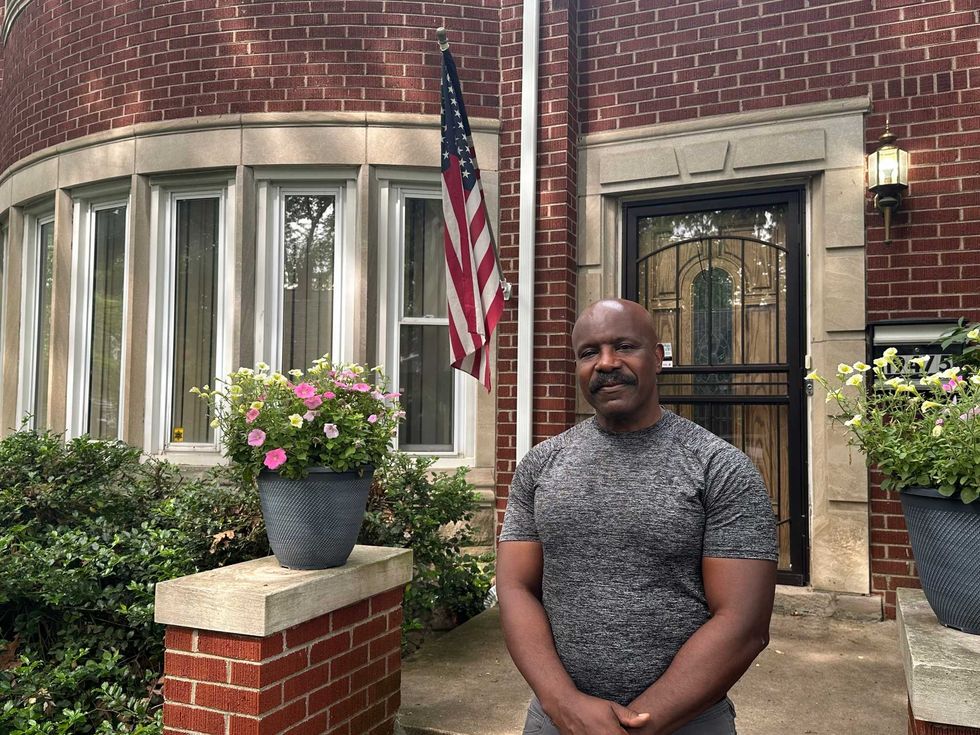 Jerry Esters stands in front of American flag outside his Detroit home on June 9, 2026AP Photo/Corey R. Williams
The findings reveal that Republicans and older, white adults are particularly inclined to fly the American flag, whereas younger Democrats and Black adults are less likely to do so. Views on whether the flag serves as a unifying or divisive emblem mirror other profound divisions within American society, where interpretations of the country's history and achievements vary significantly.
Matthew Delmont, a professor of American history at Dartmouth College, observed: "A lot of Black Americans see the flag as a symbol of both inclusion and exclusion. Black Americans, more so than white Americans, also understand the flag can be used to justify a version of patriotism that is rooted in exclusion, with the flag being used to say ‘you don’t belong here.’"
The survey, which polled 2,596 adults between 16 and 20 April, indicates that older white Americans, particularly Republicans, are more prone to viewing the flag as a unifying symbol.
Approximately half of all US adults reported displaying the flag at home throughout most of the year or during holidays. This figure rises to about seven in 10 Republicans and six in 10 Americans aged 60 and over who fly the flag at least during holidays.
In contrast, around six in 10 Democrats and independents state they "never" fly the US flag, a sentiment shared by a significant 75 per cent of Democrats under 45.
Mr Esters, a 64-year-old retired clay sculptor from Detroit, flies three American flags at his Sherwood Forest home. He explained his motivation: "When these homes were built, Black men like me, my mother and my family ... we couldn’t even buy these homes. To me, that’s one reason I fly the flag. We went through a lot to be able to own nice homes, and this is what we fought for." He also connects his success to his great-great-grandmother, Moriah Martin, who was born into slavery.
"I’m kind of living out her dreams — what I did for a living, having a business, having a nice home," he said. "I think that’s the American way, but we got to fight for it and we, as Blacks, fought for it."
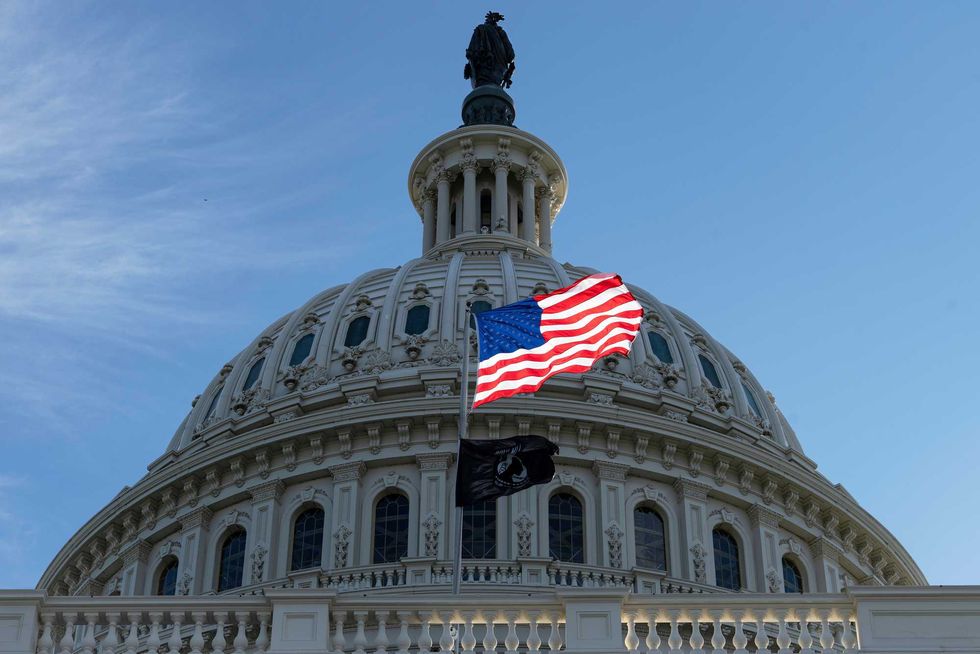 AP Photo/J. Scott Applewhite
His stance places him in a minority among Black adults; the survey found only about three in 10 Black adults display the American flag, compared with roughly half of white and Hispanic adults.
Ms Pistochini argues that current divisions over political leanings, perspectives, and inequality of opportunities for the poor and people of colour do not align with what she believes the flag should represent. She added that people often confuse flying the flag with patriotism. "Just because you fly a flag doesn't make you a patriot," Ms Pistochini stated. "If there was patriotism, we would not have all this. We can't look at (what's going on) and say this is America."
Ben Gaskins, chair of political science at Lewis & Clark College in Portland, Oregon, noted that the flag remains an important symbol of patriotism for many Americans, particularly "those who are older people, who are white and people who are more conservative. They take it as more central to their identity."
Nancy Hansen, a 73-year-old retired Customs and Border Protection clerk in Culbertson, Montana, believes "you have to be for the country, no matter what" and that the flag signifies: "Freedom."
"Freedom to live where we want to live, travel where we want to travel, raise our kids where we want to raise our kids," said Ms Hansen, who is white and identifies as Republican.
Linda and Greg Cunningham, a white, conservative couple from Pontiac, Michigan, also equate the flag with freedom. Their home is adorned in red, white, and blue, with the flag prominently displayed. "It's no political thing, at all," said Linda Cunningham, 63. "It's our freedom. I love the American flag. I love the whole concept of it. I love America. I know there’s so much going on in the world, right now, and I know everyone has their own views, and I'm just sad that politics have to be brought into the flag."
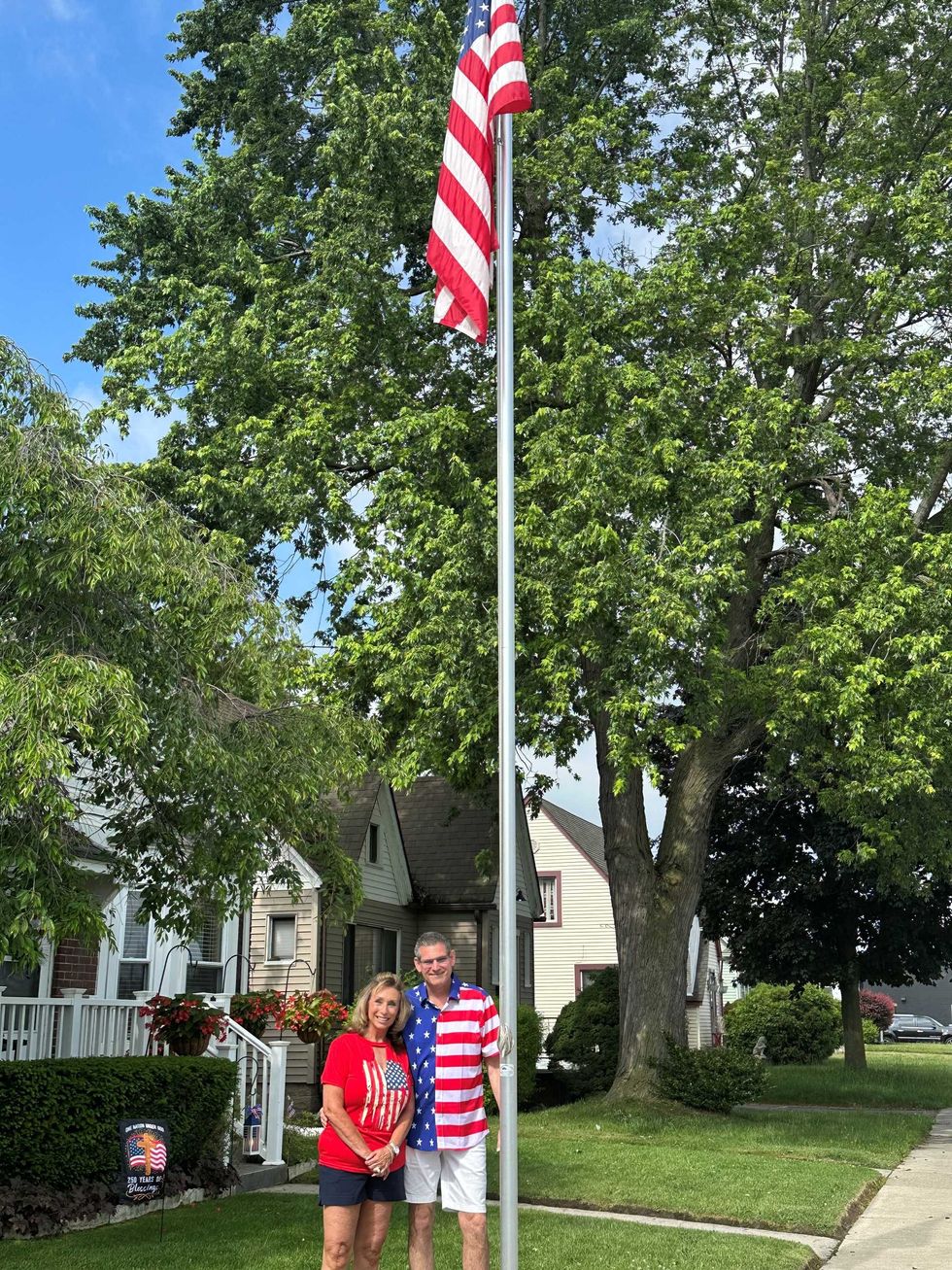 Linda and Greg Cunningham fly the American flag outside their Pontiac, Mich., home on June 10, 2026AP Photo/Corey R. Williams
The survey revealed that 47 per cent of respondents view the flag as a "more unifying" symbol, while about 16 per cent consider it a "more divisive" icon. A further 36 per cent believe it is neither. Only 22 per cent of Black adults see the flag as unifying, compared with 55 per cent of white adults and 42 per cent of Hispanic adults.
Allison Wiltz, a Black author and founder of Writers and Editors of Colour, described the flag as "a painful symbol. It’s a reminder of what we could be and how it’s failed to live up to that for Black people, for Indigenous people and people of colour."
Paul Walthour, 71, a white Democrat and retired advertising creative director, occasionally flies the flag outside his Minneapolis-area home. He admits, "This is antiquated, perhaps. I feel it’s a symbol that you’re proud to be an American."
However, he added: "Unfortunately, I kind of think it’s kind of a symbol of dividing more than uniting. The people who fly it on the far right have one kind of feeling about it, and the people who fly it on the left have a different kind of feeling about it."
Top 100