
The Conversation (0)
streamhorse: 10 minutes of horses & nature
Animals by VideoNest / VideoElephant
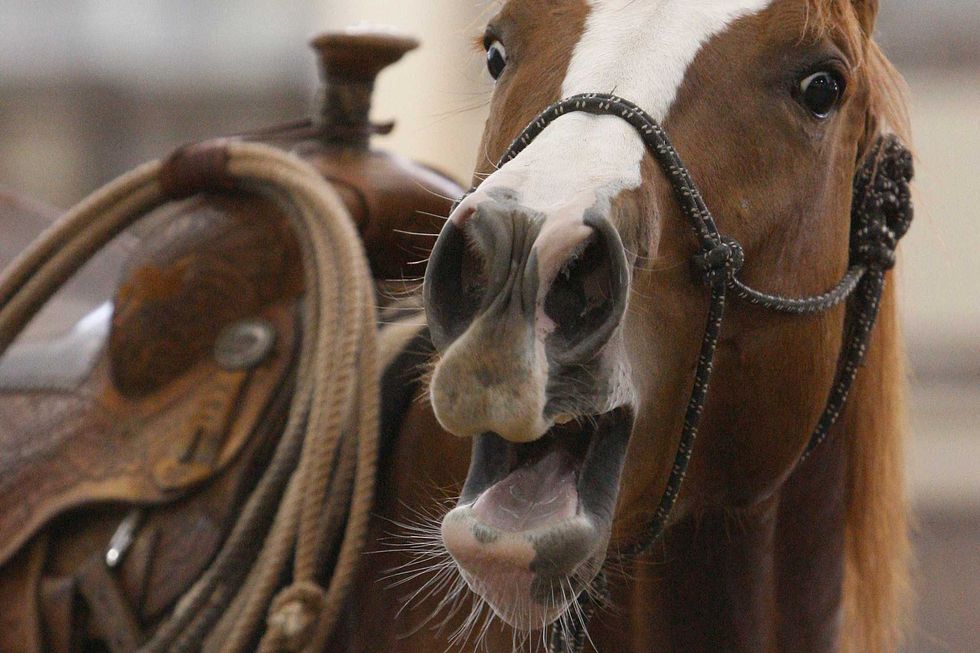
The familiar whinny of a horse, a characteristic call used for social interactions, from greeting companions to expressing joy at feeding time, has long held a scientific secret. How these magnificent animals produce their distinctive sound, also known as a neigh, has perplexed researchers for years.
The whinny is a unique blend of both high and low-pitched sounds, akin to a simultaneous grunt and squeal. While the low-pitched component was relatively understood – stemming from air passing over vibrating tissue bands in the voice box, much like human speech – the high-pitched element remained a mystery. Given that larger animals typically possess larger vocal systems and produce lower sounds, the equine ability to generate such high frequencies was particularly puzzling.
However, a groundbreaking new study has finally uncovered the answer: horses whistle. Researchers employed a combination of innovative techniques, including sliding a small camera through horses' noses to film their vocal mechanisms during whinnies and nickers. They also conducted detailed scans and blew air through the isolated voice boxes of deceased horses.
Their findings revealed that the whinny's enigmatic high-pitched tones are, in fact, a form of whistling originating within the horse's voice box. Air vibrates the vocal tissues while an area just above contracts, creating a small opening through which the whistle escapes.
 AP
AP
This mechanism differs significantly from human whistling, which is produced using the mouth. Jenifer Nadeau, a horse expert at the University of Connecticut, who was not involved in the study published in Current Biology, remarked: "I'd never imagined that there was a whistling component. It's really interesting, and I can hear that now."
While a few small rodents, such as rats and mice, exhibit similar whistling capabilities, horses are the first large mammals identified with this particular skill. They are also the only known animals capable of whistling through their voice boxes simultaneously with vocalisation. Alisa Herbst, from Rutgers University's Equine Science Center, commented on the study via email: "Knowing that a ‘whinny’ is not just a ‘whinny’ but that it is actually composed of two different fundamental frequencies that are created by two different mechanisms is exciting."
A significant question that remains is the evolutionary path that led to these two-toned calls. Wild Przewalski’s horses and elks can produce similar sounds, yet more distant equine relatives like donkeys and zebras lack the ability to make the high-pitched elements. The researchers suggest that these complex, two-toned whinnies could enable horses to convey multiple messages simultaneously, allowing for a more nuanced expression of emotions during social interactions. As study author Elodie Mandel-Briefer, from the University of Copenhagen, explained: "They can express emotions in these two dimensions."
Top 100