The Conversation (0)
Canada vs. Bosnia Match Preview - Favorites and Predictions
SportsGrid / VideoElephant
"I am from Bosnia; take me to America." These stark opening lyrics, once a lament of disillusionment, have been dramatically recontextualised by the Bosnian band Dubioza Kolektiv. Their classic track "USA" has been rewritten, transforming a satirical take on the American Dream into a viral anthem now fuelling Bosnia-Herzegovina’s World Cup aspirations.
On the eve of their match against Canada, members of the eclectic rock group met with The Associated Press in Sarajevo, where they filmed the new music video for the accordion-infused earworm, now titled "I Am From Bosnia, Take Me to America."
In under three weeks, the video, which celebrates football’s working-class roots, has garnered nearly two million views on YouTube. This adds to the 26 million views the original "USA," released in 2011, has accumulated over the years.
"It’s an interesting story how this song got its second and third and fourth incarnation in these 15 years," mused Vedran Mujagić, the bassist for the band, known for integrating political and social causes into its identity. "It evolved from this satirical take on immigration and (the) American Dream and it was translated into (an) American football dream for the entire nation."
- YouTube www.youtube.com
Bosnia-Herzegovina is making only its second appearance at a World Cup, a feat that once seemed improbable given the traditional football powers in their path. However, a late goal against Wales in April propelled the team to a victorious penalty shootout, a success they replicated days later against Italy. The band members were surprised when fans unfurled a banner emblazoned with their lyrics, singing them as a rallying cry.
"First, it was working as a joke, but what I like the most is the supporters kind of loaded completely new meaning to the old song, and this is the best thing for the band or for the song: when people take over and load new meaning and then it becomes theirs," explained keyboardist Brano Jakubović. "It’s not ours anymore."
The original "USA" is undeniably catchy, with its protagonist’s eagerness to flee quickly giving way to disenchantment with life outside the Balkans. The band decided to deliver an updated version of what Jakubović describes as a "typical immigrant song," crafting new lyrics suitable for a football anthem. While "USA" was in English, this version is predominantly in Bosnian – "so people will understand," he noted – and largely focused on the sport. This language switch has not diminished its global appeal, as evidenced by YouTube comments, though Jakubović acknowledges some jokes might be inscrutable outside Bosnia.
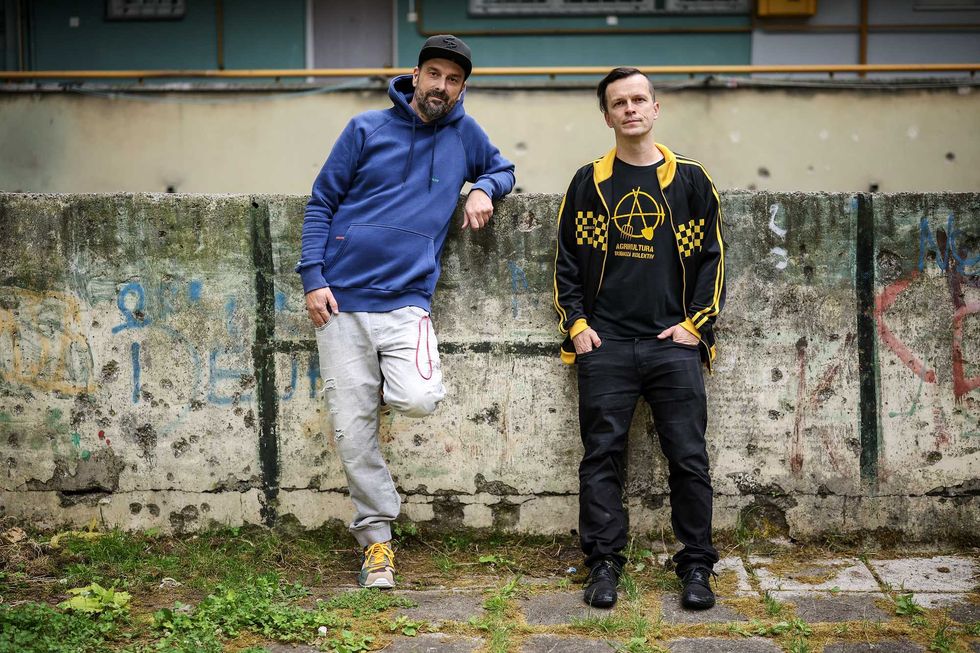 Brano Jakubovic, left, and Vedran Mujagic, members of Bosnian band Dubioza kolektivAP Photo/Armin Durgut
Jakubović’s favourite new line offers a chance to address a national trauma that has lingered since the 2014 World Cup: "And that goal against Nigeria, that was never offside." He added, "So this is like a big national trauma in Bosnia, so I used the song and lyrics to kind of release this trauma."
While he speaks wryly, trauma has been a constant since Bosnia’s independence amidst the dissolution of Yugoslavia in 1992, leading to interethnic war and genocide. More than 30 years after the Srebrenica massacre, deep divisions between Bosnian Serbs and Bosniak Muslims persist. "Football in this moment is much more than just a game, it’s a hope and it’s very basically (a) political thing because it brought all the people from Bosnia together, which is usually not the case," Jakubović stated.
Bosnia’s first match is in Canada, but the team will indeed be taken to America, with their base camp in Sandy, Utah, and other group stage matches against Switzerland and Qatar also in the States. As Mujagić highlighted, many players were born in the US or elsewhere in the diaspora. "They are children of those people who went outside in search of a better life or as refugees or whatever their story was. And they kind of see and hear these lyrics and this song entirely differently from us," he said.
Mujagić believes the original message of "USA" endures as Bosnians continue to emigrate. Once they leave, he finds, "they encounter this hostility of the locals, right-wingers, and they just don’t want them there." He concluded, "So it’s this schizophrenic situation in which you want to go there, but you somehow know that you won’t have it good on the other side as well. So in that sense, this song still works perfectly well as it worked before."
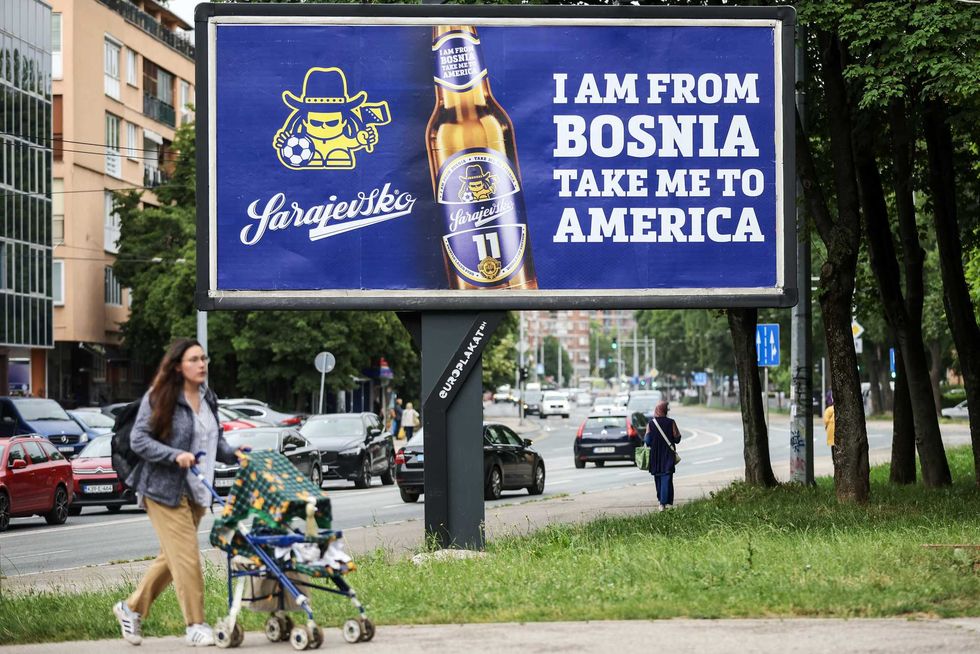 A woman walks past a billboard displaying lyrics from the Dubioza kolektiv song "I Am From Bosnia, Take Me to America" in SarajevoAP Photo/Armin Durgut
In St. Louis, home to a thriving Bosnian community, Admir Hodzic, a founder of the supporter group BH Loyals, resonates with the song’s message. The 40-year-old business owner, born in Bosnia, has moved between his homeland and the US, much like the protagonist of "USA." "I think every Bosnian that lives here and understands how the system works and everything else, I think they will find the truth in that song, and that song is honestly nothing but the truth," he said, acknowledging the opportunities in the US but also the struggle. He and his fellow supporters are avid fans of Dubioza Kolektiv, singing their anthem at matches and watch parties. However, more often than not, it is the original "USA" that they sing. "It’s engraved in their brain and their hearts," he explained, "and no matter what, they just go back to the old lyrics, you know?"
Top 100