The Conversation (0)
'Heated Rivalry' viewership growing
Fox - Milwaukee / VideoElephant
Steven Thompson began playing hockey in 2017, but it was only after encountering Joey Gale that he truly felt a sense of belonging in his new sport. Thompson, who had previously played alongside LGBT+ teammates, met Gale, whose stick was adorned with Pride tape.
"That was the first time I had seen that in the wild, if you will," Thompson recalled. "And so I immediately ran up to him and identified myself as a gay player and just wanted to reach out and just wanted to offer myself as a connection."
This encounter led Thompson and Gale to co-found the Seattle Pride Hockey Association in 2019, aiming to make hockey more accessible to underrepresented communities. Their organisation is one of over a dozen nationwide that have long provided inclusive spaces for LGBTQ+ adults and youths to play, with some leagues thriving despite emerging challenges.
In Pittsburgh, Mike Marisco established Pittsburgh LGBT+ Hockey after moving back to the Steel City with his husband in the early 2010s. Starting with just eight or nine players 14 years ago, the league now boasts multiple squads and plans to add a third team, alongside offering clinics and ice time. Crucially, the support of the Pittsburgh Penguins and their former president of hockey operations, Brian Burke, proved pivotal. Burke has been a vocal advocate against homophobia in sport since the death of his gay son, Brendan, in a 2010 car accident.
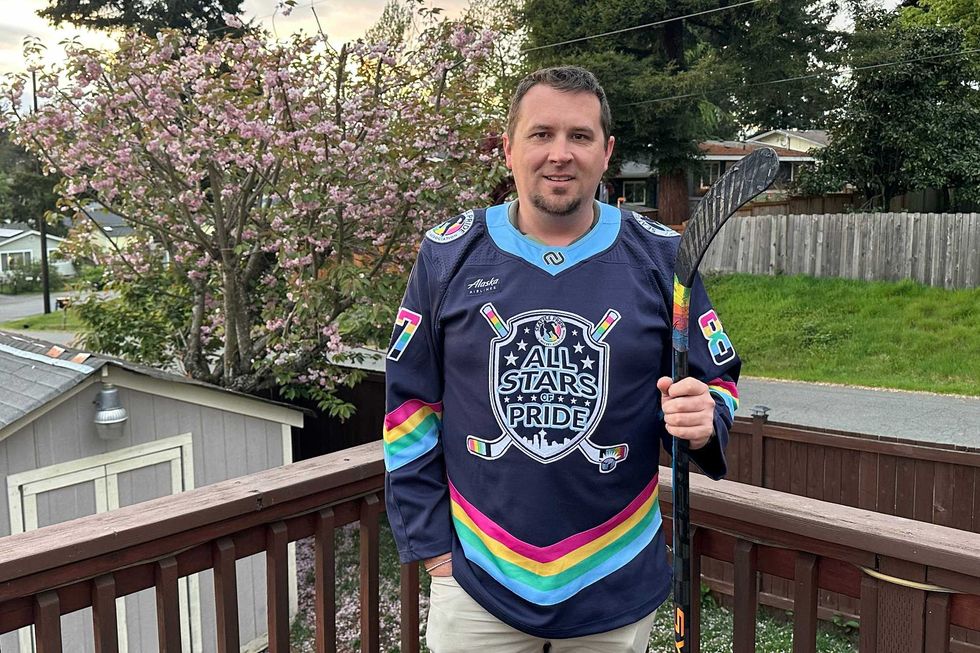 Steven Thompson, co-founder of the Seattle Pride Hockey Association (SPHA), poses for a photo with his stick that features pride tape and a SPHA sweater at his home in Des Moines, WashAP Photo/Andrew Destin
Marisco noted Burke’s impact: "(Burke) was great for LGBT+ stuff, and when he came to the Penguins, they already had a little bit of momentum. But, he amped that up. So right away, the Penguins took a prime spot not just amongst other NHL teams, but they took a leadership role amongst all the other professional sports teams in Pittsburgh."
Similarly, Gina Malizio, president of the Chicago Pride Hockey Association, has observed a significant surge in participation recently. This growth coincides with the debut of Heated Rivalry, a popular TV series depicting a secret romance between two professional hockey players. Malizio estimates hundreds of new player enquiries since the show’s premiere.
"Some of that is people that have played before wanting to join, knowing that we’re out there, knowing this is a thing," Malizio explained, "and people then wanting to play the sport now feeling more comfortable seeing themselves potentially be represented in a TV show."
However, Chicago’s success is somewhat of an anomaly, not necessarily indicative of a universally positive trend for hockey’s relationship with the LGBTQ+ community. Public detractors remain, such as Columbus Blue Jackets defenseman Ivan Provorov, who three years ago cited his Russian Orthodox religion for not participating in Pride activities while with the Philadelphia Flyers. The team had worn Pride-themed jerseys and used rainbow Pride tape during warm-ups.
Thompson highlighted the ongoing hostility: "If the Kraken put on a Pride night and they post something about it, if you go look at the comments, you’ll see all the hate and bigotry that’s in those comments."
The Seattle association itself did not operate during the 2025-26 season due to a lack of available ice time. Furthermore, from 1 April, USA Hockey reversed a 2019 policy, now limiting male- or female-only teams to athletes assigned those sexes at birth. This decision was made to comply with guidance from U.S. Olympic officials, following an executive order from US President Donald Trump.
"They’re saying ‘Hockey is for everyone, except this group of people,’" Malizio stated. "So, as far as Chicago Pride hockey, as far as we’re concerned, it’s not a ban that we want to support in any way. We don’t think that banning people from the sport is being a steward of the sport at all."
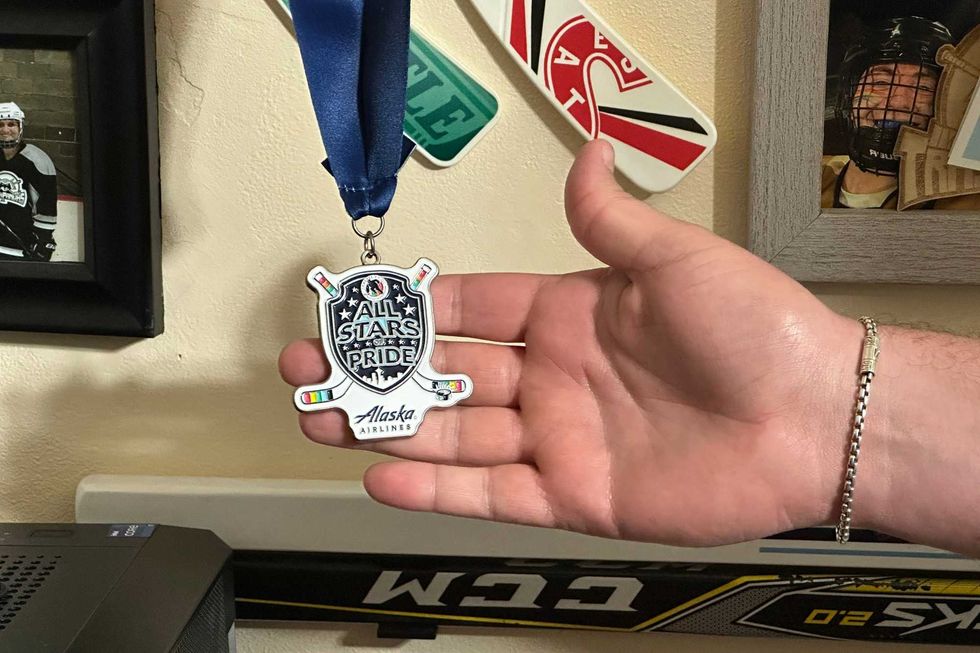 Steven Thompson sifts through some of his hockey memorabiliaAP Photo/Andrew Destin
Tony Tiet, who plays for the San Francisco Earthquakes LGBT+ Ice Hockey Club, described the current climate as challenging. "Back in 2010 or so, when the Stanley Cup was in the Chicago Pride Parade, there was a huge momentum and then just maybe in the past four years they kind of stepped back," he said. "We’re losing a lot of sponsors and a lot people are taking away simple stuff such as wearing your tape, Pride tape."
Despite these setbacks, inclusive leagues offer a vital haven. Jacob Lassner, now with the Pittsburgh Penguins radio network, deeply valued playing in Boston Pride Hockey during his time in the Northeast. Lassner, who is gay, noted that many traditional hockey locker rooms are not welcoming spaces for LGBT+ individuals, particularly those who are closeted on competitive teams.
"A lot of players," Lassner observed, "they love hockey so much that they take it and just keep playing in spite of things that are said."
The persistence of these inclusive leagues, despite hockey’s complex relationship with the LGBT+ community, underscores their importance. For individuals like Alex Marsh, a queer trans man playing for Pittsburgh LGBT+ Hockey, finding such a space has brought immense joy and connection.
"I’m so glad that I didn’t let my fear of not being welcome because I was trans stop me," Marsh affirmed. "I’m just so lucky that I have this team to play with here in Pittsburgh. The joy and connection is giving me the strength to keep fighting and resisting, and keeping me moving forward."
Top 100