The Conversation (0)
Related video: Oversharing on dates
Fox - LA / VideoElephant
The familiar pang of regret after revealing too much, that cringeworthy feeling of having shared an inappropriate detail at an inopportune moment, is a common human experience. Yet, for one Harvard business professor, a moment of drunken candour about a bathroom emergency onstage in front of hundreds of people unexpectedly became a career asset.
Leslie John, author of "Revealing: The Underrated Power of Oversharing," initially feared she had jeopardised her professional future. Instead, the two superiors to whom she confessed became her closest mentors. "Those two grand poo-bahs, they became my closest mentors," John said. "And it’s not in spite of my having shared my embarrassing story with them, because they’ve told me it’s because of it." While acknowledging a degree of luck, John’s experience highlighted a crucial point: despite common anxieties, opening up can foster trust and strengthen relationships, particularly in in-person interactions. Online sharing, she cautions, carries different risks.
So, how does one discern the line between too much information and not enough? Kathryn Greene, a communications professor at Rutgers University, who has studied "disclosure" since the 1980s, explains that people constantly evaluate what personal information to share. "We’re constantly making these evaluations in all of our relationships and reassessing as it goes along," Greene noted. Context, she stresses, is paramount; discussing a sexually transmitted infection with a doctor differs vastly from revealing it to a boss.
While personal openness can forge connections, revealing too much too soon can be off-putting. Greene likens it to the early stages of dating, where individuals offer a trickle of information to gauge compatibility. "There’s a pretty predictable pattern as we test for a positive rather than neutral or negative reaction," she explained. "It’s going to lead to us potentially sharing more."
John advises analysing the motivation behind sharing and questioning whether it’s with the right person at the right time, a process that "requires a lot of self-honesty." She recounts a personal instance during the pandemic when, pregnant and craving connection, she told her landlord. The landlord, seemingly wary of tenants with children, promptly put the property up for sale, forcing John to move. "If I had been honest with myself, why do I want to reveal this? Because I want love and excitement," she reflected. "Well, the landlord is not the right person to reveal to."
 AP Photo/Esteban Felix,
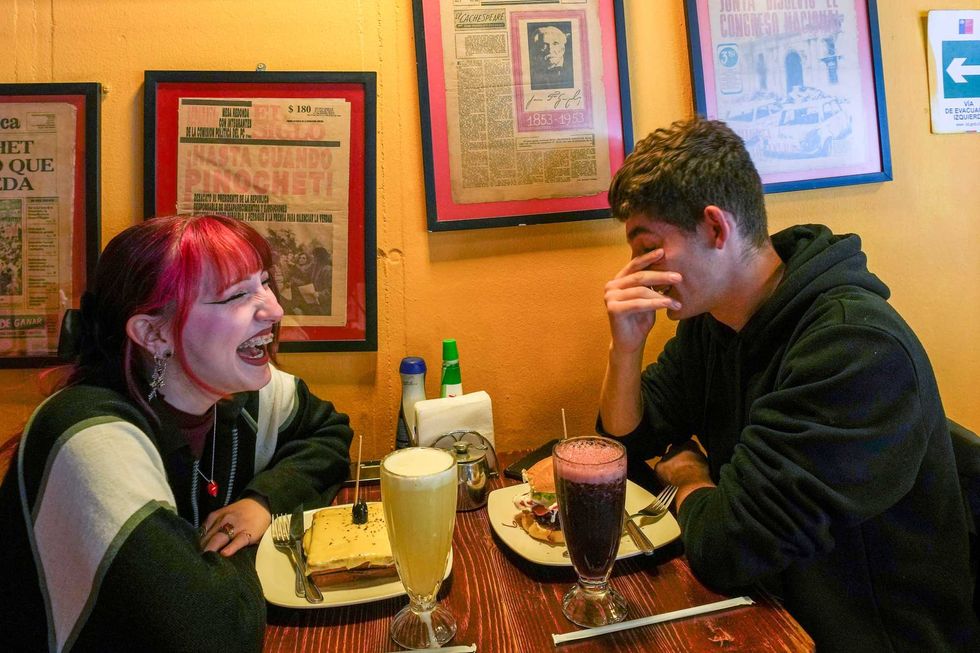
Conversely, John argues that people rarely consider the risks of revealing too little. Without opening up, acquaintances may never evolve into close friends, and significant opportunities for connection can be missed. While revealing too much can feel mortifying, it is often recoverable. John suggests that the solution to feeling like you’ve overshared is to share more, not less. For example, if you believe you’ve offended a colleague, addressing it directly can clear the air. "What feels like overcommunicating is just communicating," she said.
However, certain types of oversharing are counterproductive. Greene highlights the imbalance created when someone monopolises a conversation by dumping personal information without allowing others to speak. Such one-sidedness can degrade relationships over time, as "most people will try to distance themselves if they’re finding time after time that this balance doesn’t ever shift." Gossip is another pitfall. John’s research on "spontaneous trait transference" indicates that sharing others’ personal information or speaking ill of them implicitly associates those negative traits with the speaker. "It happens automatically, outside of conscious awareness," she said. "Literally, it makes you look bad."
Beyond these caveats, John suggests that most other forms of sharing are fair game, especially if the goal is to feel more understood. Moreover, sharing feels inherently good. Studies show that pleasure centres in the brain activate during self-disclosure. "Nature has a way of making what’s good for us pleasurable," John concluded. "In moderation."
Top 100