
The Conversation (0)
What Are Peptides? 5 'Miracle Molecules' Women Over 50 Are Buzzing About
Woman's World - Recipes / VideoElephant
Has self-improvement culture officially hit its peak?
It's easy to see why people think so - whether it's watching Steven Bartlett's life unravel after a glass of wine, the normalisation of weight-loss drugs, or the open-experimentation of peptide use.
Wellness has officially become more DIY than ever before.
That could explain why if you've been scrolling your feed as of late, you might have seen these code word-like acronyms popping up in the form of GHK-CU, MOTS, SS31, or RETA, to name but a few.
Retatrutide has become one of the fastest-growing health topics online, with searches for the experimental weight loss drug soaring by 1,224 per cent over the past year alone.
Analysis of Google search data by Feel30 found that 'Retatrutide' (sometimes known as 'Triple-G') generated approximately 3.4 million searches in the past month alone, highlighting growing public curiosity around the treatment.
Here's what to know...
 iStock
What is Reta?
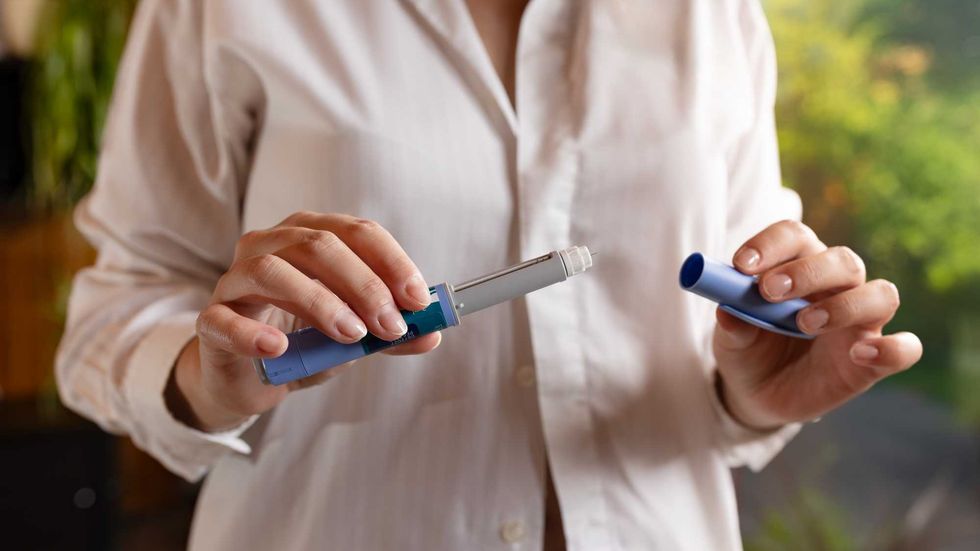
Retatrutide (or RETA), is a triple agonist peptide, targeting the receptors of 3 hormones that can impact appetite, weight, and blood sugar levels, administered via injection.
That means, in theory, people believe it behaves in a similar way to a GLP-1 drug without the need for medical intervention. It's being studied as a potential option for treatment of obesity and Type 2 Diabetes.
It's particularly exploded in popularity in the looksmaxxing and body building communities as a more 'natural' approach to achieving a lean physique.
“Peptides are chains of amino acids that act to help signal different parts of the body. Think of it as text messages sent to different areas of the body, helping cells to communicate with each other", notes Dr Ahmed El Muntasar, GP and owner of The Aesthetics Doctor.
“They deliver signalling molecules directly into the body to help stimulate certain biological functions. They can help with skin rejuvenation, metabolism, muscle repair, and hormones among many other things.”
 iStock
Why has Reta become so popular?
The rise of looksmaxxing culture paired with social media accessibility means that so-called 'before and after' transformations are readily available to influence our behaviour - and on the surface, it's easy to see why those results are enough to prompt temptation.
Studies from manufacturers claim that users can lose up to 70 pounds or about 30 per cent of their body weight over 80 weeks, which is on-par with weight-loss surgery.
Researchers also found that Retatrutide reduced pain for people with knee arthritis by up to 73 per cent.
However, Reta is not FDA-approved, and is unlikely to be until at least 2027, with a number of concerns around safety still at the forefront.
One participant in clinical trials experienced kidney stones after losing weight too rapidly (although it's not confirmed as having a direct correlation), while other social media users have reported 'emotional flatlining' through using the peptide.
"When people repeatedly see dramatic transformations, glowing testimonials and viral videos, it's understandable that they want to learn more. The problem is that social media doesn't always provide the full picture", says Anneliese Cadena, AGNP-C and Clinical Advisor at Feel30.
"If someone claims they can sell you Retatrutide online, consumers should approach that with extreme caution."
 iStock
Is Reta available to buy?
Put simply; there's no 'safe' way to buy it right now.
Many people are accessing it through social media, but what they don't realise is that much of the research around peptides has been done on animals and cells, rather than humans - and peptides are not licensed for self-injection in the UK.
That means there's no real safety net when it comes to the purity of what you're buying, or the long-term implications of using it.
"There is no reliable way to verify what is actually contained within an unregulated injectable product, whether it has been manufactured safely or whether the dosage is accurate", adds Anneliese.
"People should be particularly wary of products being promoted through social media, messaging apps or websites that operate outside legitimate healthcare channels."
In fact, experts are now so concerned that the UK medicines regular is investigating claims made by clinics selling unregulated peptide therapies, per The Guardian.
While its initial findings may prove promising, it's better to wait until it's been given the official seal of approval.
Things to remember about Retatrutide:
- Retatrutide is still an investigational medication
- It has not yet been approved by the FDA
- It should not be purchased from unregulated online sellers
- Products marketed online may not be authentic
- Clinical trial results do not automatically mean a treatment is suitable for everyone
- Medical weight loss treatments should always be discussed with a qualified healthcare professional
The information in this article is not intended to be medical advice
Why not read...
Kylie Jenner’s sold-out electrolytes are now an essential in my beauty routine - here’s why
Can a 'palm reading' predict the future of my health?
How to join the indy100's free WhatsApp channel
Top 100