











The Conversation (0)
Liam O'Dell
Jul 31, 2026
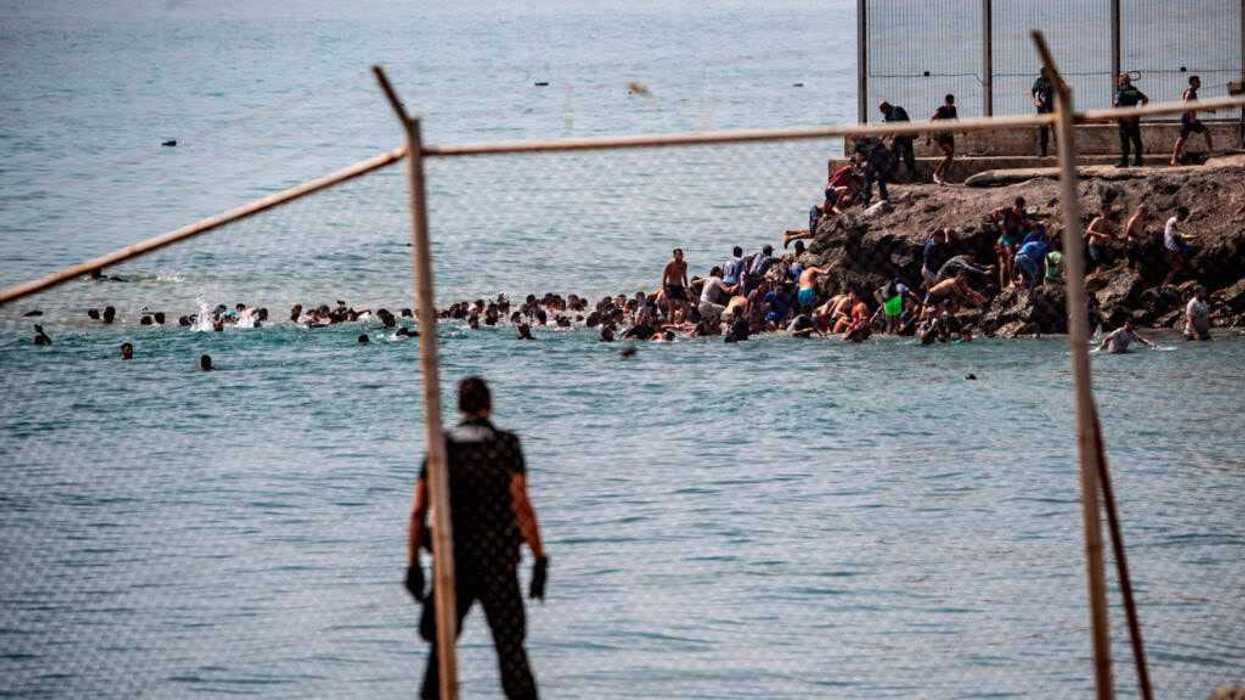
Related video: Thousands start returning to Morocco after mass arrivals in Spain's Ceuta
FMM - F24 Video Clips / VideoElephant
In the past few days, an estimated 60,000 migrants have entered Ceuta, a Spanish enclave, from Morocco. While around 25,000 migrants returned to Morocco on Friday, at least 34 people have died while attempting to cross into Ceuta from North Africa.
Spanish president Pedro Sánchez said on Friday that the mass migration is “an attack on Spain’s territorial integrity and deserves our most resounding and energetic condemnation”.
According to an X/Twitter translation of his comments, Sánchez also wrote: “The Government will guarantee the safety of the residents of Ceuta, intensifying the presence of the Security Forces and Corps on the city’s streets.
“Additionally, we will deploy a physical containment barrier in the sea to facilitate repatriation at the border, in compliance with the Supreme Court ruling.
“We will expedite the repatriation files of the migrants who arrived irregularly. And we will maintain cooperation with the Moroccan authorities to continue fighting against the mafias that traffic in human beings.”
Where is Ceuta in Spain?
As mentioned above, Ceuta is a Spanish enclave.
On a map of the world, it’s actually found on the North African coast, south of Gibraltar.
It borders Morocco, and is separated from mainland Spain by the Strait of Gibraltar.
Why are Moroccans fleeing to Spain?
There’s no definitive answer, but in a statement issued on Thursday, Spain’s Ministry of the Interior pointed towards a recent Supreme Court ruling.
Similarly, Dr Mihnea Cuibus of the University of Oxford’s Migration Observatory told The Independent: “One of the factors that might have played a part, although we don’t know, is the Supreme Court decision in Spain.”
What was the Supreme Court ruling?
Dr Cuibus said the ruling meant “under Spanish law, pushing back people who arrived by sea into Morocco without processing their applications is illegal”.
“In theory, that judgement will constrain the Spanish government to some extent, but we haven't been in this situation before so it is hard to see how it is going to develop,” he said.
The ruling pertains to Ceuta, as well as another Spanish enclave named Melilla.
What does the situation mean for Europe?
Conservative, right-wing leaders in Europe have expressed concerns over the crisis, with Italian prime minster Giorgia Meloni writing on X/Twitter on Thursday evening: “The images coming from Ceuta are striking and demonstrate, once again, that uncontrolled illegal immigration poses a concrete threat to the security of Europe's borders.
“Italy will not stand by and watch. We are convening the relevant bodies, and following these meetings, we are prepared to intervene with extraordinary measures to defend the borders and the safety of citizens, including the suspension of the Schengen Area with Spain.”
Meanwhile Finland’s foreign affairs minister, Elina Valtonen, said: “We are counting on Spain to protect our external border.”
UK prime minister Andy Burnham said scenes of migrants scrambling onto the shores was a “cause for concern”, and that the UK had contacted Madrid to understand the implications, and provide support.
And Ursula von der Leyen, president of the EU Commission, said: “We cannot allow anyone to come to our Union without abiding by our rules.”
According to CBS News, crossing the channel between northern Africa and mainland Europe would require passing additional border controls, and limited transport options to the rest of the EU “makes such travel unlikely”.
Dr Cuibus said that it was “way too early to tell” how it will impact Europe, and that “there are some questions that will hopefully be answered in the next few days”.
“A lot of what happens next depends on what the Spanish government is planning to do in response to the situation. I think a key question is whether, and to what extent, these people make their way into mainland Europe.
“That depends on what they do with processing, or whether Spain is successful in returning some of these people back to Morocco.
"If these people don't make it to mainland Spain, then the situation remains contained to Ceuta and won't have much of an effect,” he said.
Why not read…?
- Donald Trump is ranting about 'windmills' yet again
- Republican's claim 'honest' people don't plead the Fifth backfires
Sign up to our free Indy100 weekly newsletter
How to join the indy100's free WhatsApp channel
Have your say in our news democracy. Click the upvote icon at the top of the page to help raise this article through the indy100 rankings.