The Conversation (0)
Trump
Americans’ hope for their future has plummeted to a new low, with recent polling revealing a significant decline in optimism across the nation.
In 2025, only 59 per cent of Americans rated their prospective lives in five years highly, marking the lowest annual measure since Gallup began tracking this sentiment nearly two decades ago. This stark figure serves as a potent warning about the pervasive gloom that has settled over the country in recent years. Historically, Gallup’s measures of current and future life satisfaction have moved in tandem; a positive present typically correlated with an optimistic outlook for what lies ahead. However, the latest data indicates that while current life satisfaction has waned over the past decade, future optimism has fallen even more sharply.
The findings stem from a long-standing Gallup question that asks individuals to rate their current and future lives on a scale of zero to 10. Those who assign a score of eight or higher to their future prospects are categorised as optimists.
Dan Witters, research director of the Gallup National Health and Well-Being Index, observed: "While current life is eroding, it’s that optimism for the future that has eroded almost twice as much over the course of about that last 10 years or so."
Fewer than half of Americans, approximately 48 per cent, now fall into the "thriving" category, defined by Gallup as those rating their current life at seven or higher and their anticipated future at eight or higher.
Democrats and Hispanic Americans, in particular, exhibited a more pessimistic mood last year. Even with Donald Trump back in the White House and his party controlling both houses of Congress, Republicans are not as optimistic about the future as they were during the final year of Trump’s first term.
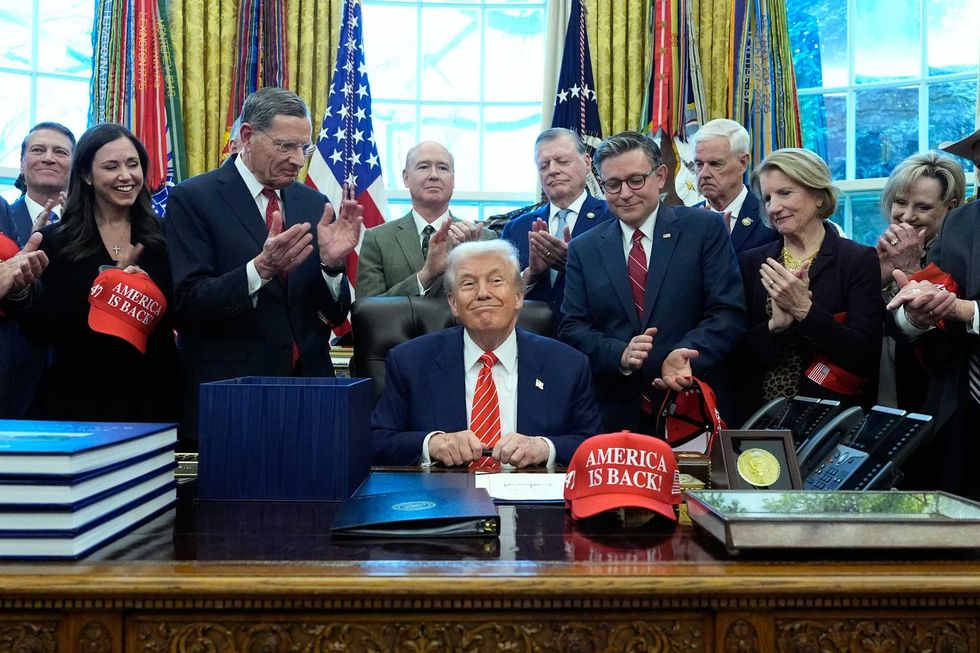 President Donald Trump smiles after signing a spending bill that ends a partial shutdown of the federal government in the Oval Office of the White House AP Photo/Alex Brandon
Typically, Americans’ attitudes towards the future shift with a change in presidential administration; the party in power generally becomes more optimistic, while the opposition grows more despondent. For instance, Democrats’ outlook improved after Joe Biden’s presidential victory, while Republicans’ soured. Witters noted that these shifts usually occur "by roughly the same amount, same level of magnitude, so they cancel each other out."
However, this balance did not hold in 2025. Towards the end of Biden’s term and the start of Donald Trump’s second term, Democrats’ optimism dropped from 65 per cent to 57 per cent. While Republicans became more hopeful, their increased optimism was insufficient to offset the significant decline among Democrats.
"The regime change in the White House almost certainly was a big driving factor in what’s happened," Witters explained. "And a lot of that was just because the people who identified as Democrats really took it in the chops."
Despite this, Republicans remain considerably gloomier about the future than they were during the final year of Donald Trump’s first term. A January AP-NORC poll indicated that while the vast majority of Republicans still support the president, his economic policies have not met many people’s expectations.
Optimism among Hispanic adults also saw a sharper decline during Donald Trump’s first year in office, falling from 69 per cent to 63 per cent. This decrease was more pronounced than among white and Black Americans, a trend Witters suggested could be linked to broader concerns over living costs, healthcare worries, or apprehension regarding Donald Trump’s recent immigration policies.
Last year, a survey by the American Communities Project found that residents in heavily Hispanic areas felt less hopeful about their future than in 2024. Donald Trump’s favourability among Hispanics decreased over 2025, according to AP-NORC polling, which also revealed that Hispanic adults reported higher levels of economic stress compared to other groups.
A Pew Research Center poll conducted in October highlighted the high visibility of the administration’s stringent immigration enforcement within Hispanic communities. Approximately six in 10 Latinos reported having witnessed or heard of Immigration and Customs Enforcement (ICE) raids or arrests in their community within the preceding six months.
Witters concluded: "(Deportations are) something that everybody can see and look at with their own eyes. But if you’re Hispanic, I think it’s fair to think that that might hit a little closer to home."