The Conversation (0)
'You’re gonna do the whole big trip to Mars': Trump speaks to …
NASA
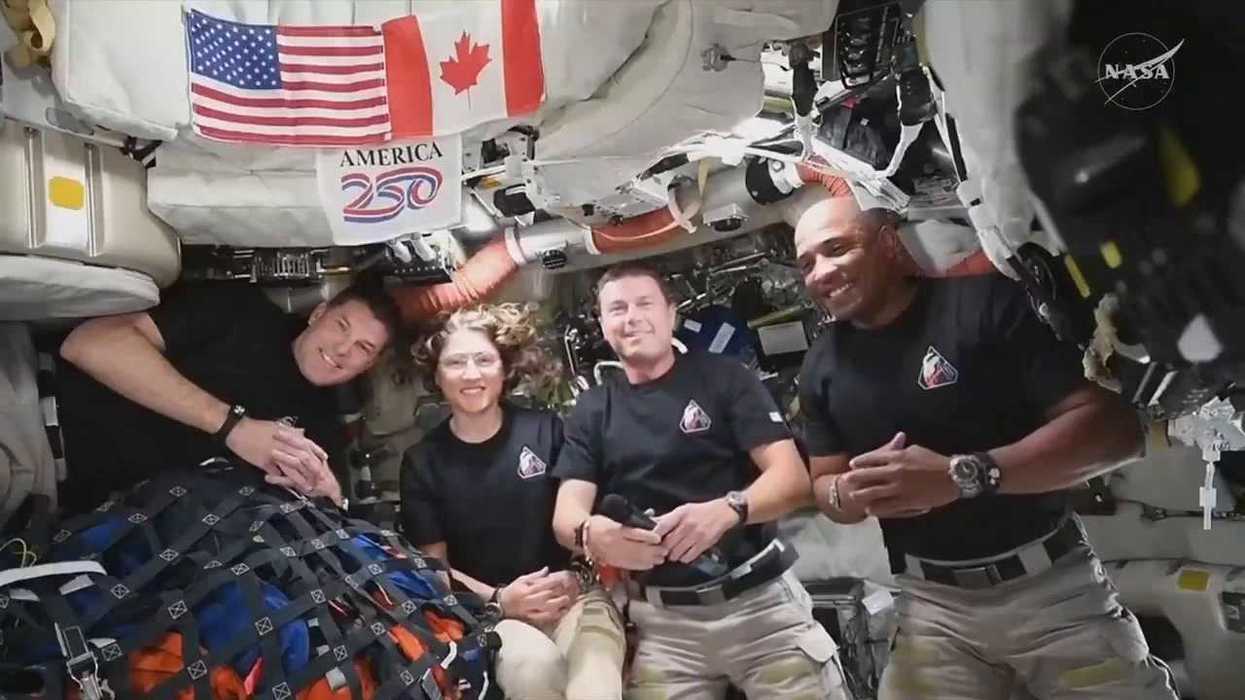
The Artemis II astronauts have begun their journey home after a historic lunar flyby, venturing deeper into space than any humans before them. Their mission offered unprecedented views of the Moon's far side and marked a significant stride towards future crewed landings near the lunar south pole within the next two years. This flyby represents NASA's first return to the Moon since the Apollo era, combining crucial scientific objectives with breathtaking celestial sightseeing.
During their voyage, the three American and one Canadian astronaut witnessed a total solar eclipse as the Moon temporarily obscured the Sun from their perspective. They also observed Mercury, Venus, Mars, and Saturn, alongside the poignant landing sites of Apollo 12 and 14, serving as reminders of NASA's initial age of exploration over half a century ago.
In a remarkable echo of past space exploration, Artemis II surpassed the distance record set by Apollo 13 in 1970. NASA’s Orion capsule reached a maximum distance of 406,771 kilometres (252,756 miles) from Earth before executing a U-turn behind the Moon, travelling 6,600 kilometres (4,101 miles) further than Apollo 13. Canadian astronaut Jeremy Hansen expressed his awe, radioing: "It is blowing my mind what you can see with the naked eye from the moon right now. It is just unbelievable." He challenged future generations to quickly break this new record.
The crew received a special message from Apollo 13 commander Jim Lovell, recorded two months before his death last August. Mission Control beamed his words to commander Reid Wiseman, pilot Victor Glover, Christina Koch, and Hansen before their lunar fly-around. "Welcome to my old neighborhood," said Lovell, who also flew on Apollo 8, humanity’s first lunar visit. "It’s a historic day and I know how busy you’ll be, but don’t forget to enjoy the view." The Artemis II astronauts carried an Apollo 8 silk patch, which had accompanied Lovell to the Moon, with Wiseman stating: "It’s just a real honor to have that on board with us."
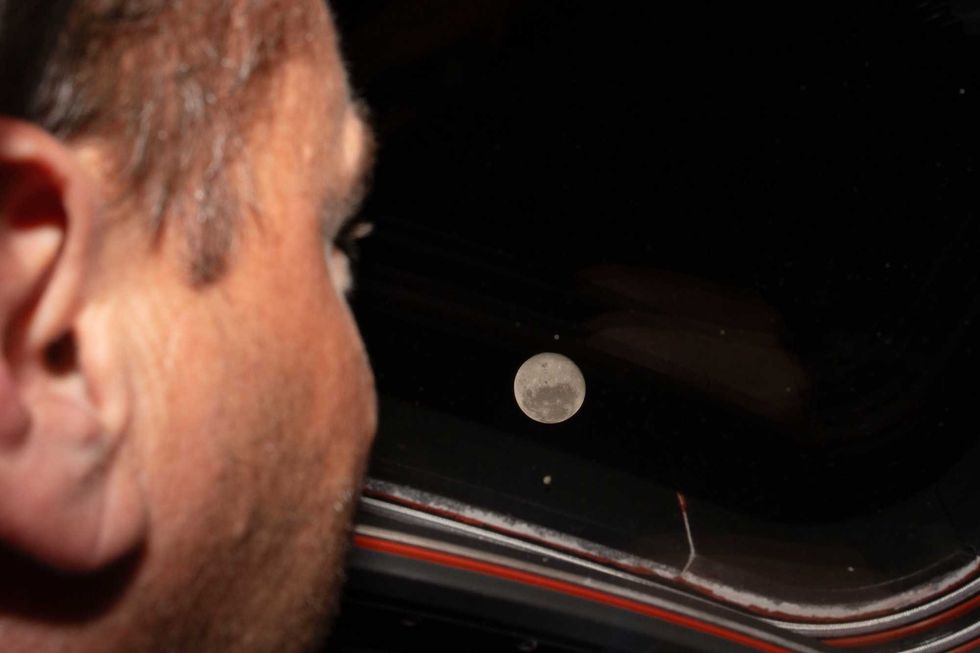 Artemis II commander and NASA astronaut Reid Wiseman looks out one of the Orion spacecraft's main cabin windows at the Moon ahead of the crew's lunar flyby on April 6, 2026NASA via AP
Artemis II employed the same "free-return lunar trajectory" manoeuvre used by Apollo 13 after its oxygen tank explosion thwarted a moon landing. This fuel-efficient route leverages Earth and Moon’s gravity, guiding the astronauts back towards home in a celestial figure-eight once they emerged from behind the Moon on Monday evening.
The lunar fly-around and intense observation period spanned seven hours, forming the highlight of the nearly 10-day test flight, which is set to conclude with a splashdown in the Pacific on Friday. Venturing as close as 6,545 kilometres (4,067 miles) to the lunar surface, the astronauts meticulously examined over two dozen targets, utilising powerful Nikon cameras and their iPhones to capture impact craters and other intriguing features.
Before commencing their observations, they sought permission to name two bright, newly formed craters: Integrity, after their capsule, and Carroll, in honour of commander Wiseman’s wife, who passed away from cancer in 2020. Wiseman was visibly moved as Hansen made the request to Mission Control, leading to an emotional embrace among all four astronauts. "Such a majestic view out here," Wiseman radioed, regaining his composure to begin photography. The crew successfully captured both the Moon and Earth in a single shot, providing scientists in Houston with a running commentary of their discoveries. Christina Koch described an overwhelming emotional sensation while zooming in on the Moon, stating: "Something just drew me in suddenly to the lunar landscape and it became real."
The astronauts made their closest approach to the Moon and reached their maximum distance from Earth during a communication blackout. As the spacecraft reappeared from behind the Moon, accelerating towards Earth, an "Earthrise" came into view, revealing Asia, Africa, and Oceania. Mission Control declared: "We are Earthbound and ready to bring you home," as flight controllers in Houston symbolically flipped their mission patches.
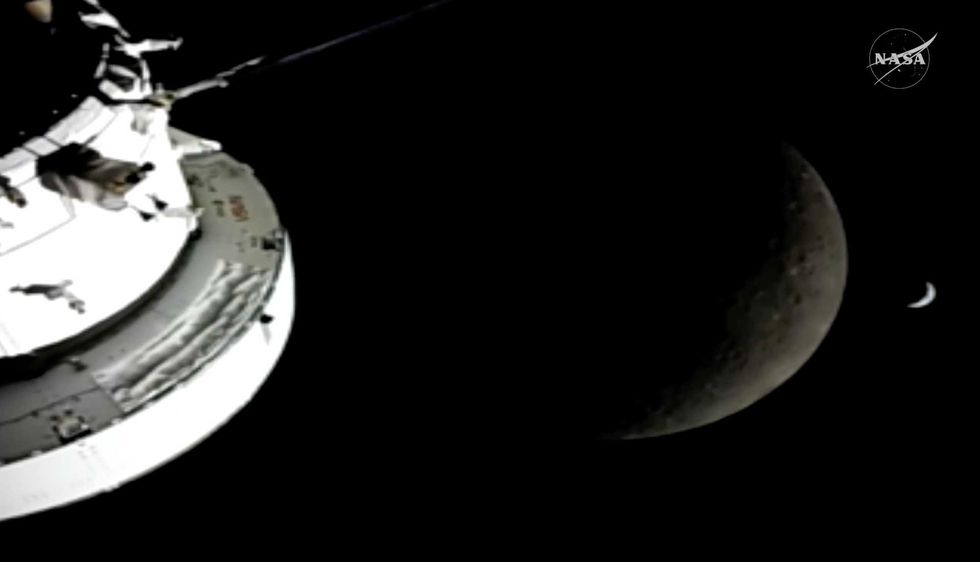 In this image from video provided by NASA, the Orion Spacecraft, the Earth and the Moon are seen from a camera as the Artemis II crew and spacecraft travel farther into Space, Monday, April 6, 2026. NASA via AP
Donald Trump telephoned the astronauts following the flyby, hailing them as "modern-day pioneers." He added: "Today you’ve made history and made all America really proud, incredibly proud," and spoke of future lunar travel and ultimately "the whole big trip to Mars."
To prepare for this monumental event, Wiseman and his crew spent years studying lunar geography, incorporating solar eclipses into their training in recent weeks. Their launch last Wednesday ensured they would experience a total solar eclipse from their vantage point behind the Moon. A key scientific objective was the Orientale Basin, a vast impact basin with three concentric rings, the outermost stretching nearly 950 kilometres (600 miles) across. NASA geologist Kelsey Young anticipates thousands of images from the mission.
Artemis II, NASA’s first crewed Moon mission since Apollo 17 in 1972, paves the way for next year’s Artemis III, which will involve another Orion crew practising docking with lunar landers in Earth orbit. The culminating Moon landing by two astronauts near the lunar south pole is planned for Artemis IV in 2028. While Artemis II followed Apollo 13’s trajectory, it also evoked memories of Apollo 8, humanity’s first lunar visitors who orbited the Moon on Christmas Eve 1968. Victor Glover reflected on the significance of flying to the Moon during Christianity’s Holy Week, noting "the beauty of creation." He observed that Earth is an oasis amidst "a whole bunch of nothing, this thing we call the universe" where humanity exists as one. "This is an opportunity for us to remember where we are, who we are, and that we are the same thing and that we’ve got to get through this together," Glover concluded, clasping hands with his crewmates.
Top 100