The Conversation (0)
Science & Tech
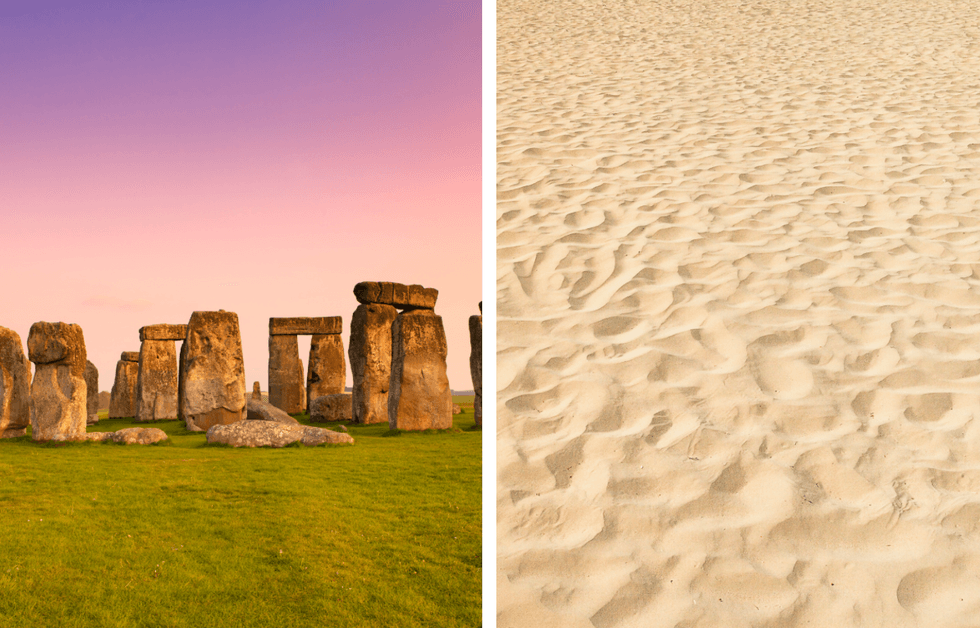
For centuries, ideas about how Stonehenge’s enormous stones reached Salisbury Plain have ranged from the practical to the fantastical. Scholars have suggested sledges, ropes and boats, while folklore has credited giants with the task. Another long-standing theory proposed that nature itself did the hard work, with glaciers transporting the stones south during the last ice age.
A new geological study now casts serious doubt on that icy explanation.
Research published in Communications Earth & Environment suggests the stones were not carried by glaciers at all. Instead, the evidence points firmly towards human involvement, and it comes from an unexpected source: grains of sand found in nearby rivers.
The study focused on microscopic mineral crystals known as zircons. These grains are extremely small, but they are remarkably resilient and can preserve information about when and where they formed. Because of this, they are widely used by geologists to track the movement of rocks and sediments over deep time.
Researchers collected sand samples from four streams that drain Salisbury Plain, including the River Avon and the River Wylye. From these samples, they separated out the heavier minerals and analysed individual zircon grains to determine their ages.
 iStock
The crystals turned out to be very old, having formed billions of years ago. Such ages are common in ancient rocks found in the northern parts of Britain. However, the way these grains appear in Wiltshire’s river sands is crucial to understanding what moved them.
If glaciers had carried large stones into the area during the last ice age, they would also have transported vast numbers of tiny mineral grains at the same time. Those grains would have been deposited across the landscape, leaving a clear geological signal dating to that period.
The researchers found no such signal.
Instead, the zircon ages match older sediments that once covered wide areas of southern Britain. These sediments were laid down long before the last ice age and were later eroded and recycled into modern river systems. This process can fully explain the presence of ancient zircon grains in local sands, without any need for glacial transport.
Crucially, the study found no evidence that material was carried into the Salisbury Plain area by ice between around 20,000 and 26,000 years ago, when glaciers last affected Britain. This absence makes it very unlikely that glaciers delivered the stones used at Stonehenge.
While the research does not explain exactly how the stones were moved, it strongly supports the idea that they were transported deliberately by people rather than carried by natural forces.
You should also read...
How to join the indy100's free WhatsApp channel
Sign up for our free Indy100 weekly newsletter
Have your say in our news democracy. Click the upvote icon at the top of the page to help raise this article through the indy100 rankings.