The Conversation (0)
Sandi Toksvig's favourite fact
IndependentTV
I have a bone to pick with my old English teacher. For years, their insistence that adding a ‘the’ before Magna Carta was redundant – that you’d essentially be saying ‘the the Great Charter’, akin to saying ‘PIN number’ or ‘ATM machine’ – has taken up space in my mind, compounded by the fact I went to Lincoln as an undergraduate, where one of the original copies of the historic document is located.
And so, as I watched a rehearsal of an episode of beloved fact-based quiz show QI – a format dedicated to accuracy – and I heard host Sandi Toksvig refer to “the Magna Carta”, I rather cheekily interjected with information I considered to be true, only for the comedian herself to later come up to the gallery and inform me I wasn’t entirely correct in my assertion (‘the Magna Carta’ is absolutely fine thanks to the modernisation of the Latin, don’t worry).
But this anecdote speaks to the very nature of QI, where its ‘General Ignorance’ round points out that the things we thought we knew may not be completely true or accurate after all. And at a time where learning that an authority figure in our lives might have – unintentionally – misinformed us can, in an extreme case, prompt distrust of institutions (“the media is lying to us”), the BBC programme takes a gentler, more comedic approach.
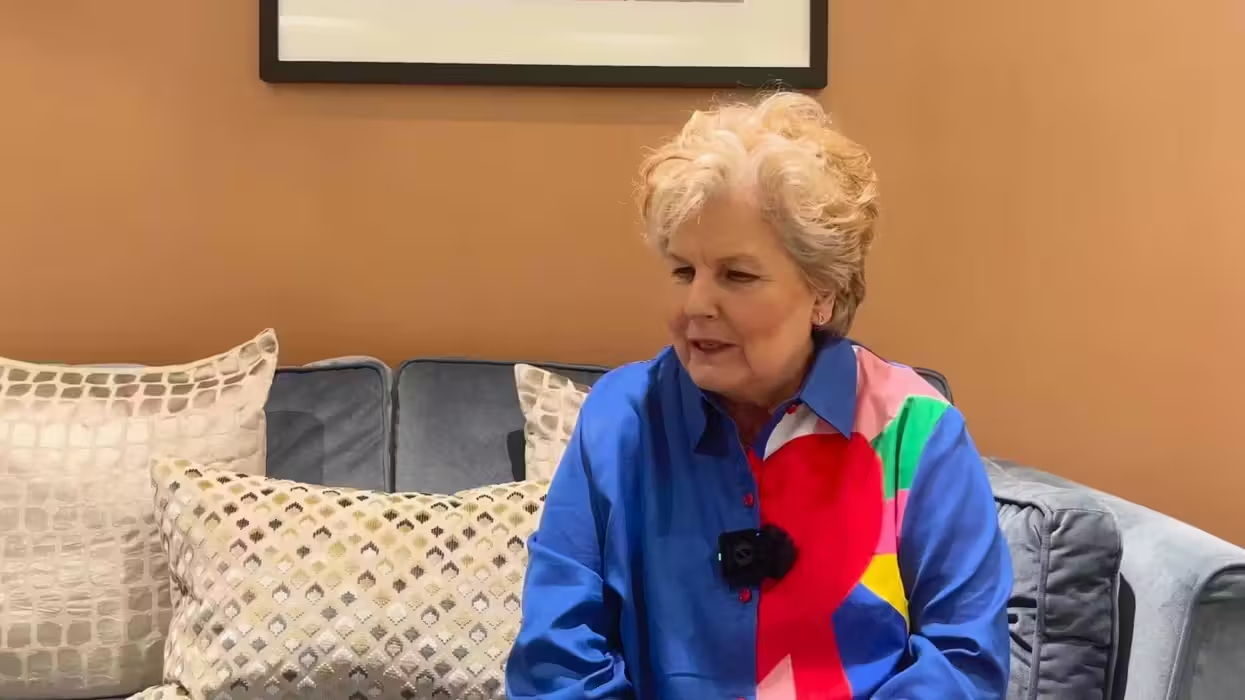
“It’s education by stealth,” Toksvig tells me. “We pride ourselves on trying to make sure that if you don’t know the answer, that’s not because you’re stupid, it’s because you didn’t have time yet. I always say ‘I don’t know’ is the first step to learning something, I’m really fine that somebody doesn’t know something, and I never ever want it to be that we’re smug because we know something and the audience or the panellists don’t.
“I think we are educating in a kind way.”
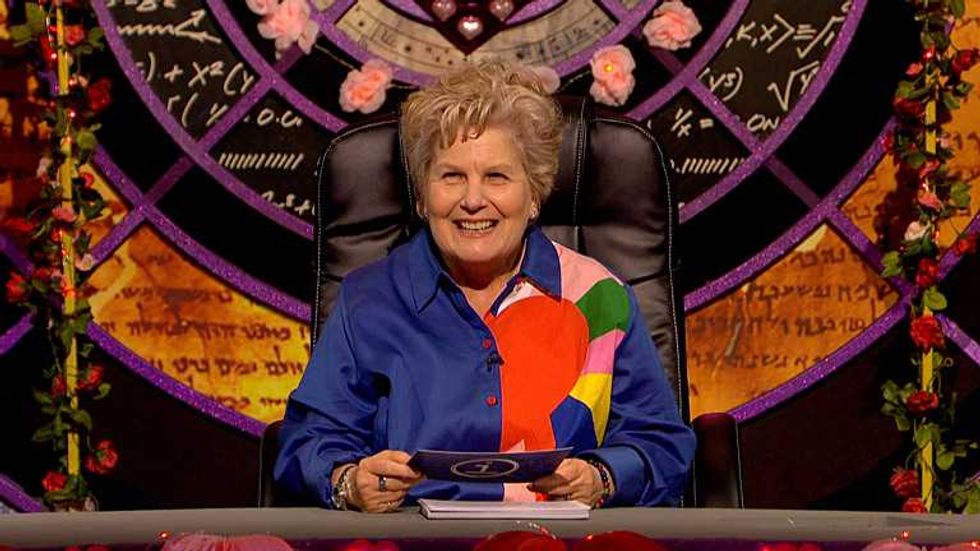 QI host Sandi Toksvig shares favourite – and quite interesting - fact BBC/Freemantle Media and QI
I touch upon the idea of not knowing something with regular panellist Alan Davies, who’s previously described his role on the gameshow as being “the dunce in the class”. Does that reputation, and the light teasing that comes with it, speak to how society doesn’t do a very good job of admitting when we don’t know something? “Possibly,” he tells me.
“My kids are all at school, and they’re all told, ‘ask a question, you might think it’s a silly question, or think you should know something, but ask it, ‘cause there’s no point sitting there not knowing’. So, kind of, a spirit of curiosity and inquisitiveness and enquiry and interest is what we’re after,” the comedian goes on to add. “And maybe you’re right, maybe being that way makes people think you’re weak or vulnerable, when in fact, I think the opposite’s true, I think you’re prepared to go and enquire and see what you can find out.”
But then again, what’s curious or ‘quite interesting’ is subjective, so how do those working on the show know they’ve found something of interest to a wider audience?
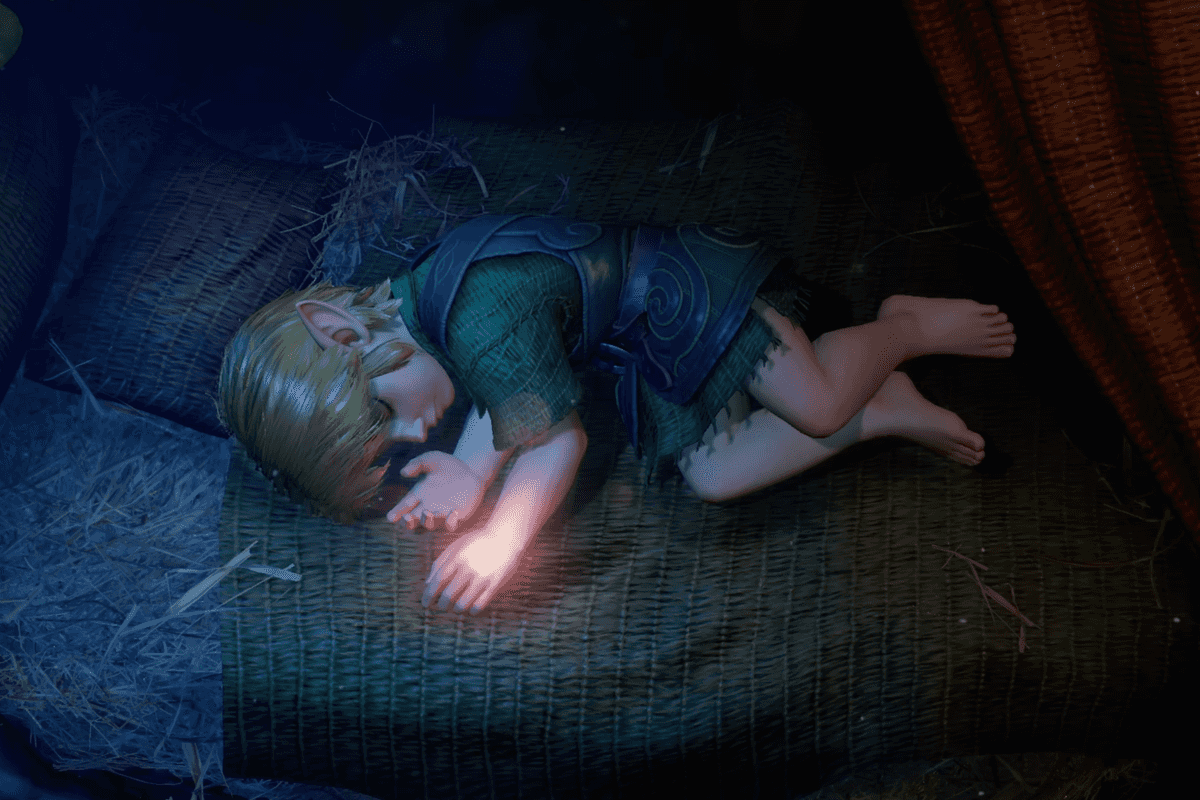
“I think one thing we’re always encouraged to think about is, would you want to tell this to a friend down the pub,” explains researcher and QI elf Tara Dorrell, who describes her job as doing “lots of little bits and pieces” such as “running after some chickens or something” (she’s unable to elaborate, but declares that “Chicki Minaj lives in my heart”).
“If that’s the kind of nugget you want to pull out and surprise people with, that’s perfect, because we do often have very different interests,” she adds. “Some people will like really science-y topics and things about physics and maths and how many grains of sand fill a room, and other people like the history stuff and it doesn’t always match up the same way, but if you can pull out those gems that fascinate anyone, regardless of what your background is, that’s what really works for the show.”
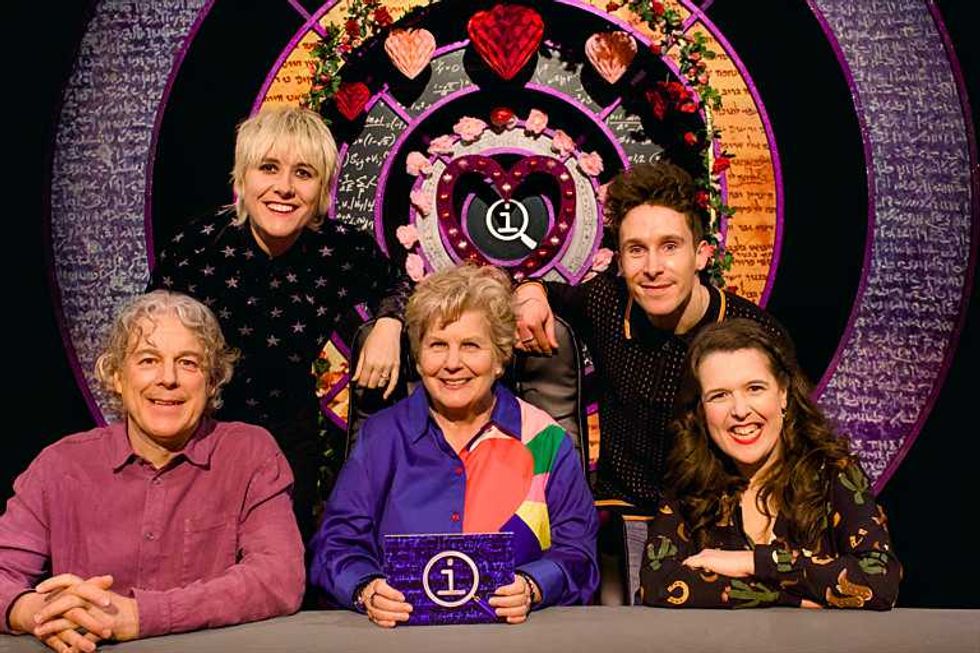 BBC/Freemantle Media and QI
Anna Ptaszynski, QI script editor and No Such Thing As A Fish co-host, agrees. “I think that’s right. I think people think interestingness is subjective, but actually, most people are bored by similar things and I think most people are interesting by that amazing nugget. Like, if you tell someone there was a US president who spent the last three months of his life eating through his anus, there aren’t many people who are going to go, ‘I don’t care about that’.”
That’s 20th president James Garfield, if you’re wondering.
QI’s creator and executive producer Sir John Lloyd details the requirements of being a researcher for the show as having “the curiosity of a five-year-old” and “the diligence of a professor”, and in talking to Dorrell and Ptaszynski, that balance is evident.
Sir John’s description of his show to The Guardian in January last year is just as imaginative: “[My wife’s] current favourite fact is that elephants are 22 million times the size of bees - that’s what QI is about. It’s not about knowing stuff; it’s about how extraordinary the ordinary world is. A simple fact about elephants and bees makes you realise you haven’t really been paying attention to anything.”
And at a time where everyone’s competing for our attention – not least social media platforms – what’s the antidote to being more attentive?
 BBC/Freemantle Media and QI
“The thing is, the closer you look at things, the more interesting they appear,” explains the producer, as we talk inside a busy sound studio in the old Television Centre (which used to house the BBC, and is now home to ITV daytime programmes such as Lorraine, This Morning and Loose Women). Ironically, I’m having to pay extra attention to Sir John as staff speak into gallery microphones behind him, and other members of staff peer in through the window in the door.
“From a distance, things are meh – think of stars, they’re just a twinkle – but close up, the raging storms of Jupiter are full of interest,” he continues. “So by paying attention, by looking closely, you reveal secrets of the universe that are not accessible to people who basically go through life with a bag over their head, that’s most people.
“You’re not living in the moment, you’re thinking, ‘what did I do last night? Oh, I’m such a t***, I did that last night’, and you’re fantasising about the future, worrying about the future, you’re not really alive and present in the moment. So attention is about being present, really.”
And when watching a show such as QI, it’s hard not to be anything other than awestruck. After spending the afternoon talking to Toksvig, Davies, Lloyd and the QI Elves, I was taken to the set to watch a recording of an episode (on the theme of ‘wooing’, coincidentally) and there’s something magical about the collective ‘a-ha’ from the audience when the penny drops.
Maybe we could all do with some more of that wonder, and finally take that bag off our head.
QI continues on BBC Two and iPlayer tonight (December 2) at 9pm.
Why not read…
- This is how the 'I am not a robot' Captcha test really works
- The deadly Pompeii volcanic eruption was so hot it turned this organ into glass
Sign up to our free Indy100 weekly newsletter
How to join the indy100's free WhatsApp channel
Have your say in our news democracy. Click the upvote icon at the top of the page to help raise this article through the indy100 rankings.
Top 100