The Conversation (0)
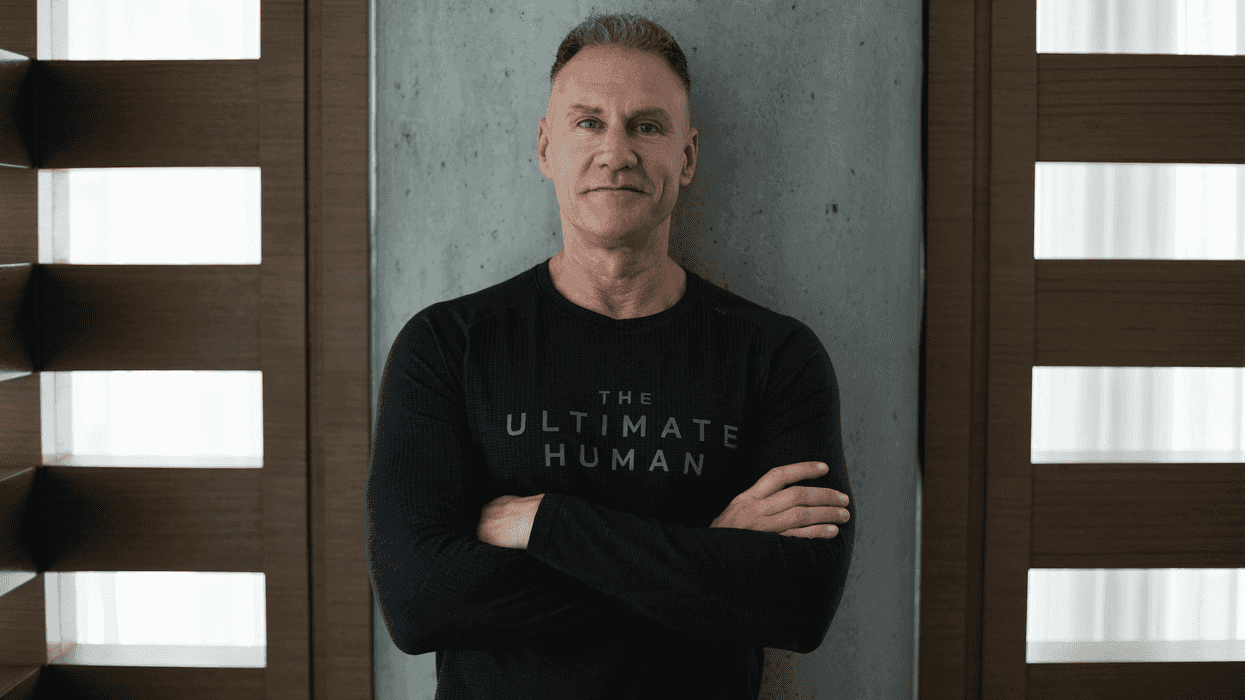
Gary Brecka
What does it mean to be The Ultimate Human?
It’s a question human biologist and biohacker, Gary Brecka, who’s built a whole brand on the concept, asks each of his podcast guests - and one that I wanted to put to him directly when we meet.
He’s best-known for being the brains Dana White credits for “saving” his life, and has gone on to build a loyal wellness community, with Kim Kardashian and Cristiano Ronaldo among it.
While his three million followers now see him as the blueprint for how to live well (the ‘Gary Brecka diet’ has even found its way onto Healthline), his journey began on the flip side of the coin, with a 20-year career in mortality risk prediction.
It was during this time that Brecka witnessed a powerful truth: much of what we understand about disease isn’t inevitable, but preventable.
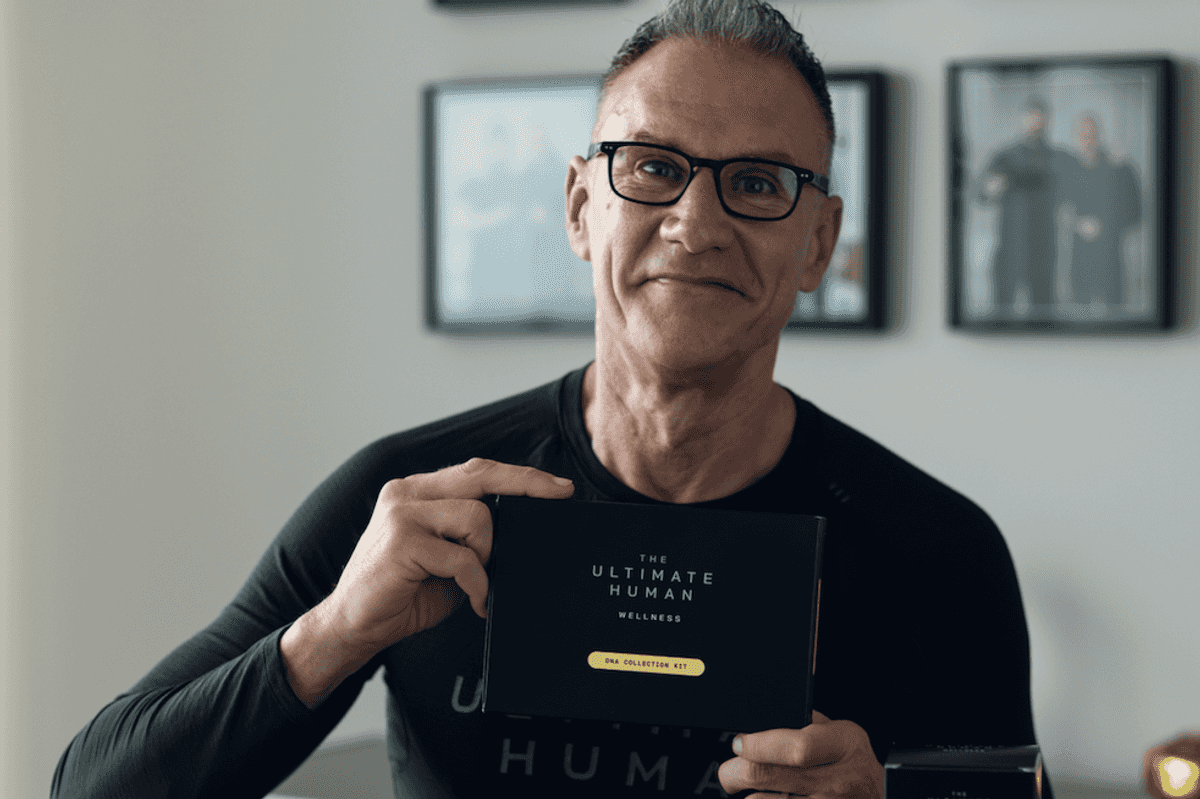 Gary Brecka
"If you want to know how accurate life insurance companies are in predicting death, just look at what happened during the 2008/2009 financial service crisis. We had 364 banks fail. You didn't have a single life insurance company fail”, he tells me during our conversation, detailing how our demise can be pinpointed - almost to the month - by a total stranger.
“I've read more medical records than any physician - not because I'm qualified to practice medicine - but I saw these patterns emerge, and I saw the lifecycle of these mortality predictions end almost exactly where they were predicted to end”, he continues. “What emerged from this pattern consistently over and over and over was that human beings were not as sick or diseased or as pathological as we might think we are.
”We very often think that healthcare is something that's managed by the system, when really it's managed by your daily choices. We are a sum of our habits.”
This was a reality Brecka was forced to grapple with, too, having formerly been what he describes as a “hard-charging entrepreneur” with a “sleep when I’m dead” mentality to match.
“Six years ago, I started scheduling all of my meetings and travel around sleep and exercise… that was the biggest and most dramatic shift”, he says, crediting a diet that’s simply “militant in not eating processed foods” as his new approach of choice, focusing on gut health-rich foods from nuts to avocados.
“It’s astounding how much our gut microbiome determines who we are - our personality, our mood, our mental state, our focus”, he notes, often referencing the world’s Blue Zones - or areas where people frequently live to be over 100 years old - as the blueprint.
 The world's Blue Zones include Ikaria, Greece
”If you sat a 102-year-old down, I guarantee you they don't have a red light bed, [and] they’re not doing cold plunging”, he says. “I'm a huge fan, for the record, of both of those things - but what they do very, very well is they sleep, they eat a diet absent of processed foods, and their mobility is non-negotiable until later in life.”
In the longevity sector, the fixation on being the ‘last man standing’ is often the source of both intrigue and criticism. Fellow renowned biohacker, Bryan Johnson, is well-documented to have used more extreme methods in a bid to take control of his fate, spending approximately $2 million every year to get there.
Now 55, Brecka claims he has the biological age of a 20-year-old, though takes a more simplistic approach that makes him more accessible to his sizeable following.
In real life, he's equally as laid back and approachable.
I ask the burning question - how long he’d like to live - to which he responds: ”I want to get to 120… 140. This is what Bryan Johnson's trying to do, right? He's showing us what's possible, but not what's probable and, and practical."
He continues: “I have a lot of respect for him, but I think the vast majority of people are in the bucket of ‘I'd like to be as healthy as I can for as long as I can, and as I become less independent, I'm okay to go.’”
“I firmly believe, and I think the evidence supports this, that if you are alive in five years from today, it will be your choice whether or not you wanna live to 120.
 Gary Brecka
“I don’t have this seething interest to live forever, I'm just fascinated by it.”
We move on to the obvious elephant in the room when it comes to any conversation around longevity. In a world powered by burnout, screen addiction, and reliance on ultra-processed foods, how can we ever look beyond 100?
”We spend $5 trillion a year on healthcare [in the US] - but we are also the sickest, fattest, most disease-ridden nation in the world”, Brecka confidently confirms, citing that the States leads the world in morbid obesity, type two diabetes, and chronic disease.
“We know that spending doesn’t equate to outcomes, so what is it?” he asks, referencing a recent study that insists up to 85 per cent of chronic disease is preventable. “It's dietary and lifestyle choices, it's lack of community, lack of connection, lack of purpose.
“I see a global resurgence of people looking for true community, true connection. You see social wellness clubs starting to crop up everywhere - boutique resorts and destination wellness resorts just flourishing all over the place because people want that connection”, he continues.
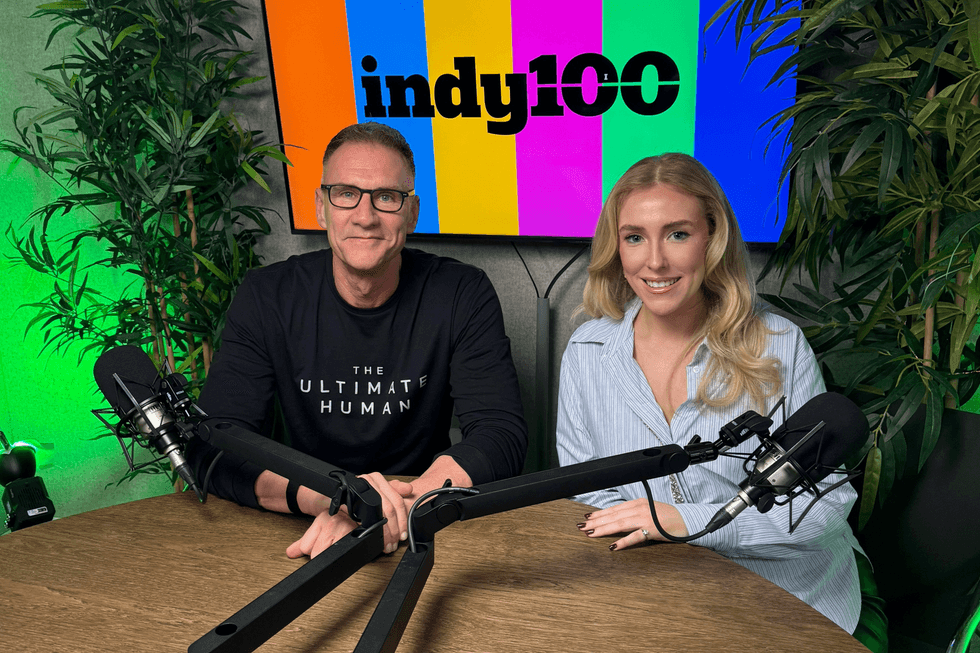
“We knew in the mortality space, that if you wanted to cut a human being's life expectancy almost in half at any age, you just put them in isolation."
He uses the ever-rising cases of both physical and mental chronic conditions as an example of the sheer scale of what we’re dealing with. In fact, according to the World Health Organization, over one billion people are now living with a mental health condition.
Some studies indicate a link between the gut-brain axis.
”When you start to become nutrient deficient in the very raw materials that make the neurotransmitters driving mood and behaviour, you start to get a society that is plagued by anxiousness”, he notes.
“If you put 100 people in a room that had anxiety and ask them to tell you what anxiety is, they would all describe to you the characteristics of anxiety - very few would be able to say what anxiety specifically is.”
 Gary Brecka
It’s a point that sparks intrigue, not least because I’ve been on the receiving end of healthcare professionals insisting that the reason no treatment has ever stuck is because some people are “just born anxious”; a narrative countless others will be all too familiar with.
“If you walked out of your office tonight and somebody was standing in front of you with a knife, that’s a very real threat. You would begin to have a fight or flight response in response to that stimulus”, Brecka continues.
“You could also be lying in your bed tonight, and you could start thinking about getting eaten by a shark. You could probably reason to yourself that the chances of a shark getting out of that ocean and making it into your bedroom are zero, but you could have the exact same response.
“So how is it that you have the same response to a very real threat versus an entirely perceived threat?”, he questions. “Because neurophysiologically, they're the same thing. They're a rise in catecholamines.
“ I'm not saying people should not seek therapy and should seek medical advice; What I am saying is whilst doing that, why not also give your body the raw material that it needs to function normally instead of, when it does not behave normally, assuming something is wrong?”
I query whether genetics has a role to play in determining our peak physical and mental performance. Precision DNA testing has become commonplace in the wellness circles, allowing people to get more prescriptive about their health and supplementation based on pre-determined factors set the day they were born.

“ I think the healthcare system has saved countless numbers of lives, but the is the fallacy that what goes into your body, and my body, and your friends’ bodies, and my friends’ bodies is treated exactly the same way…Nothing can be further from the truth.”
He theorises about feeding a group of people mercury-laden tuna fish for 90 days and how their bodies would react.
“At the end of that 90 days, about a third of those people are going to have deadly mercury poisoning”, he notes. “Another third of those people are going to have symptoms of heavy metal toxicity, brain fog, crushing fatigue, some hormonal disruption, maybe some thyroid antibodies - and a third of those people are gonna have no symptoms at all.
“Same level of toxin. Completely different results. And why is that? Because our genes determine these methylation pathways.”
Our attention turns to the impact of environmental and societal factors among this - more namely, how around 80 per cent of those who do end up with autoimmune diseases are women.
“It has nothing to do with autoimmune disease being selected by sex, it's selected by weakness”, Brecka explains.
“It doesn't mean that women are weaker than men. It means that women have a tendency to develop something called ‘caregiver syndrome’. This is where they put the needs of others before the needs themselves over long periods of time.
“They don't make self care non-negotiable. Some women think self-care is selfish, and so they wake up in the morning, and the first thing they do is they go right into a stressful environment, immediately start caring for everybody else around them, and then they collapse into bed at night.”

On a more general level, he mentions the alarming statistic that humans used to spend 90 per cent of our lives outdoors, and now spend 95 per cent of them indoors, controlling everything from our temperature to our lighting without any real routine.
This chronic stress can affect our cortisol, melatonin and hormones, causing chronic low-grade inflammation.
It’s a heavy reality, however, one Brecka insists is “never too late” to change; crediting breathwork as an easy, free habit that can transform even the most stressful of circumstances.
“ I'll miss a commercial flight to do breath work”, he jokes, insisting he “hasn’t missed a morning” in the last 48 months.
Other check boxes include getting out into natural light as early as possible, delaying caffeine intake when you wake up where possible, and, most importantly, giving yourself grace to be imperfect with self-care.
”Speak to yourself internally the same way that you would speak to a friend”, he clarifies. ”If your friend didn't drink and then had one glass of champagne, would you just lay into them for having one glass of champagne?
“ Very often it's the voices that we use internally that are the most damaging to us because we consistently break small promises over time.”
All roads lead back to my opening question.
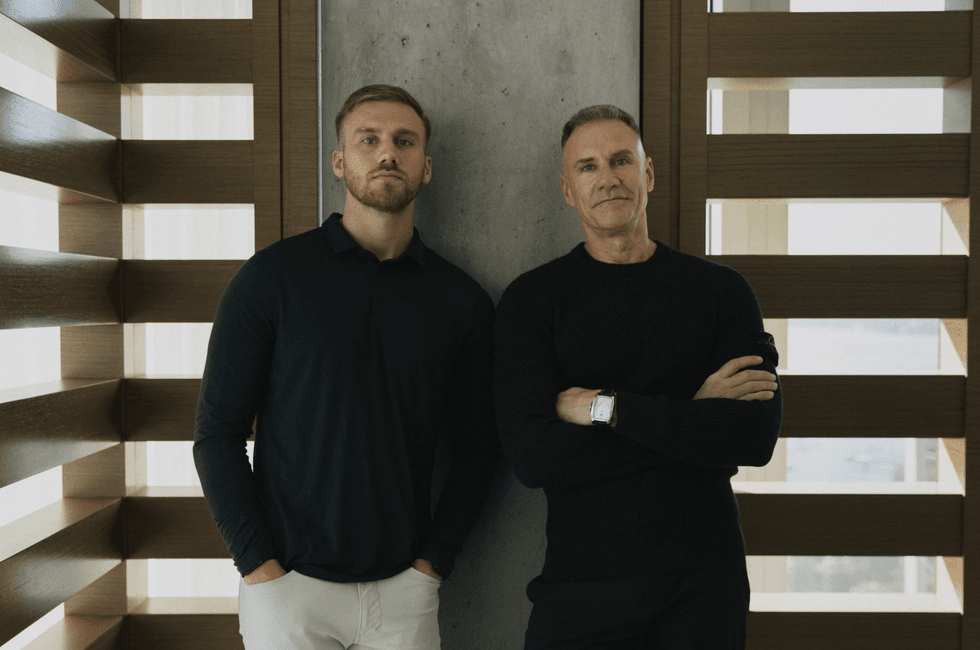
In a space that can often feel inaccessible and over-saturated, what does it really mean to be the Ultimate Human?
“It's not comparing yourself to other people socioeconomically, physically, or comparing your relationships to other relationships”, he confirms.
“To me, being the Ultimate Human is being the most ultimate version of yourself.”
In our hour-long conversation, we cover everything from Blue Zones, to Peptides, NAD+, Precision Genetic Testing, and the practical steps you can take towards living healthier (or, perhaps even longer).
Watch now via The Independent onYouTube:
- YouTube www.youtube.com
This interview has been edited for clarity. The contents of this article are not intended as medical advice.
Why not read?
I spent a week at the world’s most exclusive longevity retreat loved by A-listers
I tried the world's first precision genetics test - and it'll change the way we view health
Sign up for our free Indy100 weekly newsletter
Top 100