The Conversation (0)
Related: Trump Reverses Landmark Climate Ruling, Triggering Legal Showdown
Cover Media - Shareable / VideoElephant
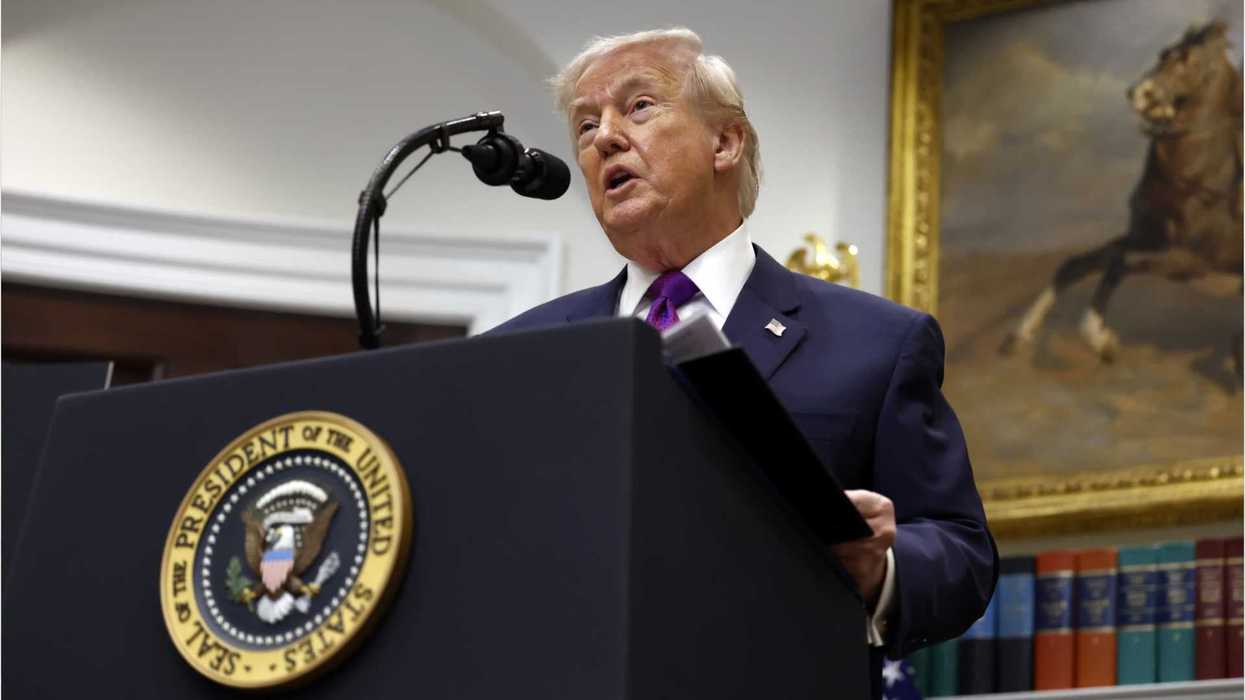
Donald Trump has used his Truth Social platform to dismiss global warming projections, presenting a distorted view of climate science and the international community’s approach to climate policy.
The United Nations regularly publishes extensive scientific reports detailing the current state and likely future impacts of human-caused global warming. These reports incorporate updated scenarios to project future climate change, with carbon dioxide emissions from fossil fuels serving as a critical determinant. Higher carbon pollution leads to greater global warming, prompting scientists to base their projections on a range of potential scenarios.
These scenarios recently became the subject of Mr Trump’s social media post. Here is a closer look at the facts:
Mr Trump posted: "GOOD RIDDANCE! After 15 years of Dumocrats promising that ‘Climate change’ is going to destroy the Planet, the United Nations TOP Climate Committee just admitted that its own projections (RCP8.5) were WRONG! WRONG! WRONG!"
This statement refers to a set of projections from 2011, developed by scientists associated with the UN’s Intergovernmental Panel on Climate Change (IPCC). These projections were updated in a scientific journal this spring, which concluded that the old worst-case scenario, known as RCP8.5, was implausible.
 AP Photo/Matthias Schrader, File
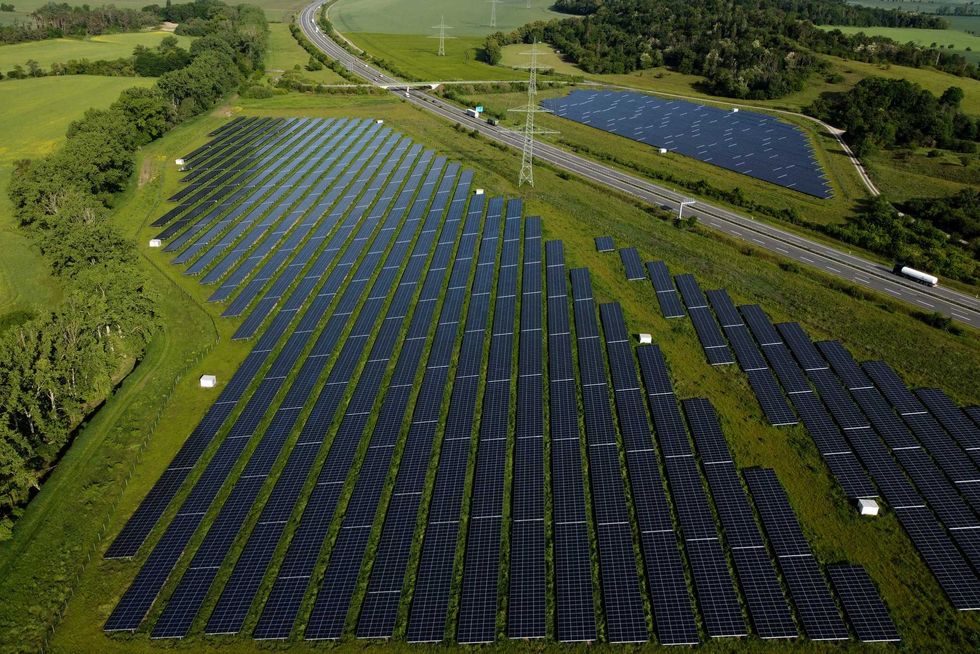
The update was seized upon by individuals and groups who downplay or deny climate change, who used it to criticise decades of work by the international panel of climate scientists, which previously won a Nobel Prize. In response, mainstream climate scientists clarified the necessity of including unlikely scenarios and highlighted that the change also reflects significant global progress in adopting cleaner energy sources, such as solar, wind power, and electric vehicles. This shift has led to a near-flattening of previously soaring carbon emissions.
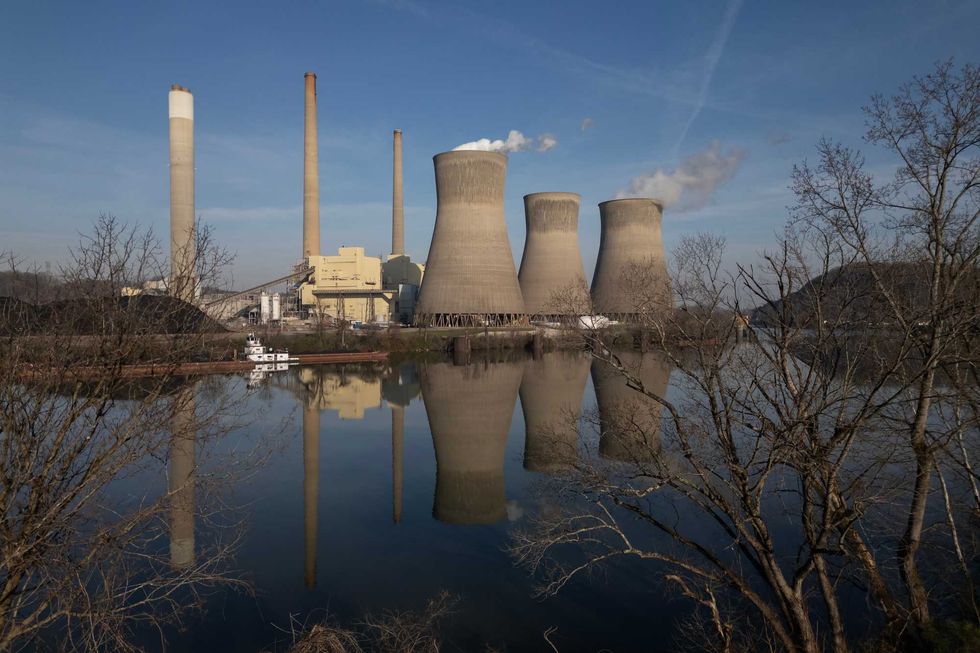
Even when it was first developed 15 years ago, the RCP8.5 worst-case scenario was considered unlikely, with other scenarios deemed more probable. However, it remained a possible outcome if the world continued a heavy reliance on fossil fuels, particularly coal. It projected an end-of-century warming of approximately 4.5 degrees Celsius compared to the mid-1800s.
Climate scientist Detlef Van Vuuren of Utrecht University, lead author of the new study outlining future scenarios, and Johan Rockström, director of the Potsdam Institute for Climate Impact Research in Germany, both stated that it was not alarmism.
Mr Rockström warned that even with the lowest projected warming, "we enter danger," adding: "We enter danger both from extreme events (such as floods, heat waves and droughts) but also from risks of crossing tipping points" like the loss of coral and glaciers.
Mr Van Vuuren described the now-discarded scenario as "a relevant low-probability high-risk scenario" designed to help governments "be prepared with the possible risks of climate change. For instance, living in the Netherlands — a country possibly vulnerable to flooding — I would not like my government to only look at the best-guess scenario, but also explore what the risks are."
He added: "The risks of climate change have not disappeared. The good news is that we did not follow the most dramatic emission pathway. However, we are still heading towards a future with significant climate impacts; a future that we should avoid."
Cornell University climate scientist Natalie Mahowald clarified that while it represents a future of suffering and increased deaths, it was never about the outright destruction of the planet.
Nine out of 10 climate scientists interviewed by The Associated Press agreed that the jettisoned worst-case scenario was unlikely but plausible when initially released. However, they noted that this has changed due to a boom in carbon-free wind and solar energy technologies, which have become cheaper than fossil fuels.
Jonathan Overpeck, environment dean at the University of Michigan, attributed the dropping of the old worst-case scenario to the fact that "we are making progress in slowing climate change with a well-established affordable range of solutions — especially, solar, wind, battery storage, and electrified transportation."
 AP Photo/Carolyn Kaster, File
Mr Trump also declared: "My administration will always be based on TRUTH, SCIENCE, and FACT!"
However, a signature move by the Trump administration on climate was initially justified by a report presented as a scientific document that scientists later deemed inaccurate and which was subsequently abandoned.
In July 2025, the Trump administration announced its intention to repeal an Obama-era scientific finding by the US Environmental Protection Agency (EPA) that climate change endangered America's public health. To support this, the Department of Energy issued a 151-page report by its Climate Working Group, asserting that climate change was not significantly harmful.
Dozens of scientists informed the AP that the Trump administration’s justification document was "filled with errors, bias and distortion."
The National Academy of Sciences, established by President Abraham Lincoln to advise the federal government on scientific matters, swiftly issued a report disputing the Trump document, stating that "human-caused emissions of greenhouse gases and resulting climate change harm the health of people in the United States." Separately, a group of 85 scientists wrote a letter asserting that the Trump administration’s claims "are misleading or outright wrong."
When the Trump administration officially revoked the EPA endangerment finding in February, it notably did not include the Department of Energy’s scientific justification that had been widely criticised by the scientific community.
Top 100