The Conversation (0)
Trump Says King Charles Would Have Backed US On Iran
Cover Media - Shareable / VideoElephant
Donald Trump announced on Thursday that he is lifting certain tariffs on Scotch whisky, a move he attributed to the recent White House visit by King Charles III and Queen Camilla of the United Kingdom.
The president took to social media to declare: "The King and Queen got me to do something that nobody else was able to do, without hardly even asking!" He indicated that there had been a desire for this change, particularly concerning the wooden barrels used to age both Scotch and bourbon. However, his initial post left it unclear whether the tariffs were being removed from bottled Scotch or from the materials involved in alcohol production in both countries.
Trump stated: "I will be removing the Tariffs and Restrictions on Whiskey having to do with Scotland’s ability to work with the Commonwealth of Kentucky on Whiskey and Bourbon." The White House did not respond to requests for clarification regarding the specifics of the announcement, though the statement was widely interpreted in Scotland and by industry lobbyists as a removal of tariffs on Scotch.
Later, US Trade Representative Jamieson Greer issued a statement confirming that the U.S. would grant "preferential duty access for whiskey produced in the United Kingdom." It remained unconfirmed whether this meant a complete elimination or merely a reduction of the tariffs.
The Trump administration had previously established a trade framework that imposed a 10 per cent tax on most goods imported from Britain. The Scotch Whisky Association reported a 15 per cent decline in its export volume to the U.S. after these tariffs were introduced last April.
Speaking to reporters in the Oval Office, the president clarified that the tariffs were specifically lifted to boost the trade of barrels between Scotland and Kentucky, which is responsible for producing nearly all of the world's bourbon. These barrels are crucial for the ageing process of the spirits.
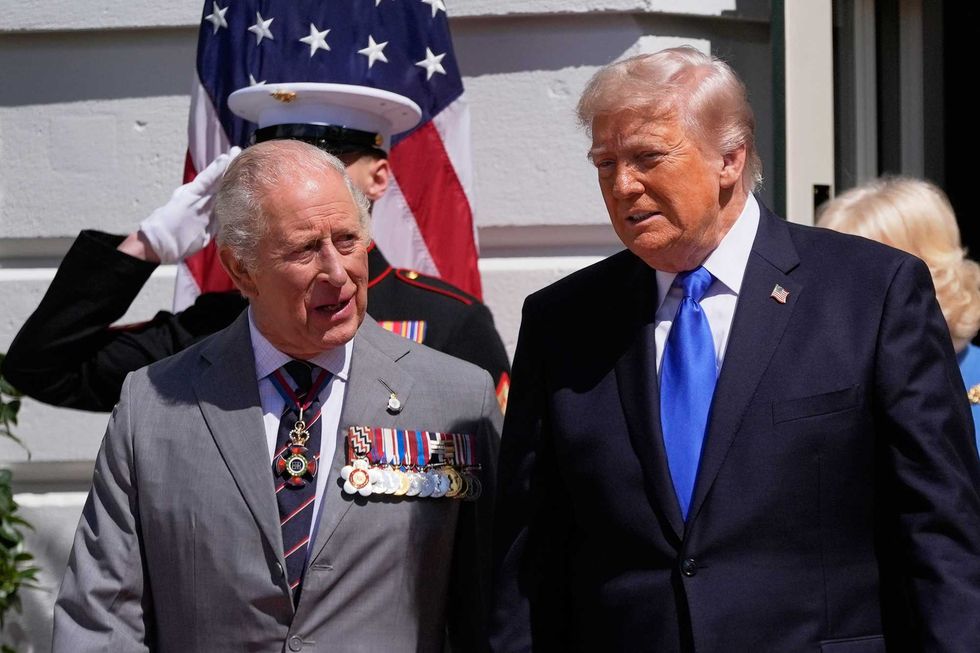 President Donald Trump and first lady Melania Trump bid farewell to Britain's King Charles III and Queen Camilla on the South Lawn of the White House, Thursday, April 30, 2026, in WashingtonAP Photo/Manuel Balce Ceneta
"I just took all the restrictions off so Scotland and Kentucky can start dealing again," Trump said, adding that he is "not a big drinker."
John Swinney, Scotland's First Minister, welcomed the president’s statement, interpreting it as a direct removal of tariffs on Scotch itself. He hailed it as a "tremendous success" for Scotland, noting: "People’s jobs were at stake. Millions of pounds were being lost every month from the Scottish economy." Swinney expressed gratitude to both Trump and King Charles III.
Trump has a history of using alcohol as a point of leverage in trade disputes. Last year, he threatened a 200 per cent tariff on European wine, a significant potential blow to French and Italian vineyards that ultimately did not materialise. Foreign nations have, in turn, responded with threats concerning bourbon and other American products. The Trump administration also previously exempted cork from tariffs, providing considerable relief to Portugal, a primary supplier of the material used for wine bottle stoppers.
Chris Swonger, president and CEO of the Distilled Spirits Council in the U.S., also viewed Trump’s announcement as the removal of the 10 per cent tariff on whisky from the United Kingdom. "We applaud President Trump for working to restore a proven zero‑for‑zero model of fair, reciprocal trade between our two nations," Swonger stated. "This action strengthens transatlantic ties, brings much‑needed certainty to our industry and allows spirits producers on both sides of the Atlantic to grow, invest and support jobs at a critical time."
Top 100