The Conversation (0)
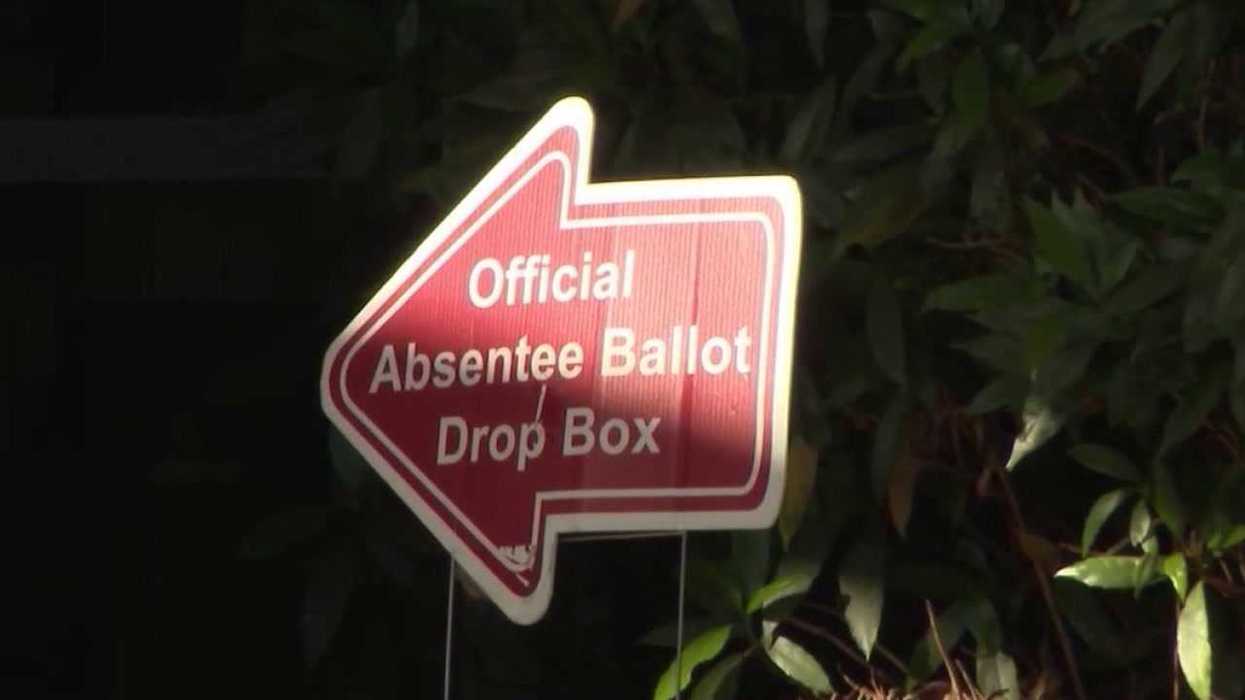
Georgia voters prepare to vote in the primaries
Fox - 5 Atlanta / VideoElephant
The political landscape for Republicans who challenge Donald Trump appears increasingly bleak, with recent events suggesting his influence over the party’s base remains formidable. This Tuesday marks another critical test of his power to exact retribution, as Representative Thomas Massie of Kentucky faces a Trump-backed primary challenger.
Massie has consistently been a source of irritation for Trump, advocating for the release of the Jeffrey Epstein files, opposing military action against Iran, and voting against Trump’s signature tax legislation last year. His defiance has now placed him squarely in Trump’s crosshairs.
Trump has repeatedly demonstrated his capacity to sway Republican primary voters, even as his broader appeal among the electorate may wane.
In Kentucky, he is endorsing Ed Gallrein, a first-time candidate, against Massie, who has held office since 2012. Massie’s attempt to convince Republicans that they can support both him and Trump simultaneously is a strategy that has largely failed in other races across the country.
 Rep. Thomas Massie, R-KY, sits at a table alone in the studio ahead of a Kentucky Educational Television (KET) debate, Monday, May 4, 2026, in Lexington, KyAP Photo/Jon Cherry
Recent examples underscore Trump’s enduring sway. Republican Senator Bill Cassidy of Louisiana failed to even reach a runoff on Saturday, unable to mend his relationship with Trump five years after voting to convict him during his second impeachment trial.
Earlier this month, Trump successfully targeted and dislodged five of seven Indiana Republicans who voted against his redistricting plan.
Trump’s influence extends to other key races this Tuesday. In Georgia’s gubernatorial contest, he is backing Lieutenant Governor Burt Jones in a fiercely contested Republican nomination battle.
Jones, from a prominent Georgia family, has invested $19m into his campaign. However, billionaire Rick Jackson, a health care magnate, has poured more than $83m of his personal fortune into the race, presenting an unprecedented financial challenge to the power of Trump’s endorsement.
While Trump remained on the sidelines of Georgia’s Senate race, leaving a crowded field to contend for the chance to face Democratic Senator Jon Ossoff, he has endorsed Representative Barry Moore for Senate in Alabama, aiming to replace Tommy Tuberville, who is running for governor.
Meanwhile, Pennsylvania Governor Josh Shapiro, widely considered a potential White House contender, faces a test of his own political strength.
On Tuesday, his efforts to elect a slate of House candidates, whom he believes will help his party flip Republican seats in the autumn, will be scrutinised. Shapiro’s endorsed candidates include Scranton Mayor Paige Cognetti, state firefighters’ union president Bob Brooks, and Janelle Stelson, a former television news personality who narrowly lost two years ago.
Despite his popularity, Shapiro’s endorsements have not deterred Democratic rivals, who are actively campaigning against his picks, potentially signalling a challenge to his perceived strength ahead of the 2028 presidential contest.
Georgia also offers a compelling case study in the divergent paths available to Republicans who defied Trump. Secretary of State Brad Raffensperger and former Lieutenant Governor Geoff Duncan were among the few Republicans to speak out against Trump’s attempts to overturn his 2020 election loss.
 Republican congressional candidate for Kentucky, Ed Gallrein, stands for a portrait during the Kenton County Republican Party Lincoln Day Dinner, Thursday, April 30, 2026, in Covington, KyAP Photo/Jon Cherry
Both are now seeking the governorship – Raffensperger as a Republican and Duncan as a Democrat – each attempting to persuade voters to overlook their past statements. Raffensperger is spending millions of his own money to reintroduce himself to Republicans by highlighting his long career in conservative politics before his clash with Trump.
Duncan, conversely, is trying to convince Democratic voters of his trustworthiness after renouncing his previous opposition to abortion rights, gun control, and the expansion of Georgia’s Medicaid programme. Runoffs for these primaries are scheduled for June 16 if no candidate secures 50 per cent of the vote on Tuesday.
Confusion is expected to prevail across Alabama on Tuesday, as votes cast in four of the state’s seven congressional districts may not be counted. This stems from Republican Governor Kay Ivey’s decision last week to postpone primaries until August 11, a move emboldened by a recent US Supreme Court ruling that weakened the Voting Rights Act.
Republicans in Alabama, Louisiana, and Tennessee are now hastily redrawing congressional boundaries to eliminate some majority-Black US House districts, aiming to maximise their political advantage. Despite thousands of civil rights activists rallying in Alabama over the weekend against these changes, the redistricting plan is proceeding.
Consequently, ballots cast on Tuesday in primaries for Alabama’s 1st, 2nd, 6th, and 7th congressional districts will be voided, according to the secretary of state, as officials reinstate a previous set of Republican-drawn district boundaries. Alabama voters will still proceed with choosing nominees on Tuesday for the 3rd, 4th, and 5th congressional districts, as well as for the US Senate and a full slate of state and local offices.
The recent death of Representative David Scott, a Democrat from Georgia, marks the fourth such loss for the party this term, fuelling growing unease on the left regarding the party’s ageing leadership.
Scott, who was 80 when he died, had been seeking a 13th term. His name will still appear on the ballot alongside five other candidates in the Democratic primary, though votes for him will not be counted.
Regardless of whether a candidate wins outright on Tuesday or the race proceeds to a runoff on June 16, the Democratic nominee is almost certain to win the general election in a district that overwhelmingly favours Democrats. A special election on July 28 will determine who completes the remainder of Scott’s term, with a runoff scheduled for August 25 if no candidate secures a majority.
Top 100