The Conversation (0)
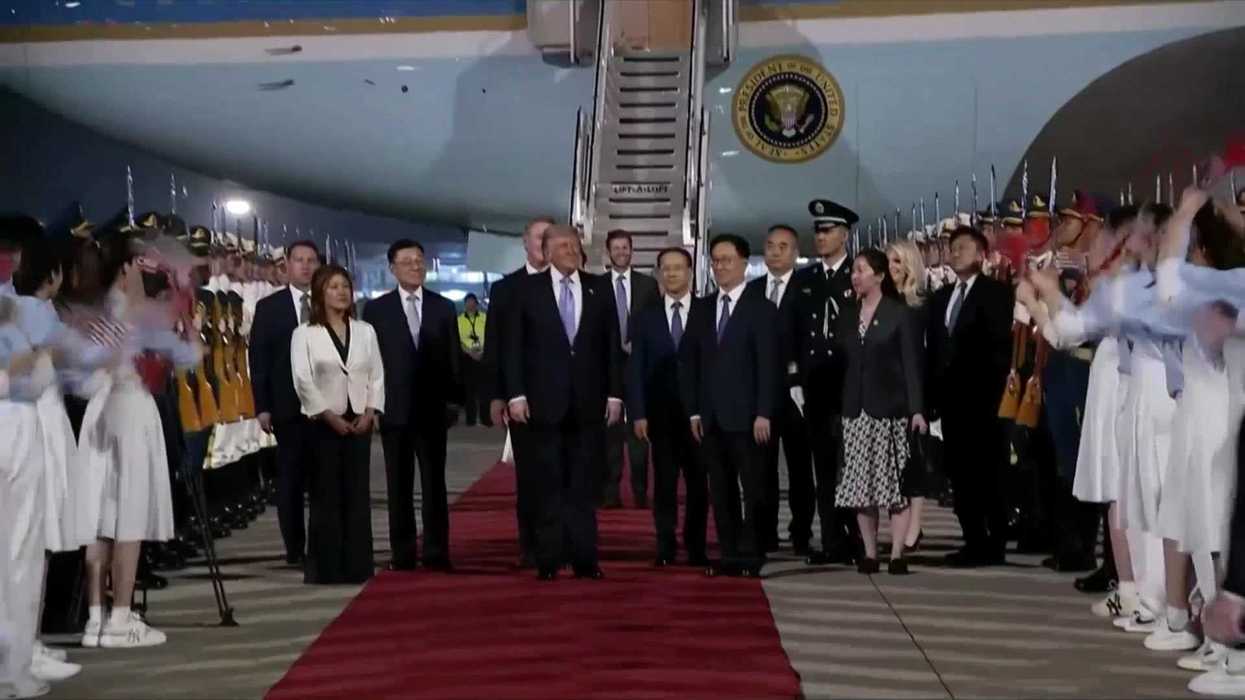
President Trump and billionaire entourage arrive in China
REUTERS
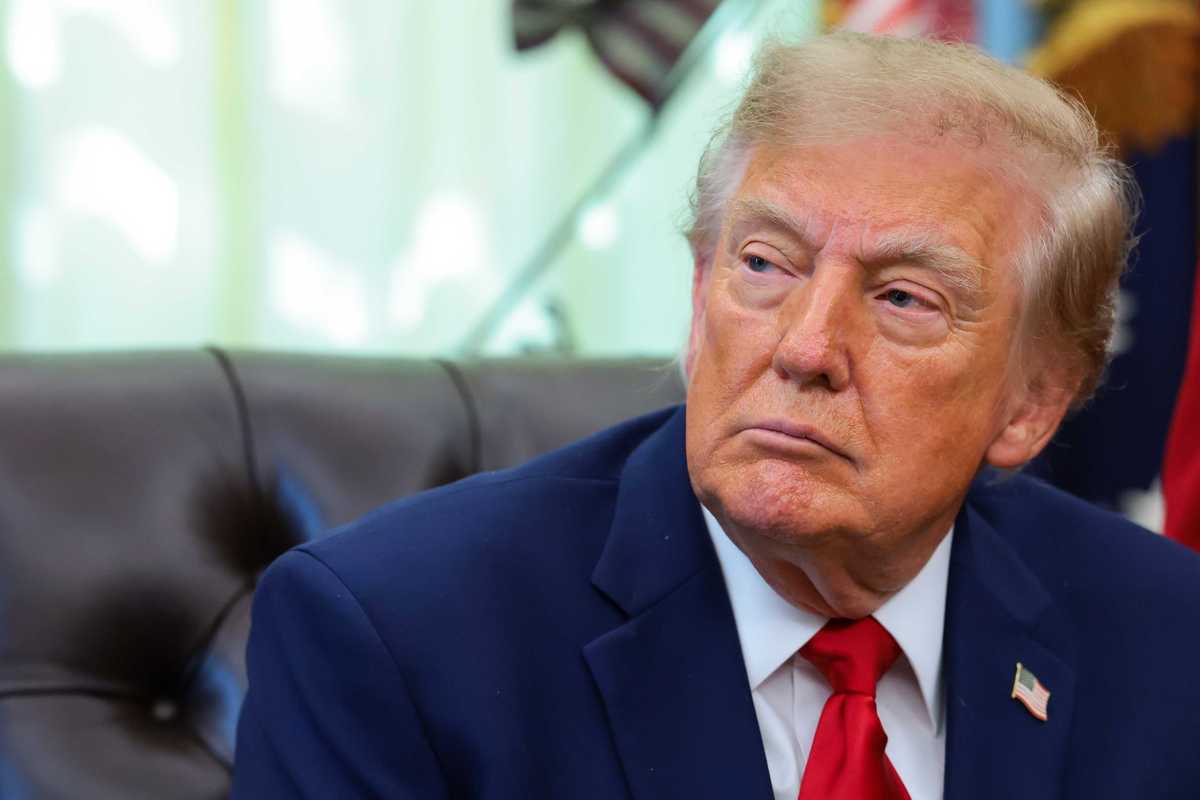
Presidents Xi Jinping and Donald Trump are set to convene for a highly anticipated summit, with both China and the United States indicating that their bilateral ties have remained broadly stable in recent months.
Despite this stated desire for continued equilibrium, the relationship, one of the world’s most consequential, is fraught with numerous complex issues for which easy resolutions remain elusive.
Few observers anticipate significant breakthroughs to address the long-standing frictions between the two global powers. These range from intense competition in technology and trade disputes to the highly sensitive question of Taiwan, whose primary unofficial ally is the US.
The ongoing conflict in Iran is also expected to feature prominently on the agenda, with Beijing seen by some as a potential, albeit unofficial, mediator.
"On both sides there is a consensus that U.S.-China stability is important," noted Henrietta Levin, a senior fellow for the Freeman Chair in China Studies at the Center for Strategic and International Studies in Washington. "Once you get past the question of stability, the ‘what’s next’ in the relationship gets a little more complicated, and so for that reason, the most likely thing to come out of the meeting is very little."
Trade Deal: A Truce, Not a Resolution
The trade war between China and the US began during Mr Trump’s first term, escalating significantly in April last year on what he termed "Liberation Day," when he announced 34 per cent tariffs on all Chinese goods. China swiftly retaliated with counter-tariffs and other measures, including restrictions on rare earth exports, with tariffs reaching as high as 145 per cent during the escalating dispute.
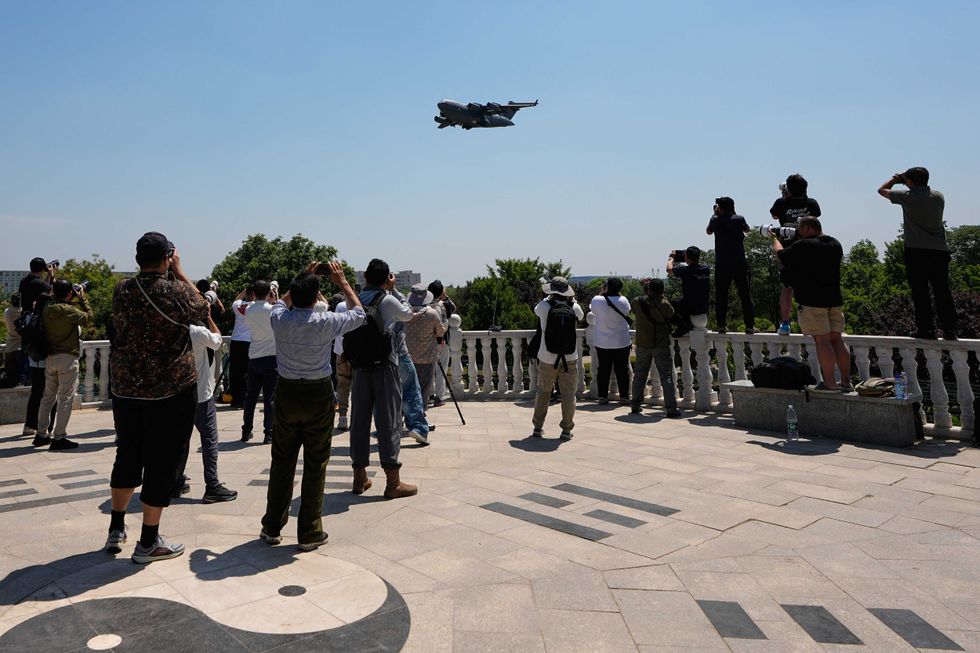 FILE - People gather at a viewing platform of a public park film a U.S. Air Force Boeing C-17 Globemaster III transport aircraft as its arrives at the Beijing International Capital Airport ahead of U.S. President Donald Trump's visit in Beijing, Monday, May 11, 2026AP Photo/Andy Wong, File
Recognising the unsustainability of such high tariffs, both sides eventually called for a trade truce, which saw many punitive economic measures halted.
The two leaders met in South Korea in October, extending the truce for another year. China committed to purchasing soybeans from American farmers, while the US reduced tariffs by more than half.
"China’s strategy was to promote stability by fighting back," explained Fudan University professor Zhao Minghao, an expert in international relations. "Both sides could very well issue a comprehensive trade agreement this time. But this doesn’t mean the war is over, and the agreement will have conditions."
Last year’s trade truce failed to resolve any of the broader issues, nor did it signify a return to previous trade relations. China, for instance, has since implemented new export permit requirements for rare earth minerals, which it can tighten at any time.
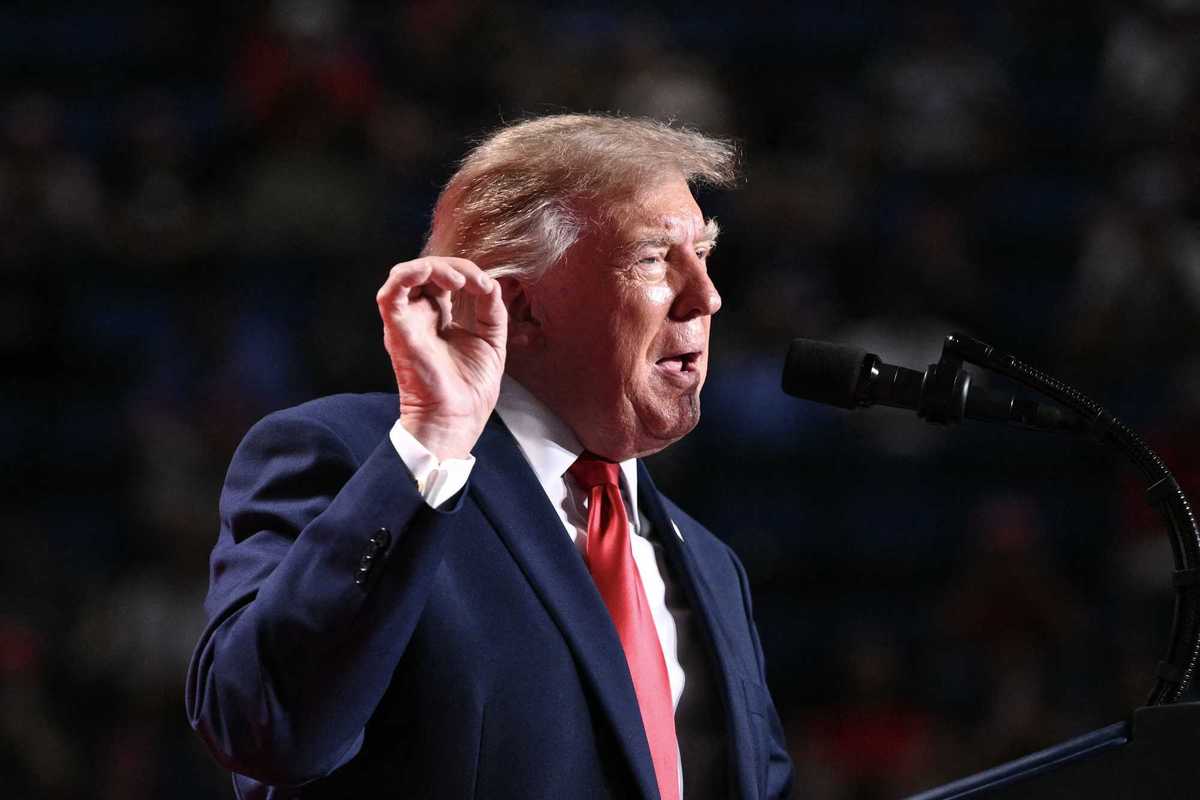
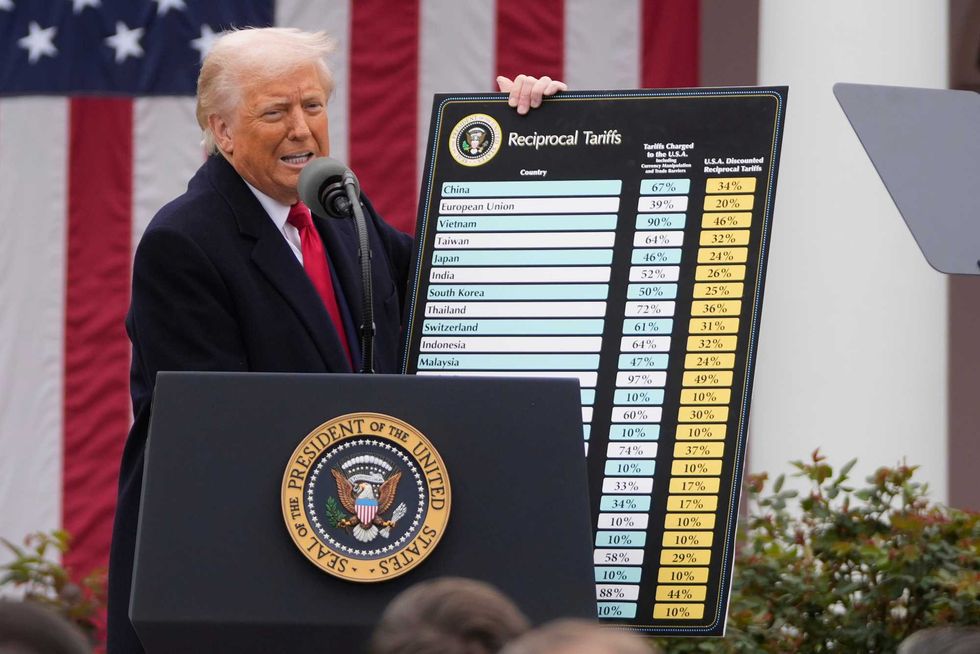 President Donald Trump speaks during an event to announce new tariffs in the Rose Garden at the White House on April 2, 2025, in WashingtonAP Photo/Mark Schiefelbein, File)
Furthermore, this time around, "there’s been a lack of the intensive type of engagement that has characterised past summits," observed Wendy Cutler, vice president of the Asia Society and a former trade negotiator for the US.
In April, China introduced new regulations establishing a framework for identifying and countering foreign measures targeting Chinese companies.
Under these rules, China’s Ministry of Commerce instructed affected companies, such as a petroleum refinery that purchased Iranian crude oil, to disregard US sanctions.
While some suggest the summit might announce a continuation of the trade truce, they highlight that targeted actions have persisted. "It’s a fragile truce," Ms Cutler added. The White House indicated on Sunday that discussions would also include the creation of a new "Board of Trade" to maintain dialogue on economic issues.
High-Tech Chips: A Thorny Issue
The US imposed restrictions on exports of advanced computer chips and related technology, such as chip-making machinery, to China as early as Mr Trump’s first term in office.
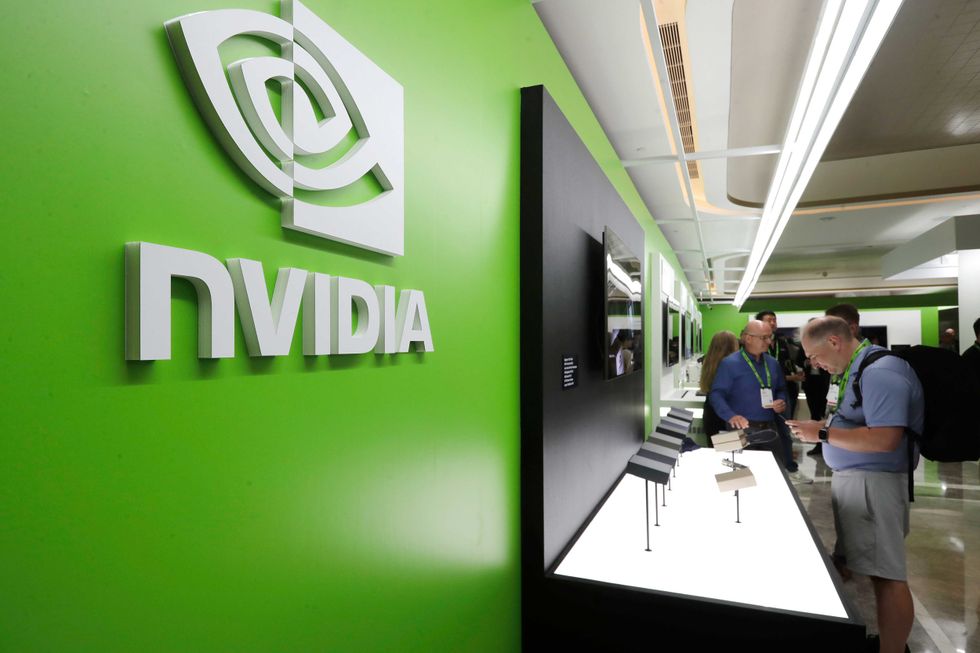 FILE - People take a look to Nvidia''s new products during the Computex 2025 exhibition in Taipei, Taiwan, Wednesday, May 21, 2025AP Photo/Chiang Ying-ying, File
Nvidia, a California-based company and a leading designer of advanced chips, has urged Mr Trump to permit their export to China. Nvidia founder Jensen Huang has argued that selling these chips would foster reliance on American technology among Chinese AI firms.
However, the growing list of restrictions on chip exports may only intensify China’s drive for self-reliance. "China’s attitude has changed subtly, it seems more focused on advancing its domestic chip industry rather than continuing to rely on advanced chips from the United States," Professor Zhao commented in written remarks.
Taiwan: The ‘Biggest Risk’
Two weeks prior to the meeting, Chinese Foreign Minister Wang Yi told US Secretary of State Marco Rubio in a call that while the bilateral relationship had remained generally stable, Taiwan continued to pose the "biggest risk" to their ties.
China reiterated on Thursday that Taiwan would be a top priority for discussion.
Few expect a resolution to the Taiwan issue, which has persisted since China and Taiwan separated in a civil war in 1949. While Beijing claims Taiwan as its own territory, the island operates as a self-ruled democracy.
Tensions have escalated since Taiwan first elected Tsai Ing-wen as president in 2016. Her Democratic Progressive Party (DPP) asserts that Taiwan is functionally independent and a sovereign state.
Beijing has severed communication with Taiwan’s government and, in recent years, has increased military drills, sending warplanes and warships closer to the island almost daily.
The island’s current president, Lai Ching-te, also hails from the DPP. Beijing has repeatedly criticised Mr Lai, even depicting him as a "parasite" in propaganda imagery accompanying its military exercises.
The US is legally mandated to ensure Taiwan can defend itself but officially maintains a position of strategic ambiguity, leaving open the question of whether it would intervene militarily if China attempted to reclaim Taiwan by force.
Mr Trump recently stated that he had discussed arms sales to Taiwan with Mr Xi, raising further questions about US support for the island.
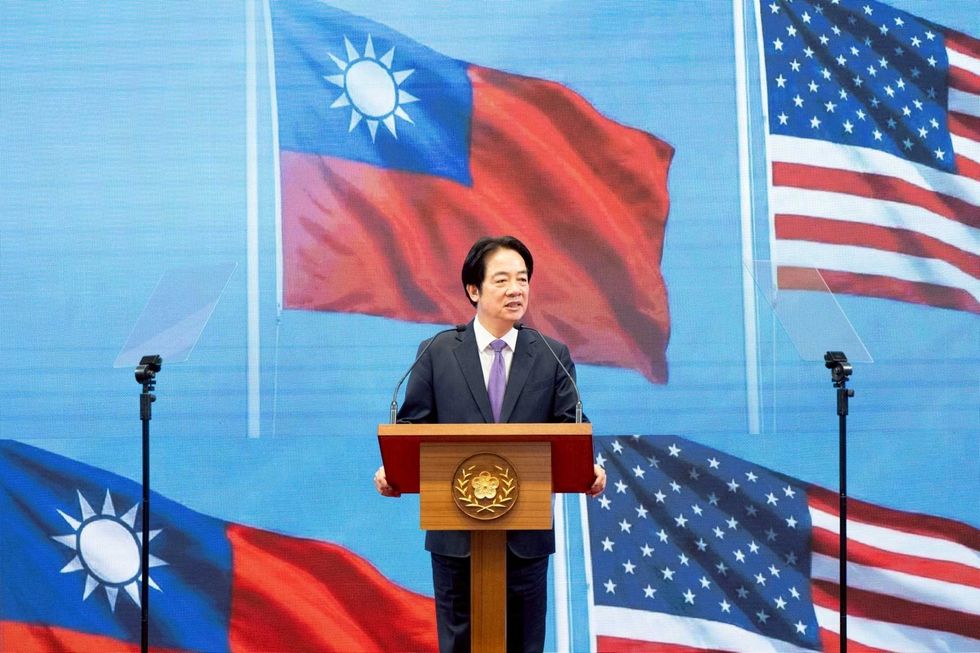 Taiwan's President Lai Ching-te speaks during a press conference on "Taiwan-U.S. Economic Prosperity Partnership" in Taipei, Taiwan on Feb. 3, 2026Taiwan Presidential Office via AP, File
"One possibility is that China and the U.S. can take the strategy of a sort of ‘reciprocal restraint’, such as reducing the number of American arms sales to Taiwan, in exchange for fewer military exercises from the mainland aimed at Taiwan," Professor Zhao suggested.
Iran: US Seeks Chinese Pressure
As the world awaits an end to the conflict in Iran, which has significantly impacted the global economy, the issue is likely to surface during the talks.
China has openly criticised the United States and Israel over the war. Given its close political and economic ties with Iran, Beijing is viewed by some as an unofficial mediator capable of influencing Tehran.
However, China has so far remained cautious, preferring not to become deeply involved.
"I don’t think China has any interest in solving the problems the U.S. has created for itself in the Middle East," Ms Levin, from the Center for Strategic and International Studies, stated.
Days before the trip, US Treasury Secretary Scott Bessent called on China to pressure Iran to open the Strait of Hormuz, asserting that by purchasing Iranian oil, Beijing was funding terrorism.
"Let’s see if China — let’s see them step up with some diplomacy and get the Iranians to open the strait," Mr Bessent said on Fox News. "Iran is the largest state sponsor of terrorism, and China has been buying 90% of their energy, so they are funding the largest state sponsor of terrorism."
Top 100