The Conversation (0)
iStock
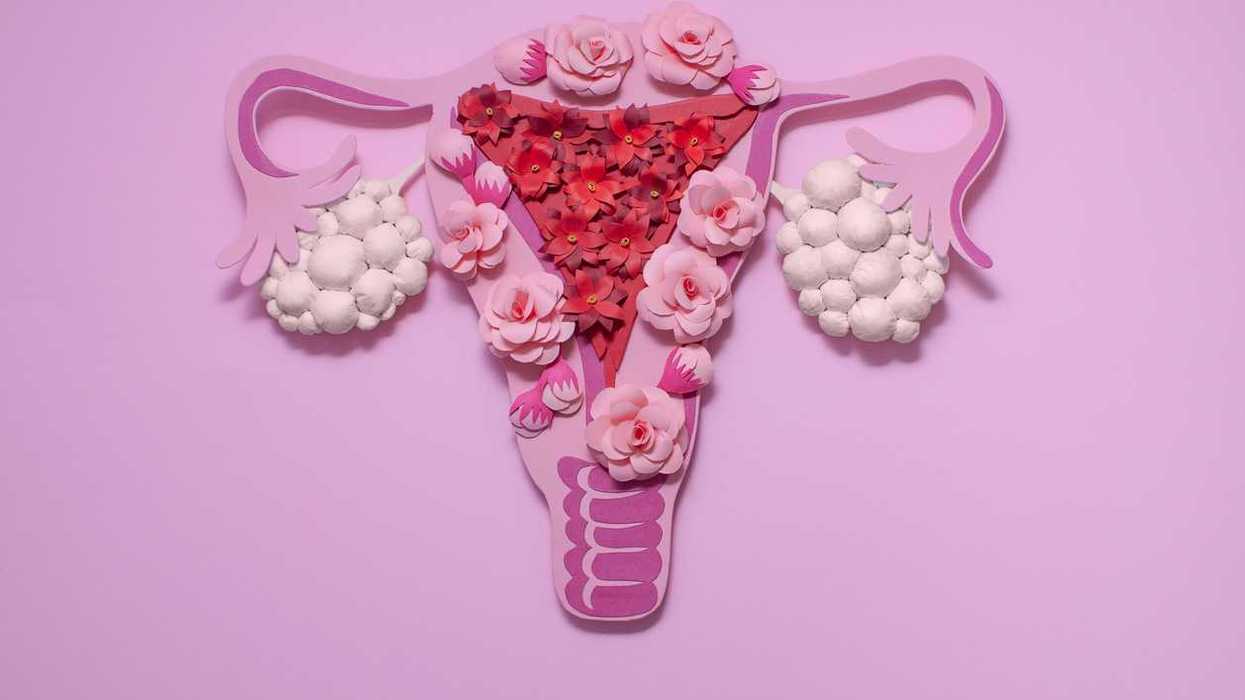
A quick Google search of 'PCOS' will lead you to what we've been told, until now, the condition affecting millions of women globally looks like: ovarian cysts, increased testosterone, weight gain, violent periods (or none at all), and increased infertility.
Except, that's not technically what it looks like at all.
In fact, when you delve into the details, it's actually a condition that carries a lengthy list of widely-differing symptoms, and certainly doesn't have a one-size-fits-all appearance, despite the strict criteria for diagnosis.
What's more, it affects one in eight women - and yet, so little is truly known about it. It's thought up to 70 per cent of the 170 million women with PCOS have no idea that they're affected by it.
That's why, for many, it's a welcome change that its name is officially being changed from Polycystic Ovarian Syndrome to Polyendocrine Metabolic Ovarian Syndrome (PMOS); a title that better captures its impact as a hormonal and metabolic disorder, and not an exclusively reproductive one.
 iStock
The move was announced at the European Congress of Endocrinology in Prague, Czech Republic this week, prompting sighs of relief from charities and campaigners alike, as well as the women who have been simply told to "get over it" for decades.
While the aforementioned symptoms may well form part of the experience for some, others may experience hair thinning or loss, insulin resistance, acne, and sleep apnoea to name but a few among the many effects.
Those with the newly-named PMOS are also at higher risk of heart disease, depression, and diabetes but - until now - have felt largely overlooked in healthcare spaces.
According to The Lancet, the name in itself, PCOS, implied "pathological ovarian cysts, obscuring diverse endocrine and metabolic features, and contributing to delayed diagnosis, fragmented care, and stigma, while curtailing research and policy framing."
Put simply, implying that ovarian cysts have to be present for diagnosis has prevented so many assigned female at birth people who didn't fit the bill from being able to receive treatment. It's also been at the heart of scaremongering for women on the receiving end of a diagnosis that simply made no sense to their lived experiences.
Despite fertility being at the heart of its name and nature, research suggests that the birth rate of women both with and without PMOS is the same when offered treatment.
Prof Helena Teede, the director of Melbourne’s Monash Centre for Health Research and Implementation PCOS didn’t capture the “multi-system burden that people with this condition have suffered”, and that it “directs attention to only one organ”.
So much of what we thought we knew about PMOS is about to be rewritten.
 iStock
"Training on this condition in medical curricula is woefully inadequate. Because of the name — and the assumption that it was primarily a gynaecological and fertility condition — it was placed in that part of the curriculum only", says Rachel Morman, Chair of UK PCOS charity, Verity, who were paramount in the campaigning process.
"That means future paediatricians, cardiologists, dieticians, mental health professionals and many others leave medical school without understanding that PMOS is part of their responsibility too. The condition doesn't stay in one body system, but medical education treated it as if it did."
She adds: "A diagnosis is also access. Access to monitoring, to treatment options, to a community of people who understand, and to the self-knowledge that so many people with this condition have been denied.
"PMOS is a lifelong condition with serious long-term health implications — including significantly increased risks of type 2 diabetes, cardiovascular disease, fatty liver disease, sleep apnoea, and mental health conditions including anxiety, depression and disordered eating. Without a diagnosis, those risks go unmonitored and unmanaged. The earlier you know, the more you can do."
 iStock
If you believe you're showing symptoms of PMOS, Rachel advises the following:
— Ask if you can take notes, or record the appointment on your phone. Many GP surgeries now allow this, and it means you don't have to try to remember everything under pressure.
— Take someone with you if you can — a friend or family member who can help you advocate for yourself if you feel dismissed.
— Download the AskPMOS app — created free of charge by the international guideline team — which gives you evidence-based information to share with your clinician and helps you understand your own symptoms.
— Print or show your GP the International PMOS Guidelines — these are the globally agreed clinical standards for diagnosing and managing this condition.
— If you experience excess hair growth, consider taking photographs before your appointment. Many people manage or remove the hair before seeing a doctor — which is completely understandable — but images can be really helpful in conveying the severity of a symptom that is difficult to show in a consultation room.
— If you are not listened to, go back, or ask to see someone else. You are not being difficult. You are advocating for your health. And you deserve to be heard. In England, a patient safety initiative introduced in September 2025 — known as Jess's Rule, or "three strikes and rethink" — means that if you present to your GP three times with the same unresolved or worsening symptoms, they are urged to formally review your diagnosis. If that applies to you, you can cite it directly.
There's still a long way to go when it comes to researching women's health, but this is just the start of an important conversation that was well overdue.
Why not read...
Is our sleep score secretly making us feel more tired than we are?
Experts have pinpointed the 'ultimate luxury' - and it isn't something you can buy
How to join the indy100's free WhatsApp channel
Top 100