The Conversation (0)
Science & Tech
Related: Mesa typewriter shop keeps craftmanship alive amid digital age
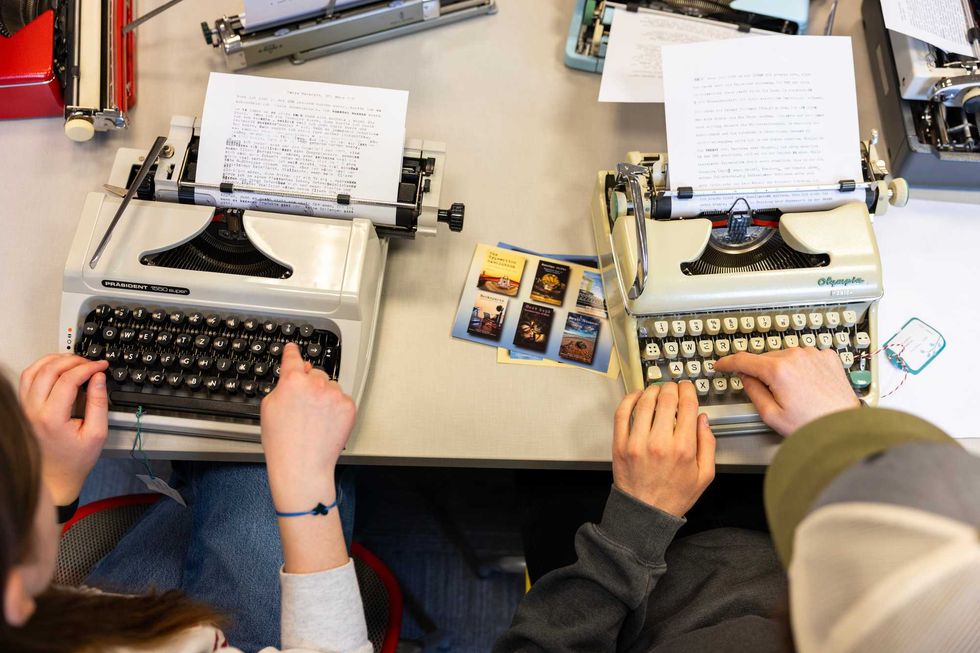
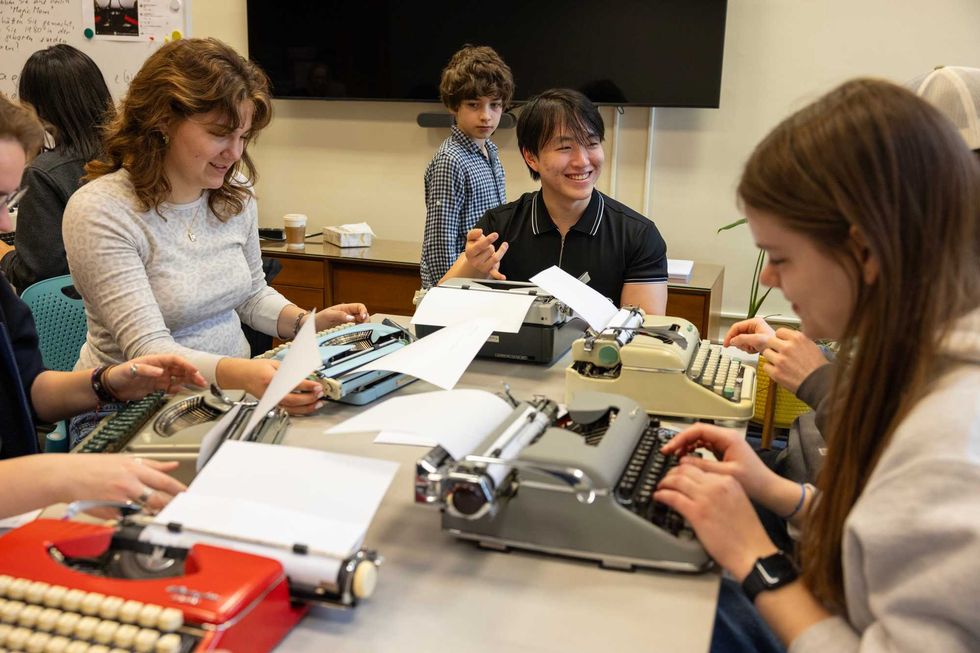
Students at Cornell University are experiencing a blast from the past, hunched over manual typewriters, their classrooms filled with the rhythmic clack of keys and the satisfying ding at the end of each line. This retro scene is no nostalgic whim but a deliberate pedagogical experiment challenging the pervasive influence of AI and online translation in academic work.
Grit Matthias Phelps, a German language instructor, introduced the "analog" assignment in spring 2023, driven by frustration with students submitting suspected AI-generated essays. "What’s the point of me reading it if it’s already correct anyway, and you didn’t write it yourself? Could you produce it without your computer?" Phelps questioned. Her aim: to immerse students in pre-digital writing and thought, prompting her to source dozens of vintage typewriters. This aligns with a national trend as institutions reintroduce traditional assessment methods, like pen-and-paper exams, to circumvent AI use.
For many students, the experience was entirely novel. Catherine Mong, a 19-year-old freshman, recalled her initial bewilderment. "I was so confused. I had no idea what was happening. I’d seen typewriters in movies, but they don’t tell you how a typewriter works," she explained. "I didn’t know there was a whole science to using a typewriter." The manual typewriter proved counter-intuitive for a touchscreen-native generation. Phelps demonstrated feeding paper, striking keys, and manually returning the carriage after the bell – a revelation for one student: "Oh, that’s why it’s called ‘return.’"
 AP Photo/Lauren Petracca
Phelps believes the exercise fosters unique focus. "Everything slows down. It’s like back in the old days when you really did one thing at a time. And there was joy in doing it," she remarked, sometimes enlisting her young children as "tech support" to ensure no mobile phones were in sight.
The assignment's lessons extend beyond typing mechanics. Ratchaphon Lertdamrongwong, a computer science sophomore, found the process transformative. "It dawned on me that the difference with typing on a typewriter is not just how you interact with the typewriter, but how you interact with the world around you," he observed. Without digital notifications, students experienced fewer distractions. The absence of readily available online answers encouraged collaboration, with students turning to classmates.
"While writing the essay, I had to talk a lot more, socialize a lot more, which I guess was normal back then," Lertdamrongwong reflected, contrasting it with modern classroom dynamics: "People are always on a laptop, always on the phone." The lack of a delete key compelled him to think more deliberately. "This might sound bad, but I was forced to actually think about the problem on my own instead of delegating to AI or Google search," he admitted.
 AP Photo/Lauren Petracca
Physically, the manual machines presented challenges. Many students found their pinky fingers lacked strength for touch-typing, leading to a slower, index-finger approach. Catherine Mong, navigating the task with a recently broken wrist, initially struggled with the untidy appearance of her work, marked by uneven spacing and misspellings. Phelps advised students to backspace and type 'X's over errors. "This thing I handed in had pencil marks all over it and definitely did not look clean or finished. But it’s part of the process of learning that you’re going to make mistakes," Mong acknowledged.
Despite initial frustration, Mong embraced the imperfections, experimenting with the visual layout to indent and fragment lines in the style of E.E. Cummings for her poetry assignment. She saved the numerous sheets filled with errors, declaring, "I’m probably going to hang them on my wall. I’m kind of fascinated by typewriters. I told all my friends, I did a German test on a typewriter!" The analogue approach, it seems, is not just about resisting AI, but rediscovering the tactile, thoughtful, messy art of creation.