The Conversation (0)
Bad Bunny Lights Up Super Bowl With Lady Gaga Cameo & Real …
unbranded - Entertainment / VideoElephant
Bad Bunny made a striking fashion statement at Sunday’s Super Bowl halftime show, eschewing costly couture for accessible high-street tailoring, a move that resonated far beyond the stadium. The Puerto Rican star, 31, who also made history as the first performer to headline the show entirely in Spanish, captured the attention of fashion critics with his unexpected wardrobe choice.
Breaking from the tradition of high-end designer outfits typical for such a global stage, Bad Bunny opted for a monochromatic cream ensemble from Spanish retail giant Zara. This decision placed the high-street brand at the epicentre of one of the year’s most-watched cultural events, marking a stark contrast to his recent red-carpet appearances. Just days prior, he had attended the Grammy Awards in a sleek menswear look by Schiaparelli, a significant debut for the Parisian maison.
This pivot from luxury to high street was a deliberate choice, underscoring a growing theme in the artist’s fashion narrative: a rejection of hierarchy in favour of personal style. Styled by frequent collaborators Storm Pablo and Marvin Douglas Linares, the halftime look was notably pared back.
The all-cream outfit featured a collared shirt and tie, chinos, and a sport-inspired jersey emblazoned with "Ocasio" – his surname – and the number 64. While the significance of the number remained unconfirmed, fans quickly speculated it referenced his mother’s birth year. The neutral palette ensured that the silhouette and concept took precedence over overt branding, a notable departure given the commercial visibility of the Super Bowl. This approach, focusing on styling cohesion and narrative rather than logos or embellishment, is more commonly associated with editorial fashion than live performance attire.
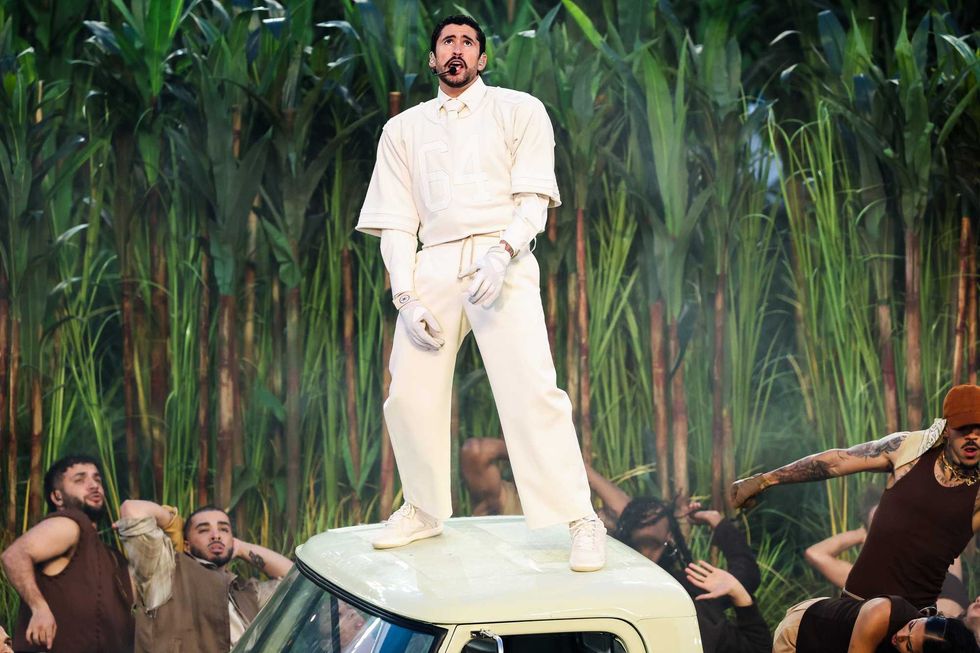 Bad Bunny's historic Super Bowl halftime show PA
His footwear added another layer of interest: the BadBo 1.0 trainer, his collaborative design with Adidas, unveiled in a new colourway ahead of its official release. This strategic timing placed the product directly before one of the world’s largest television audiences, effectively blurring the lines between performance styling and product launch. Accessories were similarly restrained, comprising cream gloves and a Royal Oak timepiece by Audemars Piguet, featuring a yellow gold case and malachite dial, which introduced a touch of luxury without disrupting the overall aesthetic.
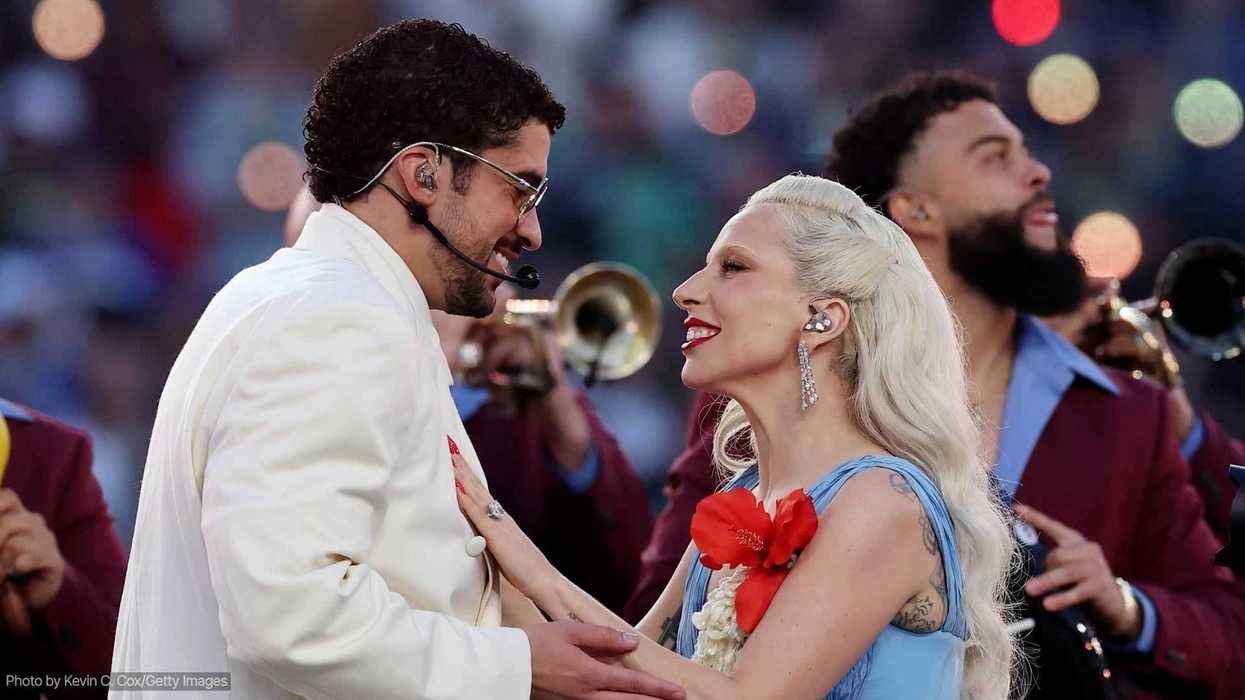
Midway through the performance, Bad Bunny was joined on stage by Lady Gaga, who appeared in custom Luar. Gaga’s cornflower blue, Flamenco-style silhouette offered a sharp contrast to Bad Bunny’s understated uniform, highlighting the diverse range of fashion labels now gracing the halftime stage – from emerging New York designers to global retail powerhouses.
The performance took place at Levi’s Stadium in Santa Clara, California, during a Super Bowl weekend that has increasingly become a focal point for the fashion industry. In the days leading up to the game, Thom Browne staged its autumn/winter 2026 show at the GQ Bowl, while Abercrombie & Fitch, now the NFL’s official fashion partner, hosted a league-backed presentation featuring high-profile players. These events collectively reinforced the Super Bowl’s evolution into a hybrid of sport, entertainment, and fashion marketing.
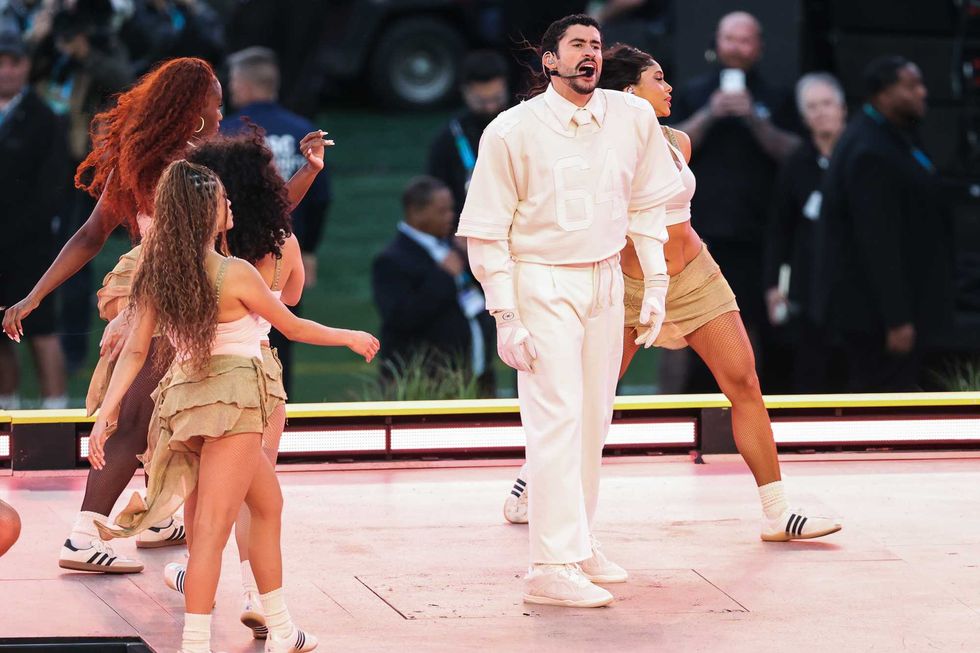 PA
PA
Against this backdrop, Bad Bunny’s choice of Zara appeared to be a calculated style statement rather than a mere departure. In a post-show statement, Zara described the look as part of a "memorable performance," maintaining a tone that mirrored the understated nature of the styling. Later in the evening, Bad Bunny introduced a second Zara look – a cream double-breasted blazer layered over the original outfit. This incremental change reinforced continuity rather than bold statements, underscoring the idea that fashion does not always require theatrics.
For an artist long associated with maximalism, Bad Bunny has consistently positioned fashion as an extension of identity rather than an add-on to the performance, favouring clothing that feels self-directed. By placing a high-street brand alongside luxury watchmaking and global sportswear, Bad Bunny demonstrated that fashion impact is not solely defined by price point, but by point of view.
Top 100